
Plastic material deformation is one of the most important quality challenges in precision CNC machining. Unlike metals, engineering plastics respond strongly to heat, clamping pressure, tool friction, internal stress, and environmental conditions. A part can look correct during machining but shift after release from the fixture, after cooling, or after moisture exposure.
In CNC manufacturing, deformation control is not only a machining issue; it is a full process-control issue. It affects dimensional accuracy, flatness, hole alignment, assembly fit, surface finish, and long-term stability. This is especially important for plastic parts used in medical equipment, electronics, semiconductor fixtures, optical components, and industrial assemblies.
Professional plastic machining guidance notes that excessive heat input can create high stress levels, warping, fracture, thermal expansion, and loss of tolerance in machined plastic components.
Reference: Curbell Plastics, Machining Engineering Plastics
For CNC shops working with PMMA, POM, nylon, PTFE, polycarbonate, and other engineering plastics, the goal is not simply to remove material. The real goal is to remove material while keeping the part stable before, during, and after machining.
What Causes Plastic Material Deformation?
Plastic parts deform during CNC machining because polymers behave differently from metals. Plastics usually have lower thermal conductivity, higher thermal expansion, lower stiffness, and higher sensitivity to residual stress. This means heat and pressure can change the final part geometry more easily.
The most common causes include:
- Heat buildup during cutting
- Internal stress in the raw plastic stock
- Improper clamping pressure
- Tool deflection and vibration
- Poor chip evacuation
- Moisture absorption
- Thin-wall or unsupported geometry
- Aggressive machining parameters
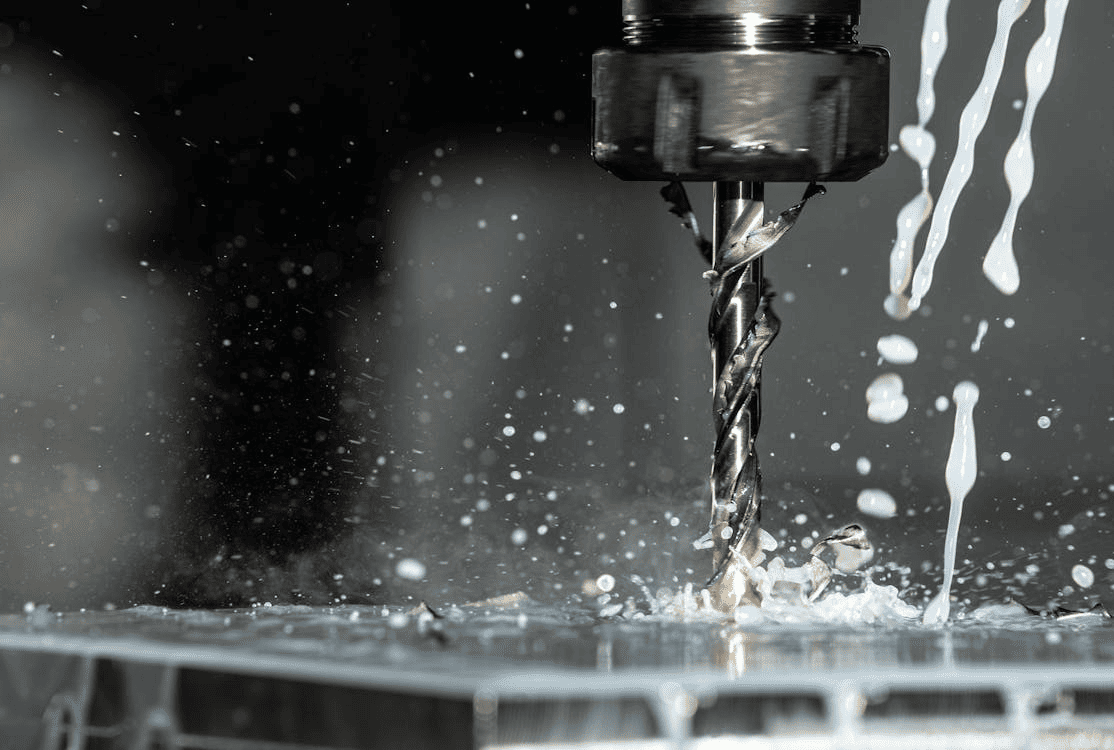
Heat is often the most visible cause. If cutting speed, feed rate, tool geometry, or cooling is not controlled, the cutting zone may overheat. This can soften the material, create burrs, melt edges, or cause the part to expand during machining and shrink after cooling.
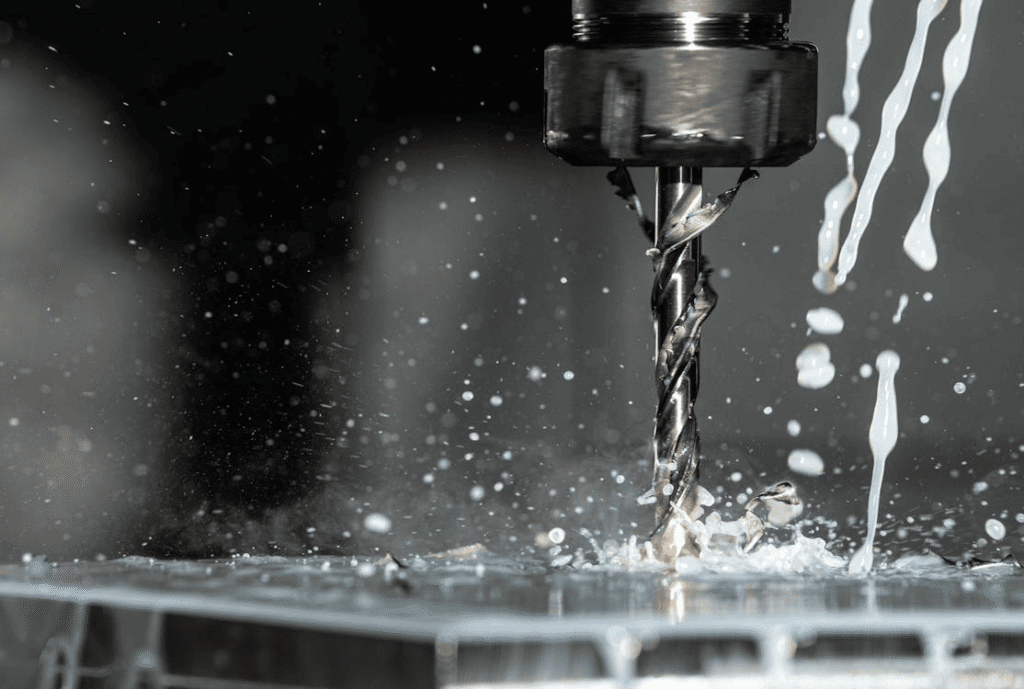
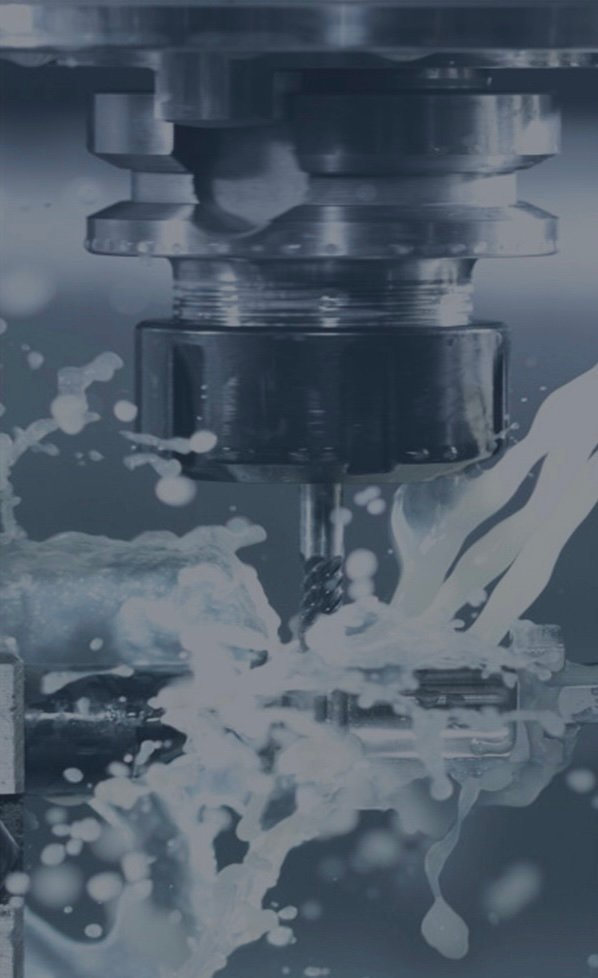
Source: Pexels CNC milling machine with metalworking fluid
Clamping is another major cause. Plastic parts can compress under fixture pressure. When the clamp is released, the material may spring back and change shape. This is common with thin PMMA panels, polycarbonate covers, PTFE parts, and nylon components.
Internal stress also matters. Many plastic rods, sheets, and plates contain residual stress from extrusion, casting, molding, or prior processing. When a CNC machine removes material, that stress may release unevenly and distort the part. Curbell Plastics notes that stress-relieved raw materials are important for accurate plastic machining because released stresses can distort geometry.
Reference: Curbell Plastics, Plastic Machining Guidelines
Plastic Materials Most Affected by Deformation
Different plastics deform for different reasons. Material selection should match the tolerance, geometry, operating environment, and machining process.
Acrylic (PMMA)
PMMA is valued for optical clarity, gloss, and light transmission, but it is sensitive to heat and stress. During machining, PMMA can crack, chip, melt at the edge, or show stress marks if the tool is dull or the feed and speed are not controlled.
PMMA is best machined with sharp tools, controlled cutting heat, light finishing passes, and careful polishing.
Real example: a transparent acrylic display cover may pass visual inspection immediately after cutting, but if excessive heat was generated near the edges, small cracks can appear later during assembly or cleaning.
POM / Delrin
POM, often known by the trade name Delrin, is one of the more dimensionally stable engineering plastics. It machines well and is often used for gears, bushings, rollers, and precision components.
However, POM can still move if the part has thin walls, asymmetric material removal, or tight tolerances. The machining sequence should balance roughing and finishing to avoid stress-related movement.
Nylon
Nylon is tough and wear-resistant, but it absorbs moisture from the surrounding environment. This can cause dimensional growth after machining.
Nylon deformation is often not only a machining problem; it can also be an environmental stability problem.
A technical discussion from AIP Precision explains that absorbed moisture can act as a plasticizer and reduce glass transition temperature and strength, while also affecting polymer structure and performance.
PTFE
PTFE is soft, slippery, and chemically resistant, but it is difficult to hold dimensionally during machining. It can deflect under tool pressure and move under clamping force.
PTFE parts often require custom fixtures, very sharp tools, and conservative machining parameters.
Polycarbonate
Polycarbonate is tougher than PMMA, but it can show stress whitening, heat marks, and surface defects if machined aggressively. It is often used for protective covers, transparent shields, and safety components, so optical and mechanical quality are both important.
How Heat Affects Plastic Machining
Heat is one of the biggest causes of plastic part deformation. Metals can conduct heat away from the cutting zone more effectively, but many plastics hold heat near the tool and workpiece surface. This localized heat can soften the material and increase dimensional movement.
When heat is not controlled, several problems may appear:
- Edge melting
- Burr formation
- Surface roughness
- Thermal expansion during machining
- Warping after cooling
- Cracking during finishing
- Loss of tolerance
A study on CNC milling of medical-grade PMMA found that machining parameters affect surface roughness and material removal behavior, with optimized combinations of spindle speed, depth of cut, and feed rate producing better results.
Source: Study on CNC Milling Parameters of PMMA
Real Example: PMMA Panel Warping
A PMMA machine window may be cut from a transparent acrylic sheet. If the spindle speed is too high and chip evacuation is poor, heat accumulates along the cut edge. The sheet may stay flat while clamped, but after release, the panel can bend slightly. This may cause screw holes to misalign during assembly.
A better approach is to use sharp tooling, proper chip clearance, air cooling, moderate cutting engagement, and a finishing pass after the part temperature stabilizes.
Clamping and Fixturing Strategies to Reduce Deformation
Workholding is critical when machining plastics. The fixture must hold the part securely without compressing or bending it. Over-tightening a plastic workpiece may produce an accurate shape while clamped, but the part may deform after removal.
Common strategies include:
- Vacuum fixtures for thin sheets
- Soft jaws for shaped parts
- Full-surface support plates
- Low-pressure clamping
- Custom nests for curved or flexible parts
- Avoiding point-load pressure
- Supporting thin walls during machining
The best fixture supports the plastic part close to the cutting area while avoiding localized stress.
Real Example: Acrylic Sheet Machining
A large acrylic cover may need slots, holes, and edge profiling. If the sheet is clamped only at the corners, the middle may vibrate and flex. This can create poor edge quality and inconsistent dimensions.
A vacuum fixture or sacrificial support board provides more even support. This reduces chatter, improves edge finish, and lowers the risk of distortion.
Real Example: Polycarbonate Cover
A thin polycarbonate electronics cover may need several mounting holes. If the operator clamps directly over the finished surface, pressure marks or stress whitening can appear. A soft-jaw fixture or protective support layer helps distribute force and protect the surface.
Tool Selection for Plastic CNC Machining
Tool selection directly affects heat, chip formation, surface finish, and dimensional stability. Plastics usually require sharp tools that cut cleanly instead of rubbing.
Important tool factors include:
- Cutting-edge sharpness
- Flute count
- Rake angle
- Tool coating
- Chip clearance
- Tool diameter
- Rigidity
Single-flute and O-flute cutters are often used for plastics because they provide better chip evacuation and reduce heat buildup. Dull tools should be avoided because they increase friction and may melt or smear the plastic instead of cutting it cleanly.
In plastic machining, rubbing is the enemy. The tool must cut, not polish the material through friction.
Real Example: Wrong Tool on Acrylic
If an aluminum end mill with unsuitable geometry is used on acrylic, the chips may not clear efficiently. The result can be melted edges, cloudy surfaces, and small cracks. Switching to a sharp plastic-specific cutter can improve chip flow and reduce surface stress.
Real Example: PTFE Deflection
PTFE may move away from the cutter because it is soft. A very sharp tool and light passes help reduce cutting force. Custom support is often needed to keep the part from flexing during machining.
Cutting Parameters That Help Control Deformation
Cutting parameters must be selected to reduce heat and mechanical stress. There is no single universal setting for all plastics, but the process should control chip load, tool engagement, and cooling.
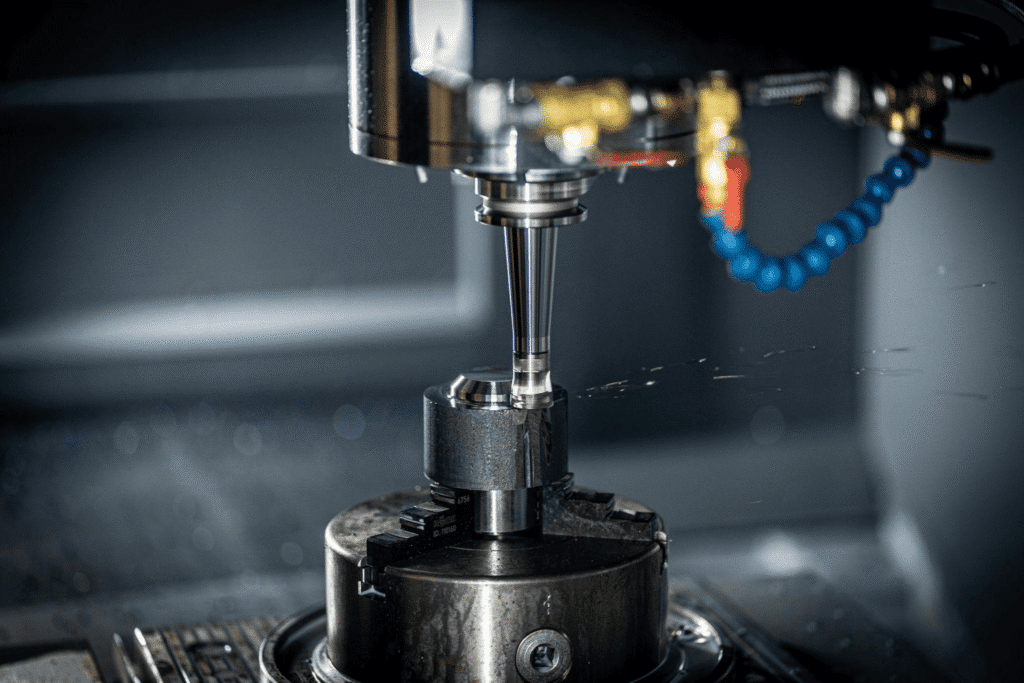
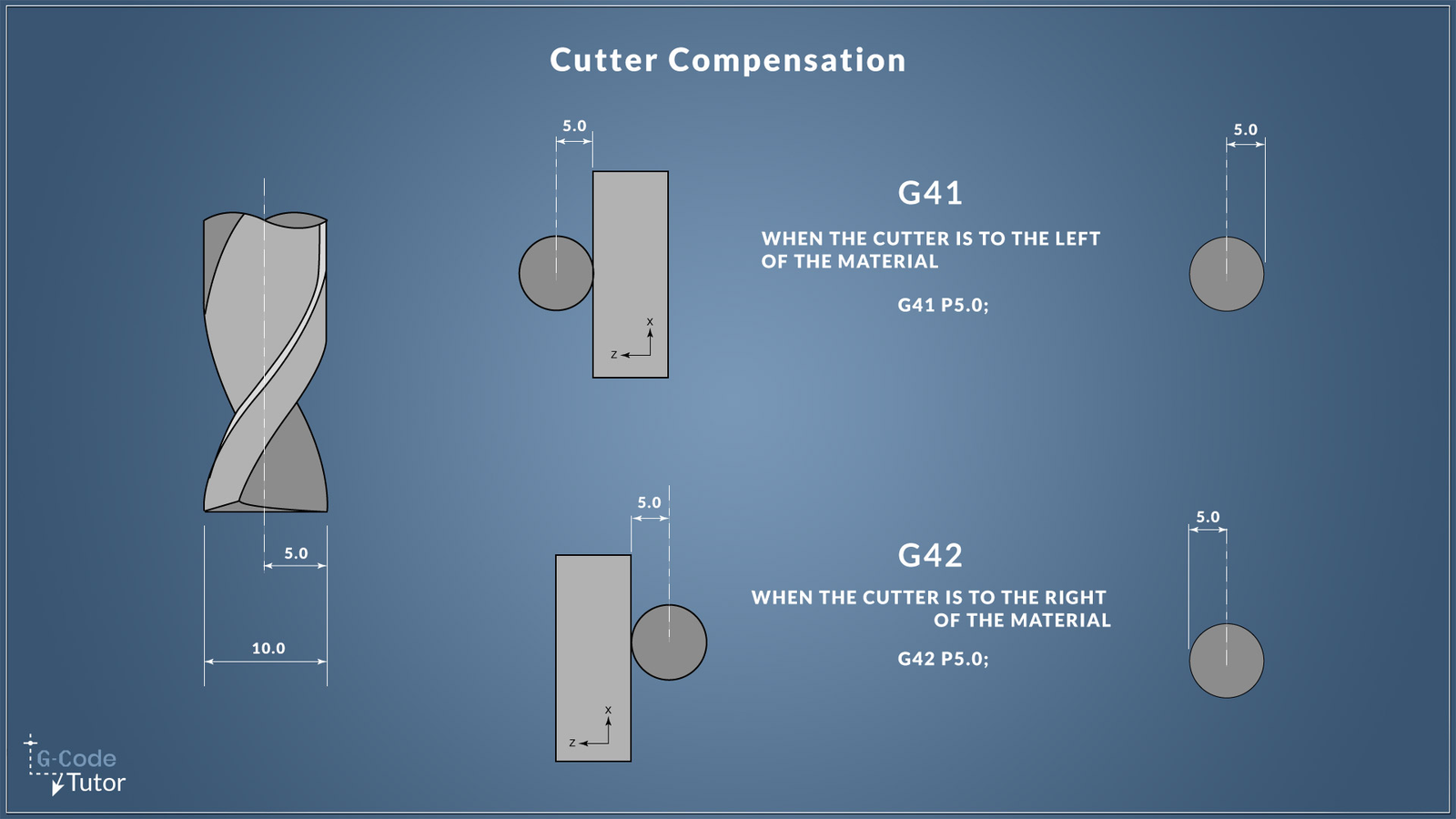
Source: Pexels CNC Machining Reference
Key parameters include:
- Feed rate
- Spindle speed
- Depth of cut
- Step-over
- Toolpath strategy
- Cooling method
- Roughing and finishing sequence
A general rule is to avoid both excessive heat and excessive pressure. Too much speed with too little chip load can rub and melt the material. Too much feed or depth of cut can flex the part and create tool marks.
Research on general-purpose PMMA milling reported that increases in cutting parameters can increase cutting temperature, maximum machining temperature, and surface roughness.
Practical Strategy
For precision plastic machining, the process often works best when roughing removes material gradually and finishing is performed after stress and heat are reduced. A light finishing pass can improve dimensional accuracy and surface quality.
Real Example: Nylon Part Stability
A nylon bushing may be rough-machined first, then allowed to stabilize before final boring. If the final bore is cut immediately after aggressive roughing, the hole may shift slightly as the part cools or absorbs moisture. A staged process helps improve final tolerance.
Thin-Wall Plastic Machining Challenges
Thin-wall plastic parts are especially vulnerable to deformation because they lack stiffness. They can bend under clamping pressure, move under cutting force, and warp after material removal.
Thin-wall parts are common in:
- Transparent covers
- Electronics enclosures
- Medical housings
- Lightweight fixtures
- Display panels
- Protective guards
The main challenges include:
- Wall flexing
- Vibration
- Heat concentration
- Tool pressure
- Uneven stress release
- Final-pass distortion
Thin-wall plastic machining should be planned around support, sequence, and heat control.
Real Example: Acrylic Housing
A clear acrylic housing may require multiple pockets and mounting holes. If one side is machined heavily before the opposite side is supported, the housing can twist. Balanced material removal and custom support reduce this risk.
Real Example: Electronics Cover
A polycarbonate cover may need a thin lip around the edge. Cutting the lip in one heavy pass can cause vibration and a poor finish. A better method is to rough the part conservatively and leave a small amount of stock for final finishing.
Stress Relief and Post-Processing Methods
Stress relief is important when plastic parts must hold tight tolerances. Annealing is one of the most common methods used to reduce internal stress.
Annealing is a controlled heating and cooling process. It allows polymer chains to relax and reduces the risk of later movement, cracking, or distortion. This can be done before machining, between roughing and finishing, or after machining, depending on material and part requirements.
Boedeker provides annealing guidelines for high-performance plastic stock shapes and describes post-machining annealing as a stress-relief process for machinists working with plastic materials.
Technical Reference: Boedeker Plastics, Plastic Annealing Guidelines
When Annealing May Help
Annealing may be useful when:
- The part has tight tolerances
- Large amounts of material are removed
- The part has thin walls
- The plastic is stress-sensitive
- The finished part will be polished or bonded
- The part must stay dimensionally stable over time
Real Example: Machined PMMA Cover
A PMMA cover that will be polished after machining may crack if internal stress remains near the edges. Stress relief before polishing can reduce the chance of crazing or cracking.
Moisture Control in Engineering Plastics
Moisture control is especially important for nylon and other hygroscopic materials. Some plastics absorb water from the air, and that absorbed moisture can change dimensions and mechanical behavior.
This matters because a part may be machined to specification in a dry condition, but change size later in a humid environment. For precision parts, this can affect hole size, flatness, bearing fit, and assembly alignment.
Plastics Technology explains that nylon can experience dimensional growth as it absorbs moisture from the atmosphere.
Reference: AIP Precision, Moisture Absorption in Machined Polymers
Practical Controls
To reduce moisture-related problems:
- Store material in controlled conditions
- Understand the service environment
- Allow parts to condition before final inspection
- Avoid unrealistic tolerances for moisture-sensitive materials
- Select lower-moisture-absorption materials when needed
Real Example: Nylon Gear
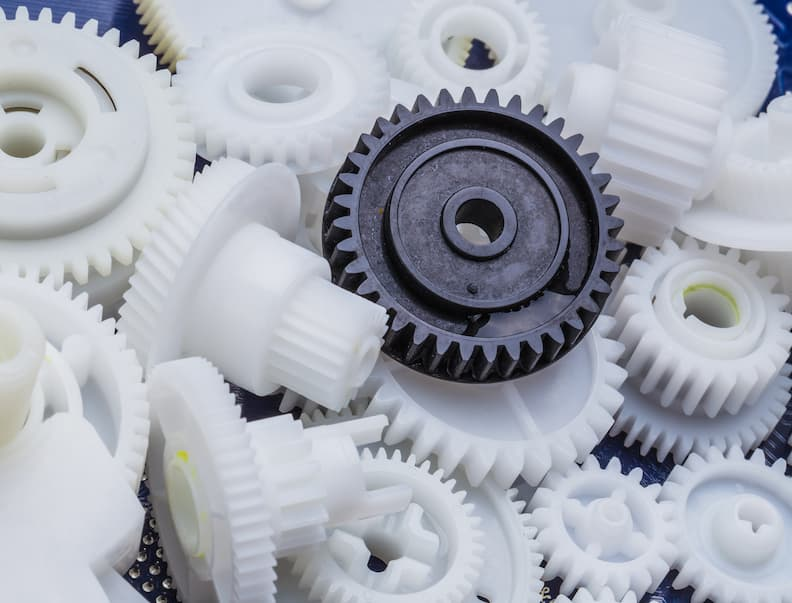
A nylon gear may machine correctly, but after absorbing moisture, its diameter may increase slightly. In a tight assembly, that change can affect gear mesh or bearing clearance. For this reason, the material and tolerance must be selected with the final environment in mind.
Quality Inspection for Plastic CNC Parts
Plastic inspection requires timing and environmental awareness. A part measured immediately after machining may not show the same dimensions after cooling or conditioning.
Important inspection points include:
- Flatness
- Hole diameter
- Wall thickness
- Surface finish
- Warpage
- Edge quality
- Stress marks
- Dimensional stability after rest time
For precision plastic parts, inspection should confirm both immediate dimensions and post-machining stability.
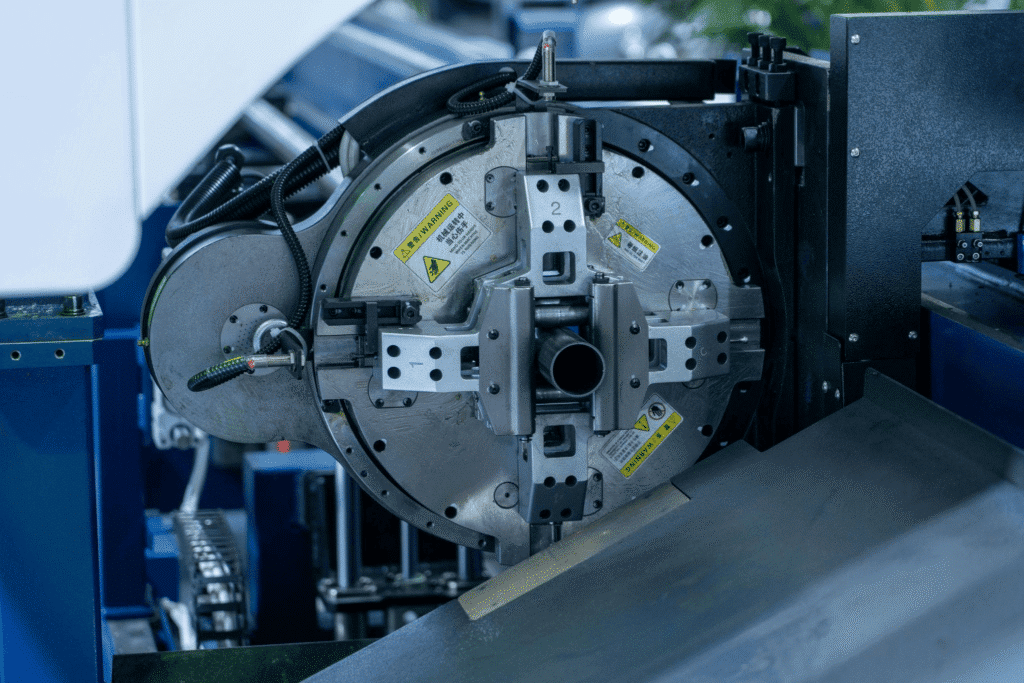
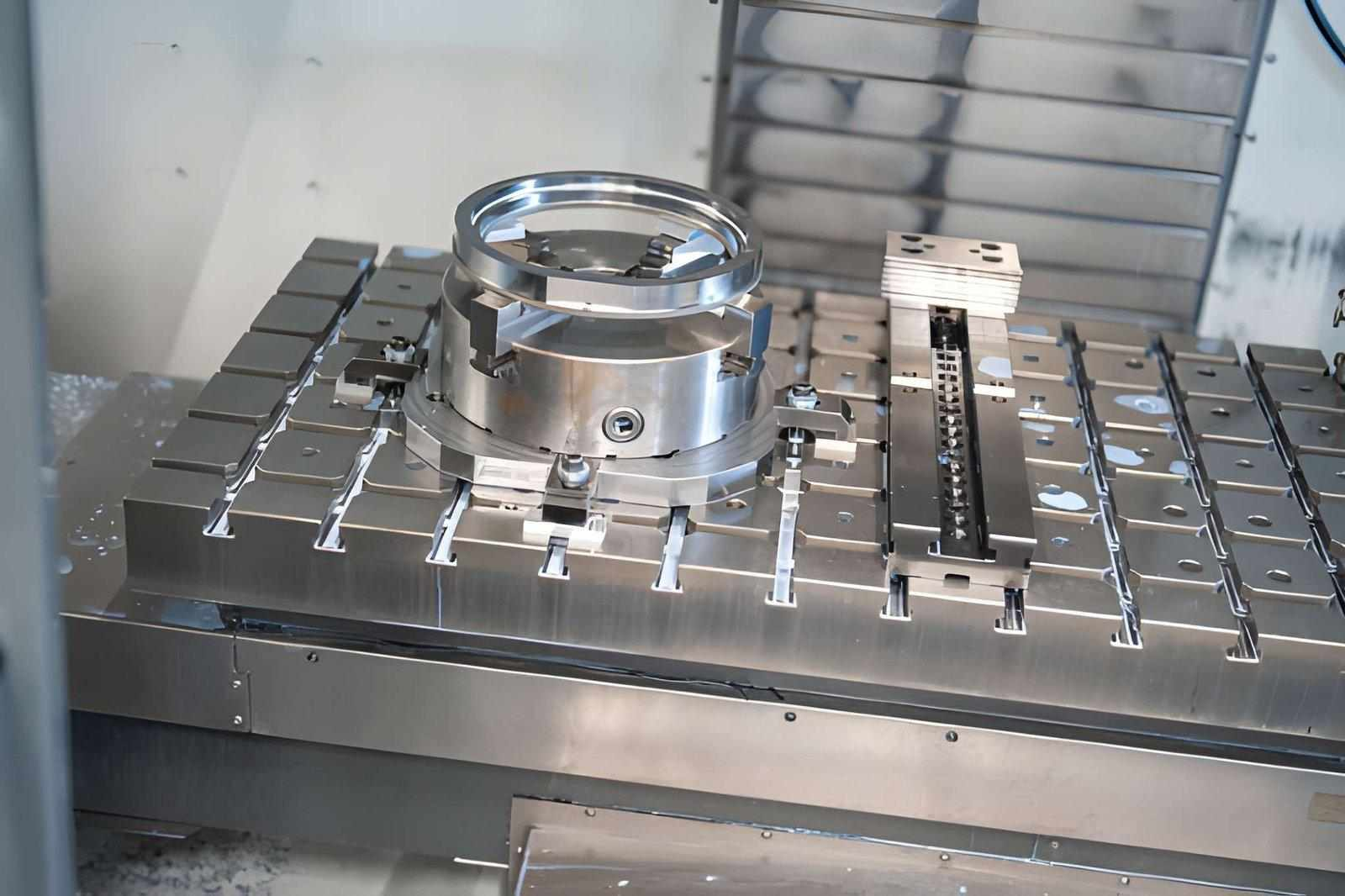
Source: Advanced Industrial CNC Manufacturing Reference
CMM inspection, optical measurement, gauges, and controlled surface inspection can all be useful. However, measurement pressure should be considered because some plastics can flex under contact.
Real Example: Lightweight Plastic Fixture
A lightweight plastic inspection fixture may pass after machining but shift after stress release. A staged inspection approach can identify whether the part remains stable after cooling and fixture release.
Plastic Material Selection for Dimensional Stability
Material choice is one of the strongest controls against deformation. No machining strategy can fully overcome poor material selection.
| Material | Stability | Heat Resistance | Machinability | Common Issues |
| PMMA | Moderate | Moderate | Good | Cracking, heat marks, edge stress |
| POM / Delrin | High | Moderate | Excellent | Movement after asymmetric cutting |
| Nylon | Moderate | Moderate | Good | Moisture absorption, swelling |
| PTFE | Low to moderate | Good | Difficult | Deflection, softness |
| Polycarbonate | Moderate | Good | Good | Stress whitening, heat marks |
For parts that require tight tolerance, POM may be better than nylon. For transparent parts, PMMA may be preferred over polycarbonate when optical clarity is the priority. For chemical resistance, PTFE may be selected, but the design must account for machining movement.
Industry Applications Where Deformation Control Is Critical
Plastic deformation control matters most when parts must fit, seal, align, or remain visually clean.
Medical Device Housings
Medical equipment often uses transparent or lightweight plastic covers. Deformation can affect assembly, sealing, and appearance.
Semiconductor Components
Semiconductor tooling and support components may require stable plastic materials for fixtures, covers, and handling parts. Flatness and dimensional consistency are important.
Electronics Covers
Plastic covers used in electronics must align with screws, ports, buttons, and internal boards. Even small warping can cause assembly problems.
Optical and Transparent Parts
PMMA and polycarbonate parts used for transparent windows must maintain clarity and avoid stress marks. Heat damage, scratches, and cracks are highly visible.
Precision Industrial Fixtures
Plastic fixtures may be used to hold or guide other components. If the fixture deforms, the parts it supports may also become inconsistent.
Advanced CNC Strategies for Plastic Parts
Advanced machining strategies can reduce deformation and improve repeatability.
Multi-Stage Machining
Roughing and finishing should often be separated. Roughing removes most material, while finishing is done after the part has stabilized.
Adaptive Toolpaths
Adaptive toolpaths can reduce sudden load changes and maintain more consistent cutting forces.
Balanced Material Removal
Removing material evenly from both sides of a part reduces stress imbalance.
Temperature Control
Air blast, mist, coolant compatibility, and controlled machining environments can help reduce heat buildup.
Custom Fixtures
For high-value plastic parts, custom fixtures often produce better results than standard clamping.
The most reliable plastic machining processes are designed around the material’s behavior, not just the drawing geometry.
Future Trends in Precision Plastic Machining
Plastic CNC machining is becoming more demanding as industries require lighter, cleaner, and more complex components. Future improvements will likely focus on better toolpath control, more stable engineering plastics, improved fixture systems, and tighter integration between machining data and inspection results.
AI-assisted process monitoring may also help manufacturers detect heat, vibration, and tool wear before deformation appears in the finished part. For high-value industries such as medical devices, electronics, and semiconductor manufacturing, this type of process intelligence can improve consistency and reduce scrap.
FAQs
Why Do Plastic Parts Deform During CNC Machining?
Plastic parts deform because of heat, internal stress, clamping pressure, tool force, moisture absorption, and unsupported geometry. Plastics are generally more sensitive to these factors than metals.
Which Plastic Material Is Most Stable for Machining?
POM / Delrin is often considered one of the more stable and machinable engineering plastics. However, the best choice depends on strength, clarity, moisture exposure, temperature, and application requirements.
How Can Heat Deformation Be Reduced In PMMA?
Heat deformation in PMMA can be reduced by using sharp tools, proper feed and speed, good chip evacuation, air cooling, light finishing passes, and avoiding tool rubbing.
What Is The Best Fixture Method For Thin Plastic Sheets?
Vacuum fixtures and full-support backing plates are often effective for thin plastic sheets. They support the material evenly and reduce bending caused by point clamping.
Why Is Nylon Difficult To Machine Accurately?
Nylon can absorb moisture and change dimensions after machining. It can also flex under cutting force, so material conditioning and realistic tolerance planning are important.
Can Plastic Parts Be Annealed After Machining?
Yes. Many plastic parts can be annealed to reduce internal stress. The correct temperature and time depend on the specific material.
How Do CNC Shops Inspect Plastic Part Stability?
CNC shops inspect plastic parts by checking dimensions, flatness, surface quality, and post-machining movement. For high-precision parts, inspection after cooling or stabilization is often important.
Conclusion
Controlling plastic material deformation in CNC machining requires more than basic cutting knowledge. It requires understanding how each plastic responds to heat, stress, moisture, clamping, tooling, and part geometry.
The most important controls are proper material selection, sharp tooling, balanced cutting parameters, low-stress fixturing, staged machining, stress relief, and careful inspection. When these factors are planned together, plastic parts can be machined with better accuracy, cleaner surfaces, and stronger dimensional stability.
For precision industries such as medical devices, electronics, semiconductor manufacturing, and industrial equipment, deformation control is not optional. It directly affects assembly quality, product reliability, and final part performance.