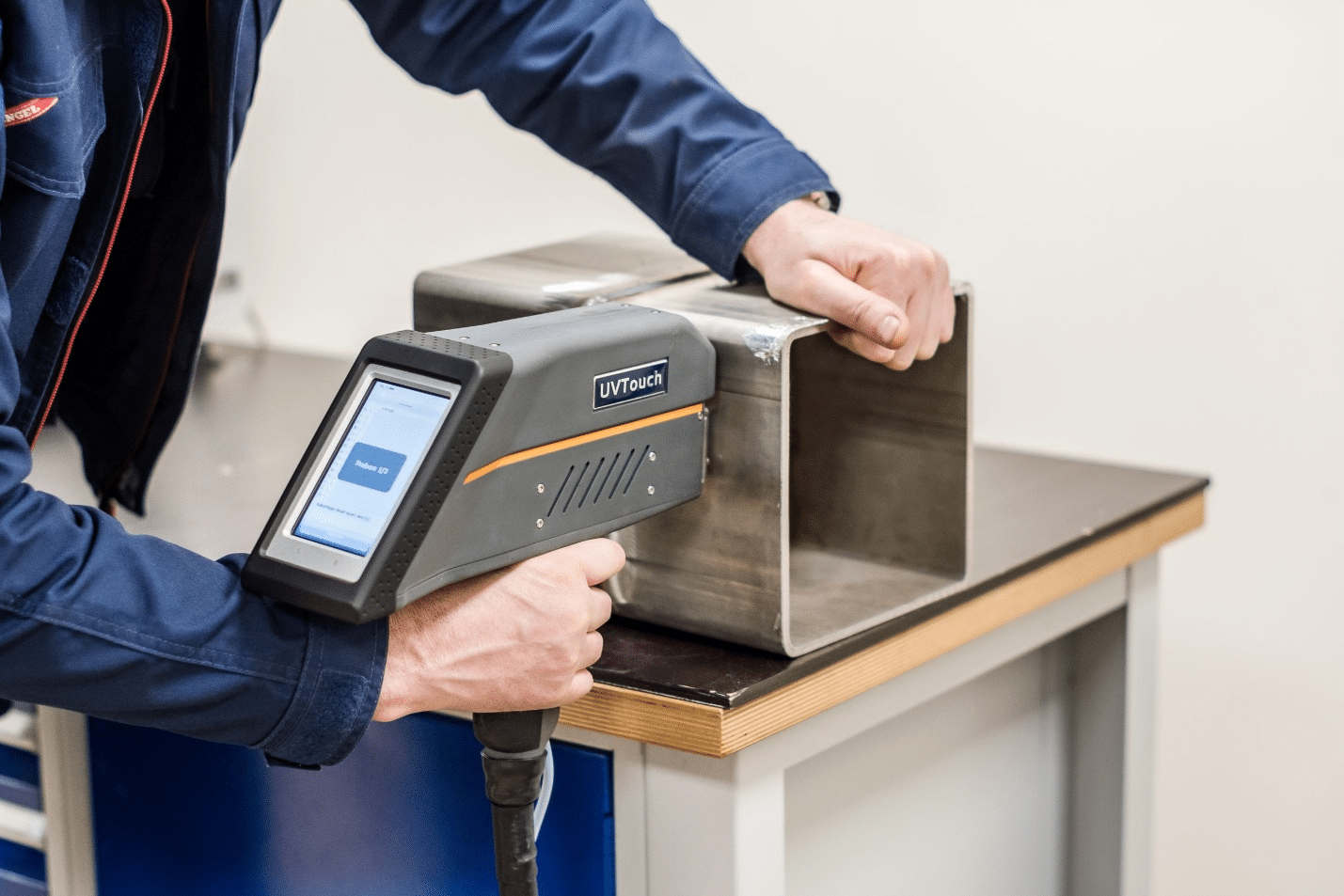

Choosing the right material for a CNC-machined part is one of the most consequential decisions in the manufacturing process. Before a single tool touches the workstock, the material choice has already determined the part's mechanical performance, its compatibility with the machining process, and a significant portion of its total production cost. Get it right, and you have a component that performs reliably within spec for its intended service life. Get it wrong, and you face tool failures, dimensional instability, premature part failure, or budget overruns that are difficult to recover from.
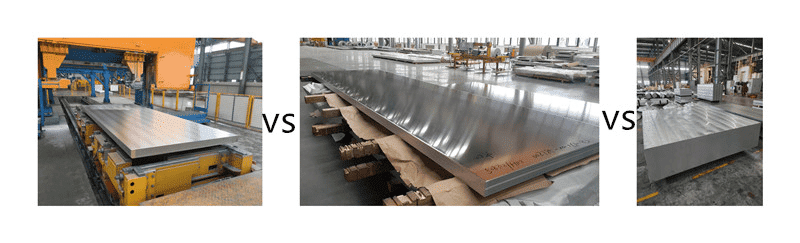
This guide compares three of the most widely used material categories in CNC machining: aluminum, steel, and titanium. For each, we examine the core mechanical properties, common grades, machinability characteristics, and the applications where they perform best.
Why Material Selection Matters in CNC Machining
Material selection is not a secondary consideration in CNC machining. It sits at the center of every engineering and production decision that follows. The material determines how aggressively a part can be machined, how long the tooling will last, whether the finished component will hold its dimensions under thermal or mechanical stress, and ultimately whether the part will survive its operating environment. Material properties directly influence cutting forces, surface integrity, and tool life, making early-stage material decisions foundational to process efficiency [1].
Key Factors That Influence Material Choice
No single material excels across every performance category. Selection requires weighing several competing variables against the specific demands of the application.
- Mechanical strength. The material must withstand the loads it will encounter in service without permanent deformation or fracture. Yield strength and tensile strength data from standardized testing, such as ASTM E8 tensile testing protocols, provide the baseline for these comparisons [2].
- Weight requirements. In aerospace, robotics, and portable electronics, mass is a direct performance variable. A heavier component that meets strength requirements may still be the wrong choice if it adds unnecessary load to a system designed around weight efficiency.
- Corrosion and heat resistance. Parts operating in humid, chemically aggressive, or high-temperature environments require materials that maintain their properties under those conditions. A component that performs well at room temperature may degrade rapidly if the operating environment is not factored into material selection.
- Machinability. Some materials cut cleanly and quickly; others generate excessive heat, work-harden under the cutting tool, or cause accelerated tool wear. Machinability directly affects cycle time, tooling cost, and achievable surface finish. ASM International's machinability ratings provide a standardized reference for comparing materials in this category.
- Surface finish quality. Certain applications, particularly medical devices and optical components, require very low surface roughness values. The material's response to finishing operations, including grinding, lapping, and anodizing, must align with the end-use specification.
- Production volume. A material that is economical at low volumes may become cost-prohibitive at scale if it requires frequent tool changes, slower feed rates, or secondary finishing operations. Conversely, a harder-to-machine material may be justified for a low-volume, high-value component.
- Budget constraints. Raw material cost is only one part of the equation. Machining time, tooling consumption, scrap rates, and post-processing costs all contribute to the total cost per part.
How Material Impacts Manufacturing
The downstream effects of material choice reach into nearly every stage of the machining process.
- Tool wear and machining time are among the most immediate consequences. Hard, abrasive materials like tool steel or titanium alloys accelerate cutting tool wear significantly compared to aluminum or engineering plastics. Cutting speed reductions of 50 to 70 percent are often necessary when machining titanium alloys compared to aluminum, directly increasing cycle time and operational cost [3].
- Precision and dimensional stability are affected by how a material responds to the heat generated during cutting. Materials with high thermal expansion coefficients, or those that are prone to stress relief during machining, can shift dimensionally after the part leaves the fixture. This is particularly relevant for tight-tolerance components where deviations of even a few microns are unacceptable.
- Part durability and maintenance needs are determined by how well the material resists wear, fatigue, and environmental degradation over its service life. A component machined from the correct material for its application will require less maintenance, experience fewer in-service failures, and deliver a lower total cost of ownership.
- Overall production cost reflects the sum of all these variables. Material price, machining speed, tool life, scrap rate, and finishing requirements combine to determine whether a project is economically viable at the required production volume.
Aluminum: Lightweight and Easy to Machine
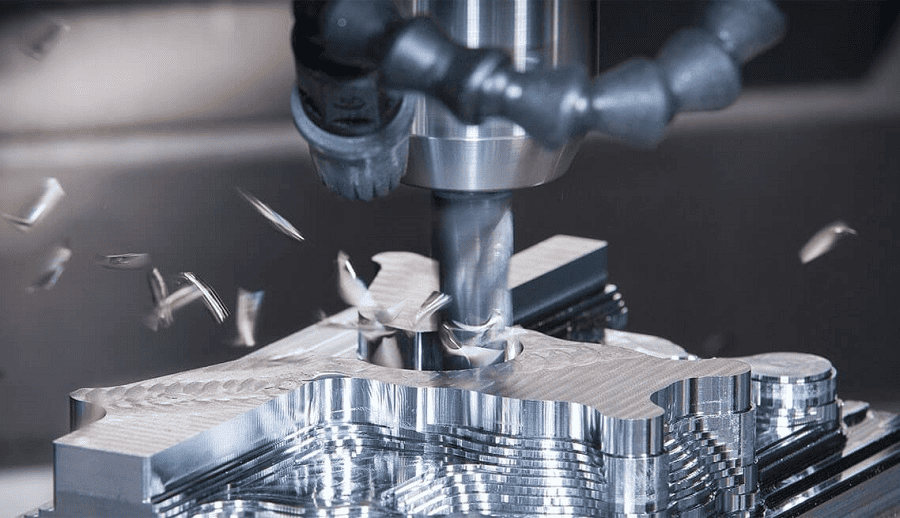
Aluminum is the most widely used metal in CNC machining, and for good reason. It offers a combination of low density, good mechanical strength, and exceptional machinability that few other materials can match at a comparable cost. For applications where weight efficiency and production speed are both priorities, aluminum is frequently the first material evaluated. Its versatility across industries, from aerospace to consumer electronics, reflects how well its properties align with a broad range of engineering requirements.
Main Properties of Aluminum
Aluminum's appeal in CNC machining comes from several properties working in combination rather than any single standout characteristic.
- Lightweight. Aluminum has a density of approximately 2.7 g/cm³, roughly one-third that of steel. This makes it the default choice for weight-sensitive applications where structural performance must be maintained without adding unnecessary mass.
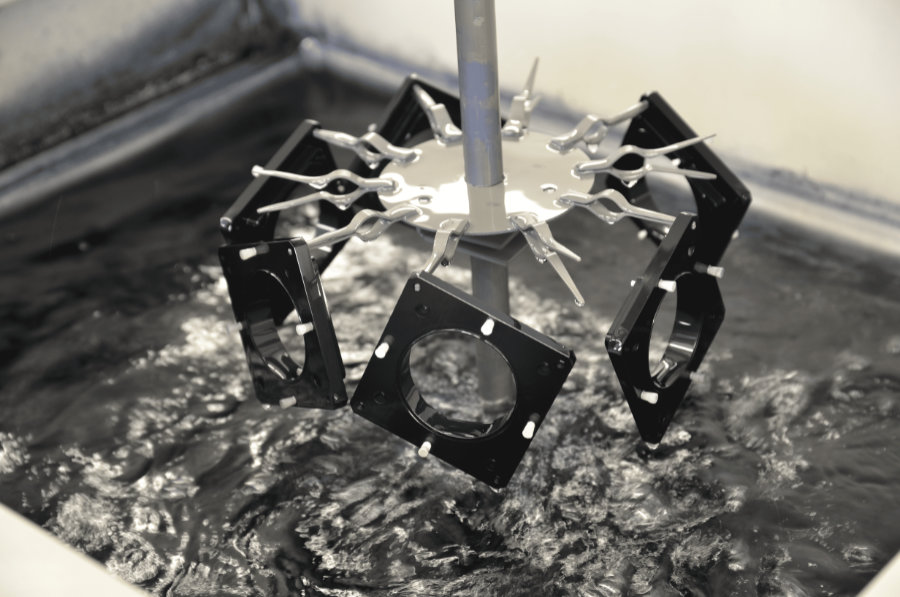
- Good corrosion resistance. Aluminum naturally forms a thin oxide layer on its surface when exposed to air. This passive layer provides meaningful protection against atmospheric corrosion without any additional treatment, though anodizing can enhance this significantly for harsher environments. [4]
- Excellent machinability. Aluminum cuts cleanly at high speeds with relatively low cutting forces. It generates less heat than steel or titanium during machining, which reduces tool wear and allows faster cycle times. This translates directly into lower per-part production costs at both low and high volumes.
- Good thermal and electrical conductivity. These properties make aluminum suitable for heat sinks, electrical enclosures, and thermal management components where heat dissipation is a functional requirement.
Common CNC Machining Grades
Not all aluminum alloys perform identically in machining or in service. Grade selection within the aluminum family matters as much as choosing aluminum over another material.
- 6061 Aluminum is the most commonly specified aluminum alloy in CNC machining. It offers a good balance of strength, corrosion resistance, and machinability, and responds well to anodizing and other surface treatments. Its yield strength of approximately 276 MPa in the T6 temper makes it suitable for structural brackets, frames, and enclosures across a wide range of industries.
- 7075 Aluminum is a higher-strength alloy with a yield strength approaching 503 MPa in the T6 temper, making it one of the strongest aluminum alloys available for machining. It is used where the strength demands exceed what 6061 can reliably deliver, such as in aircraft structural components and high-performance sporting equipment. The trade-off is slightly reduced corrosion resistance compared to 6061, which is typically managed through protective coatings.
Advantages
- Faster machining speeds. Aluminum can be machined at cutting speeds two to three times higher than mild steel, reducing cycle time and increasing throughput significantly.
- Lower machining costs. Faster speeds combined with reduced tool wear mean that aluminum parts cost less to produce per unit than equivalent parts in steel or titanium.
- Good strength-to-weight ratio. While aluminum is not as strong as steel in absolute terms, its strength relative to its weight is competitive for a wide range of structural applications.
- Easy anodizing and finishing. Aluminum accepts anodizing, powder coating, and chemical film treatments readily, giving engineers a broad range of surface finishes and corrosion protection options.
Limitations
- Lower wear resistance than steel. Aluminum surfaces wear more readily under abrasive or high-friction conditions, which limits their use in bearing surfaces and high-wear contact areas without additional surface treatment.
- Can deform under heavy loads. At the stress levels encountered in heavy industrial applications, aluminum's lower yield strength compared to steel means it may deform permanently where steel would remain elastic.
Typical Applications
Aluminum's property profile makes it the preferred choice across several demanding industries.
- Aerospace components. Wing ribs, fuselage frames, and structural brackets are where weight reduction is a primary design objective.
- Automotive parts. Brackets, housings, and suspension components where a reduced component mass improves fuel efficiency and handling.
- Electronics housings. Enclosures and heat sinks where thermal conductivity and lightweight construction are both required.
- Robotics parts. Structural arms and end-effector components were minimized, directly improving system speed and energy consumption.
Steel: High Strength and Durability
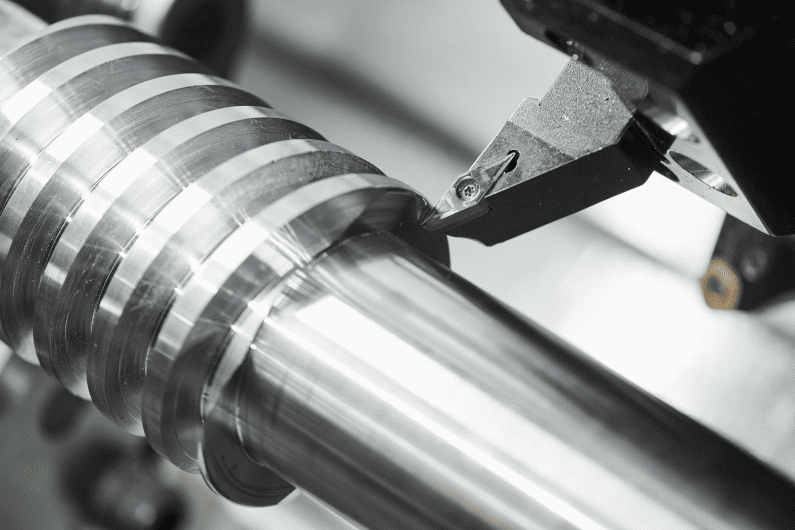
Steel remains the backbone of industrial CNC machining. Where aluminum offers weight advantages, steel delivers the tensile strength, hardness, and wear resistance that heavy-duty applications demand. It is the material of choice when a component must sustain high loads, resist surface degradation, or operate reliably over long service cycles under mechanical stress. The broad range of available steel grades gives engineers precise control over the trade-off between strength, toughness, corrosion resistance, and machinability.
Main Properties of Steel
- High tensile strength. Steel alloys span a wide strength range, from mild steels with yield strengths around 250 MPa to hardened tool steels exceeding 1,900 MPa. This range makes steel applicable across an exceptionally broad set of structural and mechanical applications [5].
- Excellent durability. Steel components maintain their mechanical properties under sustained cyclic loading, making them well-suited for fatigue-critical applications such as shafts, gears, and structural fasteners.
- Good wear resistance. Harder steel grades resist surface abrasion and contact wear far better than aluminum or most engineering plastics, which is critical in components that experience continuous sliding or impact contact.
- Suitable for high-load applications. The combination of high yield strength and good toughness means steel can absorb significant energy before fracturing, which is essential in safety-critical structural components.
Common CNC Machining Grades
Steel grade selection has a substantial impact on both machining behavior and finished part performance. The following grades are among the most frequently specified in CNC machining.
- Mild Steel 1018 is a low-carbon steel with good machinability and weldability. Its yield strength of approximately 370 MPa makes it suitable for general-purpose structural components, shafts, and fixtures where extreme strength is not required. It machines cleanly and is one of the more cost-effective steel options for high-volume production.
- Stainless Steel 304 is the most widely used stainless grade globally. It offers good corrosion resistance in most atmospheric and mildly chemical environments, with a tensile strength of approximately 515 MPa. It is specified across food processing, medical, and architectural applications where hygiene and corrosion resistance are priorities.
- Stainless Steel 316 adds molybdenum to the 304 composition, which significantly improves resistance to chloride-induced corrosion. This makes it the preferred grade for marine, pharmaceutical, and chemical processing environments where 304 would corrode unacceptably [6].
- Tool Steel D2 is a high-carbon, high-chromium cold work tool steel with exceptional hardness and wear resistance. It is used for cutting tools, dies, and punches where surface hardness and dimensional stability under load are critical. Its machinability is considerably lower than that of mild or stainless steels, which increases production time and tooling cost.
Advantages
- Stronger than aluminum. Steel's higher yield and tensile strength make it the correct choice for components that must sustain loads beyond aluminum's reliable range.
- Excellent structural performance. Steel maintains its mechanical properties across a wide temperature range, making it dependable in both ambient and moderately elevated temperature environments.
- Long service life. Properly specified and finished steel components resist fatigue, wear, and deformation over extended service cycles, reducing replacement frequency and lifecycle cost.
Limitations
- Heavier than aluminum. Steel's density of approximately 7.8 g/cm³ is nearly three times that of aluminum. In weight-sensitive applications, this is a significant penalty that must be justified by the strength requirement.
- Longer machining times. Steel requires lower cutting speeds and generates more heat during machining than aluminum, increasing cycle time and energy consumption per part.
- Higher tool wear. The hardness of steel accelerates cutting tool wear, particularly in harder grades such as D2 tool steel or hardened stainless, which drives up tooling costs over a production run.
Stainless Steel vs. Carbon Steel
These two steel families serve different needs, and selecting between them requires clarity on the operating environment and performance priorities.
| Property | Carbon Steel | Stainless Steel |
| Corrosion Resistance | Low | High |
| Tensile Strength | Medium to High | Medium to High |
| Machinability | Good | Moderate |
| Cost | Lower | Higher |
| Best Use Case | Structural, mechanical | Corrosive, hygienic environments |
Carbon steels deliver higher strength at lower cost and machine more readily, making them the practical choice for structural and mechanical components in non-corrosive environments. Stainless steels carry a cost premium but provide corrosion resistance that carbon steels simply cannot match in wet, chemical, or food-contact applications. The choice between them is rarely about strength alone [6].
Typical Applications
Steel's combination of strength, durability, and grade versatility supports a wide range of demanding applications.
- Industrial machinery. Shafts, gears, housings, and structural frames where sustained mechanical loads require high yield strength and fatigue resistance.
- Medical devices. Surgical instruments and implant components were made of 316 stainless steel, which provides both the necessary strength and the corrosion resistance required for sterilization cycles.
- Automotive components. Drivetrain parts, brackets, and structural reinforcements where steel's strength-to-cost ratio makes it the economical choice for high-load components.
- Food processing equipment. Conveyors, tanks, and processing surfaces where 304 or 316 stainless steel resists moisture, cleaning chemicals, and biological contamination.
Titanium: High Performance for Extreme Conditions
Titanium occupies a unique position in CNC machining. It is not the default choice for general engineering applications, nor is it selected on cost grounds. It is specified when the combination of high strength, low weight, corrosion resistance, and thermal stability must all be satisfied simultaneously, and when no other material can meet that combination within the design constraints. Those conditions arise frequently in aerospace, medical, and defense engineering, which is why titanium has become a standard material in those industries despite its higher cost and machining difficulty [7].
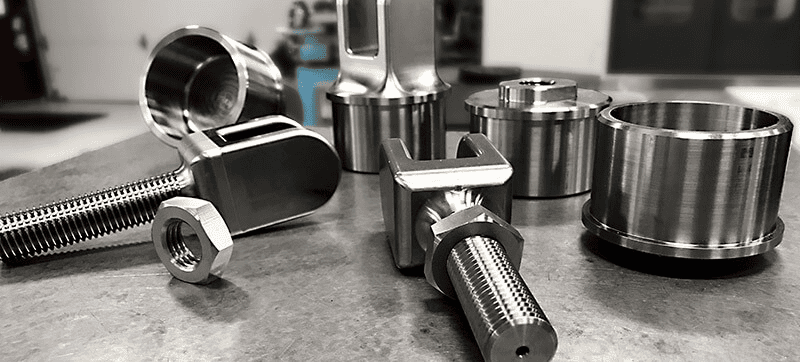
Main Properties of Titanium
- Extremely high strength-to-weight ratio. Titanium has a density of approximately 4.5 g/cm³, sitting between aluminum and steel, but its yield strength in common alloy grades exceeds that of many steels. This combination gives it one of the highest strength-to-weight ratios of any structural metal available for machining.
- Excellent corrosion resistance. Titanium forms a stable, adherent oxide layer that provides outstanding resistance to corrosion in seawater, oxidizing acids, and chloride environments where even stainless steel can fail. This passive layer reforms rapidly if damaged, giving titanium reliable long-term corrosion protection without surface coatings [8].
- Heat resistance. Titanium alloys retain meaningful strength at elevated temperatures, with some grades maintaining structural integrity up to 600°C. This thermal stability is critical in aerospace propulsion and industrial heat exchanger applications, where operating temperatures would degrade aluminum entirely.
- Biocompatibility. Titanium is non-toxic, non-allergenic, and integrates well with human bone tissue, a property known as osseointegration. This makes it the dominant material for permanent medical implants, including orthopedic devices and dental implants [9].
Common CNC Machining Grade
Titanium Grade 5 (Ti-6Al-4V) is by far the most widely machined titanium alloy, accounting for more than half of all titanium usage across industries. It contains 6 percent aluminum and 4 percent vanadium, which together produce a tensile strength of approximately 950 MPa in the annealed condition while maintaining the corrosion resistance and biocompatibility characteristic of commercially pure titanium. It is the standard grade for aerospace structural components, medical implants, and high-performance mechanical parts.
Advantages
- Stronger than aluminum at lower weight than steel. Ti-6Al-4V delivers tensile strength that exceeds common steel grades at roughly 60 percent of steel's density, which makes it uniquely positioned for applications where both weight and strength are constrained simultaneously.
- Performs well in harsh environments. Titanium's corrosion resistance in aggressive chemical and marine environments outlasts both aluminum and most stainless steel grades, reducing maintenance requirements and extending service life in demanding conditions.
- Long-term durability. Titanium components show excellent fatigue resistance under cyclic loading, which is particularly valuable in aerospace and medical applications where component failure carries serious consequences.
Limitations
- Expensive raw material. Titanium ore is relatively abundant, but the extraction and refining process, primarily the Kroll process, is energy-intensive and costly. Raw material prices for titanium alloys are typically five to ten times higher than equivalent aluminum alloys, which limits their use to applications where performance justifies the cost.
- Difficult to machine. Titanium has low thermal conductivity, which causes heat to concentrate at the cutting edge rather than dissipating into the workpiece or chip. It also has a tendency to work-harden and to spring back elastically during cutting, both of which accelerate tool wear and complicate achieving tight tolerances. Cutting speeds must be kept low, and coolant application must be aggressive to manage these effects.
- Slower production speeds. The machining constraints described above mean that titanium parts take significantly longer to produce than equivalent aluminum or steel parts. This increases per-part cost beyond the raw material premium alone and must be factored into production planning.
Typical Applications
Titanium's exceptional property combination justifies its cost in applications where performance requirements are non-negotiable.
- Aerospace components. Structural airframe parts, engine mounts, compressor blades, and fasteners where the strength-to-weight ratio and thermal resistance of titanium cannot be substituted.
- Medical implants. Orthopedic implants, spinal fixation devices, and dental implants require biocompatibility and long-term corrosion resistance in the body, which are mandatory requirements.
- Defense equipment. Armor plating, missile components, and naval hardware require corrosion resistance in marine environments, and high strength-to-weight performance is required.
- High-performance automotive parts. Connecting rods, valves, and exhaust components in motorsport and high-performance vehicles, where weight reduction at sustained high temperatures delivers measurable performance gains.
Material Comparison for CNC-Machined Parts
Selecting the right material becomes considerably more straightforward when the core properties are laid out side by side. The table below consolidates the key performance and practical variables for the materials covered in this guide. It is intended as a quick reference for narrowing down candidates before moving into detailed engineering analysis.
| Material | Strength | Weight | Corrosion Resistance | Machinability | Relative Cost | Common Applications |
| Aluminum 6061 | Medium | Very Light | Good | Excellent | Low | Aerospace brackets, electronics housings, automotive parts |
| Aluminum 7075 | High | Very Light | Moderate | Good | Low-Medium | Aircraft fittings, sporting equipment, and defense components |
| Mild Steel 1018 | Medium | Heavy | Low | Good | Low | Structural parts, shafts, and general machinery |
| Stainless Steel 304 | High | Heavy | Very Good | Moderate | Medium | Food processing, medical instruments, architectural components |
| Stainless Steel 316 | High | Heavy | Excellent | Moderate | Medium-High | Marine fittings, pharmaceutical equipment, and chemical processing |
| Tool Steel D2 | Very High | Heavy | Moderate | Difficult | Medium | Cutting tools, dies, punches, molds |
| Titanium Grade 5 | Very High | Medium | Excellent | Difficult | High | Aerospace structures, medical implants, defense hardware |
The table above makes several practical patterns immediately visible.
Best material for lightweight designs. Aluminum is the clear choice when minimizing component mass is a primary objective. Both 6061 and 7075 deliver useful structural strength at a density roughly one-third that of steel. For applications where strength demands exceed what aluminum can provide but weight still matters, titanium Grade 5 offers a compelling middle ground, though at a substantially higher cost [10].
Best option for corrosion resistance. Titanium and 316 stainless steel lead this category. Titanium's passive oxide layer performs reliably in chloride-rich and chemically aggressive environments where even 316 stainless steel can experience localized corrosion over time. For most industrial and marine applications, however, 316 stainless provides sufficient corrosion protection at a fraction of titanium's cost [11].
Most economical material. Aluminum 6061 and mild steel 1018 are the most cost-effective options across both raw material price and machining cost. Aluminum's faster machining speeds give it a per-part cost advantage in many scenarios, even when raw material prices are comparable. For high-volume production of non-corrosive structural parts, these two materials account for the majority of CNC-machined components produced globally [9].
Best material for high-stress environments. Tool steel D2 and titanium Grade 5 lead in absolute strength and performance under demanding mechanical and thermal conditions. D2 is the preferred choice for wear-critical tooling applications, while titanium Grade 5 is specified where high strength must be combined with low weight and corrosion resistance. Hardened steel grades cover the majority of high-stress industrial applications at considerably lower cost than titanium [12].
Conclusion
Material selection in CNC machining is ultimately an engineering trade-off. Aluminum delivers the best combination of machinability, weight efficiency, and cost for the majority of general-purpose applications. Steel covers the full spectrum of structural and wear-critical needs across industrial, medical, and automotive environments. Titanium stands apart for applications where strength, low weight, and corrosion resistance must coexist under demanding conditions, and where the cost premium is justified by performance requirements that no other material can meet.
There is no universal best material in CNC machining, only the right material for a given set of requirements. The decision should always start with the operating environment and mechanical demands, then work backward through machinability, finishing requirements, production volume, and budget. A component that is over-specified wastes cost; one that is under-specified fails in service. Getting that balance right, consistently, is what separates sound engineering practice from guesswork.
References
Ezugwu, E., & Wang, Z. (1997). Titanium alloys and their machinability—a review. Journal of Materials Processing Technology, 68(3), 262–274. https://doi.org/10.1016/s0924-0136(96)00030-1
Gece, G., & Bilgiç, S. (2010). A theoretical study of some hydroxamic acids as corrosion inhibitors for carbon steel. Corrosion Science, 52(10), 3304–3308. https://doi.org/10.1016/j.corsci.2010.06.005
Gogolewski, P., Klimke, J., Krell, A., & Beer, P. (2008). Al2O3 tools towards effective machining of wood-based materials. Journal of Materials Processing Technology, 209(5), 2231–2236. https://doi.org/10.1016/j.jmatprotec.2008.06.016
González-Hernández, A., Aperador, W., Flores, M., Onofre-Bustamante, E., Bermea, J. E., Bautista-García, R., & Gamboa-Soto, F. (2022). Influence of deposition parameters on structural and electrochemical properties of TI/TI2N films deposited by RF-Magnetron Sputtering. Metals, 12(8), 1237. https://doi.org/10.3390/met12081237
Jawahir, I., Brinksmeier, E., M’Saoubi, R., Aspinwall, D., Outeiro, J., Meyer, D., Umbrello, D., & Jayal, A. (2011). Surface integrity in material removal processes: Recent advances. CIRP Annals, 60(2), 603–626. https://doi.org/10.1016/j.cirp.2011.05.002
Krichen, A., Kacem, A., & Hbaieb, M. (2010). Blank-holding effect on the hole-flanging process of sheet aluminum alloy. Journal of Materials Processing Technology, 211(4), 619–626. https://doi.org/10.1016/j.jmatprotec.2010.11.018
Pek, Y. S., Wan, A. C., & Ying, J. Y. (2009). The effect of matrix stiffness on mesenchymal stem cell differentiation in a 3D thixotropic gel. Biomaterials, 31(3), 385–391. https://doi.org/10.1016/j.biomaterials.2009.09.057
Ren, Y., Li, Y., Shen, J., Wu, S., Liu, L., & Zhou, G. (2023). Revealing the corrosion resistance of 316 l stainless steel by an in situ grown nano oxide film. Nanomaterials, 13(3), 578. https://doi.org/10.3390/nano13030578
Song, C., Dong, B., Zhang, S., Yang, H., Liu, L., Kang, J., Meng, J., Luo, C., Wang, C., Cao, K., Qiao, J., Shu, S., Zhu, M., Qiu, F., & Jiang, Q. (2024). Recent progress of Al–Mg alloys: Forming and preparation process, microstructure manipulation, and application. Journal of Materials Research and Technology, 31, 3255–3286. https://doi.org/10.1016/j.jmrt.2024.07.051
Standard test methods for tension testing of metallic materials. (n.d.). https://www.astm.org/e0008_e0008m-22.html
Tan, Y. (2011). Understanding the effects of electrode inhomogeneity and electrochemical heterogeneity on pitting corrosion initiation on bare electrode surfaces. Corrosion Science, 53(5), 1845–1864. https://doi.org/10.1016/j.corsci.2011.02.002
Zhu, H., & Li, J. (2024). Advancements in corrosion protection for aerospace aluminum alloys through surface treatment. International Journal of Electrochemical Science, 19(2), 100487. https://doi.org/10.1016/j.ijoes.2024.100487