Application of Manipulator in CNC Lathe

Table of Contents

Product advantages:

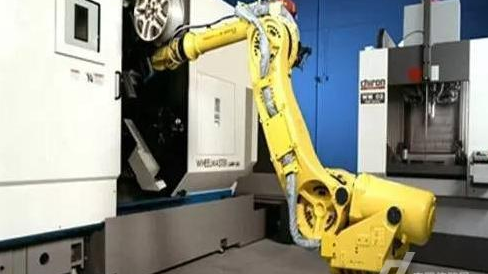
  1. By using Boris CNC lathe manipulator instead of manual operation, one person can work on 6-10 CNC lathes, which greatly reduces the need for staff, reduces work costs, and increases corporate profits.
  2. Avoid occupational injuries and reduce business risks;
  3. The machine tool manipulator can realize 24-hour continuous production and improve production efficiency
  4. Automatic production can avoid human operation errors, thus ensuring the stability of product quality;

Main sales: Most customers can take back all CNC robotic arms within 10-18 months

Application place:

  1. Most of the processed parts of CNC lathe manipulators are metal parts (steel, copper, aluminum, nickel, alloy). Strictly speaking, as long as it is an industry that uses metal parts, a lathe must be used
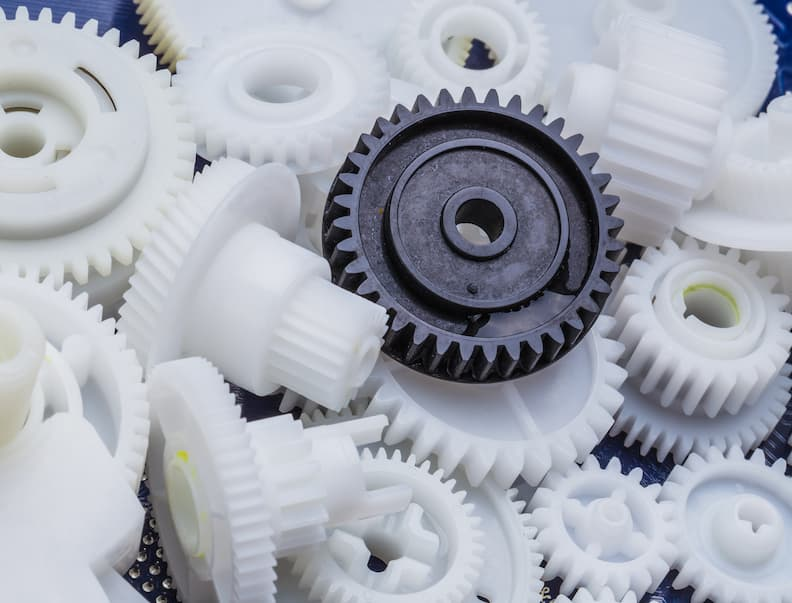
  2. Application industries include: household appliances manufacturing, auto parts, motorcycle parts, LED parts (flashlights), computer parts, communication equipment (mobile phones, tablet computers) parts, various instruments, electronic products (electronic cigarettes), gear industry (gears) ), watch industry (watch case), etc.

3. At this stage, it is suitable to configure machine tool manipulators for large-volume CNC lathes with single-variety machining parts:

4. In the next stage, in-depth research and development is suitable for a variety of medium-batch CNC lathe manipulators, that is, the manipulator can quickly replace fixtures, quickly replace silos, and quickly demonstrate and debug, etc.

Boost your business with our high quality services

Lasted Posts

CMM Inspection for CNC Parts: How It Works

CMM inspection has become the standard method for verifying dimensional and geometric conformance in CNC-machined parts, providing a level of accuracy and documentation that manual inspection methods cannot match.

CNC Milling Cutting Tools: End Mills, Face Mills, and More

Selecting the right CNC milling cutting tool is fundamental to achieving precision, efficiency, and cost-effective production. End mills handle the majority of profiling, slotting, and contouring operations with remarkable versatility, while face mills excel at producing flat, accurately finished surfaces across wide areas.

CNC Lathe Operations: Facing, Turning, Threading, and Grooving

CNC lathe machining is built on four interdependent operations: facing, turning, threading, and grooving. Each serves a distinct geometric and functional purpose, yet none operates in isolation. Facing establishes the axial reference, turning defines the cylindrical form, and threading creates the mechanical engagement features that hold assemblies together.

CNC Machining Cost: Key Factors and How to Reduce It

CNC machining costs are rarely the result of a single variable. As the sections above demonstrate, material selection, part design complexity, setup and tooling investment, and production volume each contribute independently to the final cost of a machined component, and their interactions compound quickly when multiple cost drivers are present simultaneously.

Ask For A Quick Quote

We will contact you within 1 working day, please pay attention to the email with the suffix “@partstailor.com”

Get Free Sample!

Only 2 free sample-making opportunities left!
We will keep your designs private.

Making sample consultation

We will contact you within 1 working day, please pay attention to the email with the suffix “@partstailor.com”

You can leave any questions here

We will contact you within 1 working day, please pay attention to the email with the suffix “@partstailor.com”