
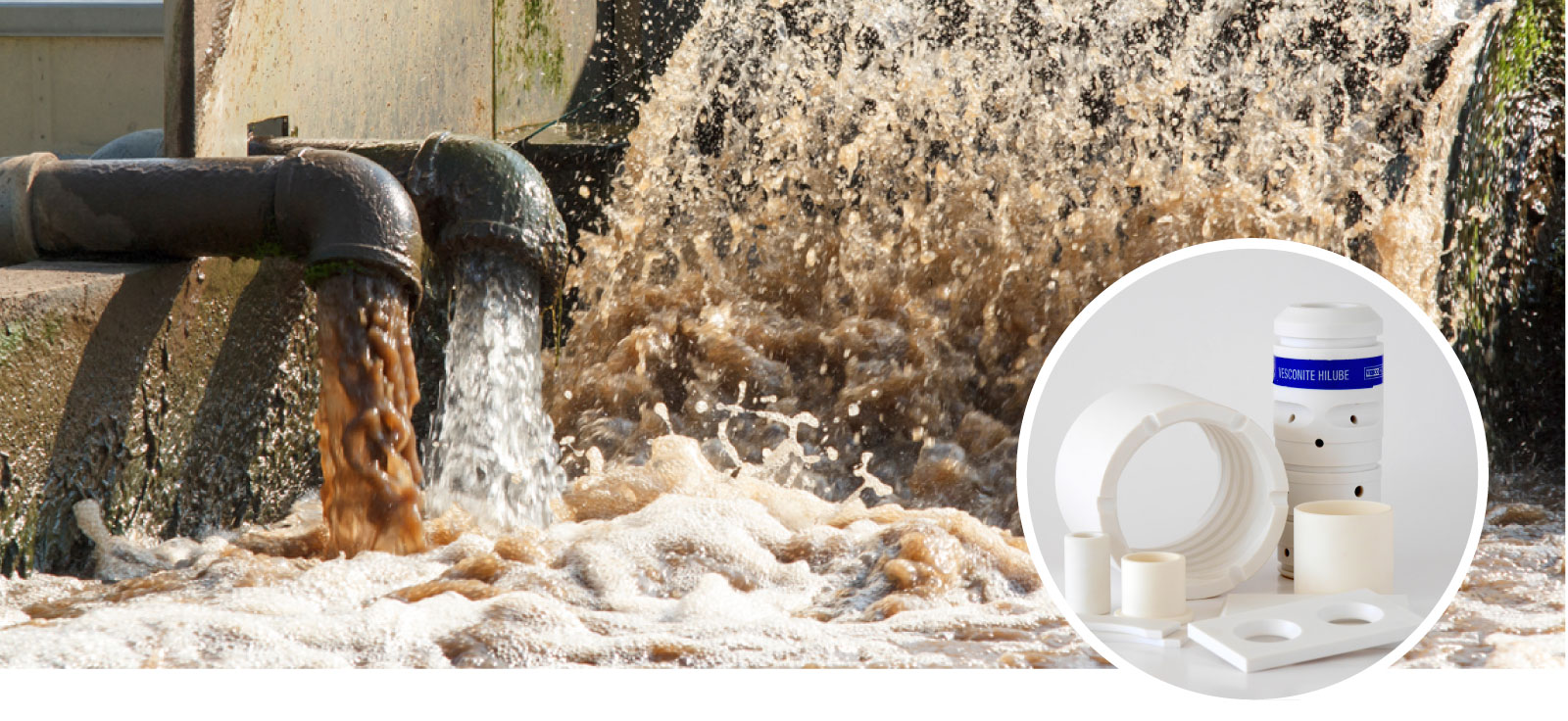
Vesconite vs UHMWPE vs POM vs PEEK: How to Choose Materials for Wear-Resistant Components
Wear-resistant components need materials that can handle friction, pressure, and repeated contact without wearing out too quickly. Choosing the right material for bushings, bearings, rollers, and wear strips can reduce maintenance, prevent equipment failure, and extend service life.
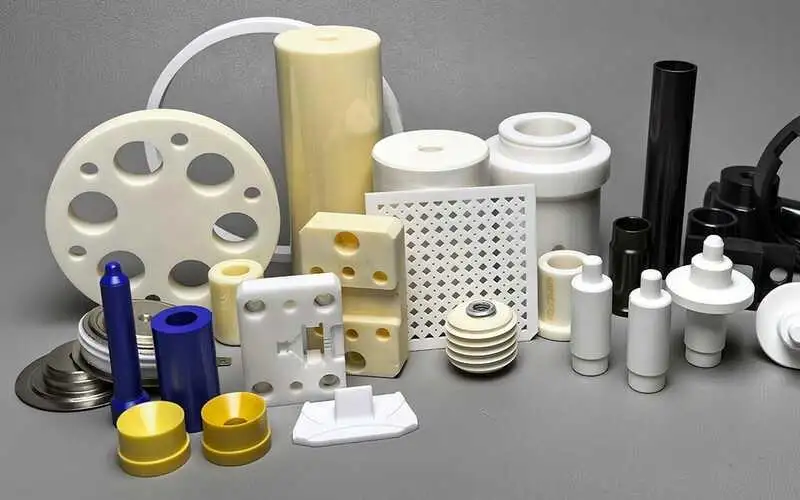
Vesconite, ultra-high-molecular-weight polyethylene (UHMWPE), polyoxymethylene (POM), and polyether ether ketone (PEEK) offer different advantages. Vesconite is designed for bearing applications, UHMWPE offers excellent abrasion resistance, POM provides stiffness and dimensional accuracy, and PEEK maintains its strength at high temperatures. Understanding these differences helps engineers select the most suitable wear-resistant plastic material for each application.
Key Factors When Selecting Wear-Resistant Materials
The right wear-resistant material depends on the conditions in which a component operates. Friction, load, temperature, moisture, and chemical exposure all affect how quickly a material wears and how long it lasts. Engineers should assess these factors together rather than choosing a material based on wear resistance alone.
Friction and Abrasion
Friction occurs when two surfaces move against each other, while abrasion happens when hard particles or rough surfaces remove material. A conveyor guide exposed to sand and grit, for example, needs good abrasion resistance. A bearing that supports a rotating shaft needs low friction and reliable wear performance during repeated movement.
Load and Temperature
A material must support the applied load without excessive deformation. Some plastics can gradually deform under a constant load, a process known as creep. Temperature can increase this risk and reduce mechanical strength. PEEK is often suitable for higher-temperature applications, while UHMWPE is better suited to lower-temperature operating conditions.
Moisture and Chemical Exposure
Water absorption can cause some plastics to swell, changing their dimensions and reducing clearance between moving parts. This is especially important for underwater bearings and pump components. Vesconite has low water absorption, while UHMWPE also offers strong resistance to moisture. Chemical compatibility must be checked separately because resistance varies by material, chemical, concentration, and temperature. [1]
Dimensional Stability and Cost
Dimensional stability matters when a component must maintain tight tolerances during use. POM is often suitable for precision parts because of its stiffness and dimensional accuracy. Vesconite can be a strong option for wet bearing applications where low swelling and resistance to creep are important.
Material cost should also be assessed alongside service life. A lower-cost plastic may be suitable for a lightly loaded guide rail, while a more expensive grade may be justified for a component that is difficult to replace. Friction and wear also depend on contact pressure, sliding speed, surface finish, and temperature, so testing under actual operating conditions can help confirm the best choice. [2]
Comparing Four Wear-Resistant Materials
Vesconite, UHMWPE, POM, and PEEK are used in wear-resistant components, but each suits different operating conditions. The best choice depends on the type of wear, the load, the working temperature, and the need for dimensional stability.
Vesconite
Vesconite is a bearing material developed for applications that need low friction, good wear resistance, and dimensional stability. It absorbs little water, making it useful in wet environments where swelling can affect bearing clearance. Its bearing properties can also help reduce the need for external lubrication in suitable applications. [3]
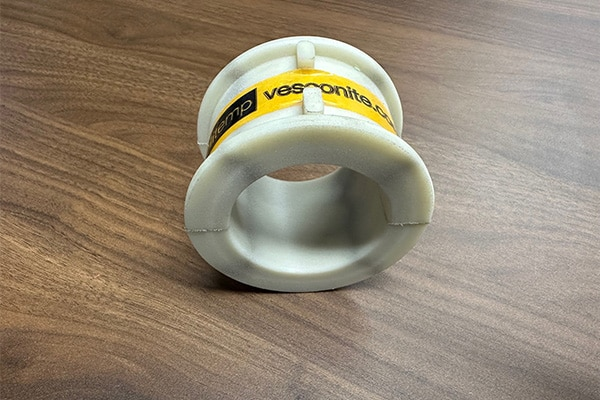
Vesconite is commonly used for industrial bearings, bushings, wear pads, and shaft sleeves. For example, a bushing in a pump or marine system may benefit from its low water absorption and sliding performance. It can also suit equipment exposed to moisture where stable dimensions are important.
However, Vesconite is not automatically the best choice for every bearing. Its suitability depends on the applied load, shaft speed, temperature, and contact conditions. Engineers should check the relevant product specifications before using it in high-speed or high-temperature systems.
UHMWPE
Ultra-high-molecular-weight polyethylene (UHMWPE) is known for its excellent abrasion resistance, toughness, and low friction. It can withstand repeated contact with rough surfaces and resist damage from many abrasive materials. These properties make it useful in equipment that handles bulk materials, especially where parts slide against one another.
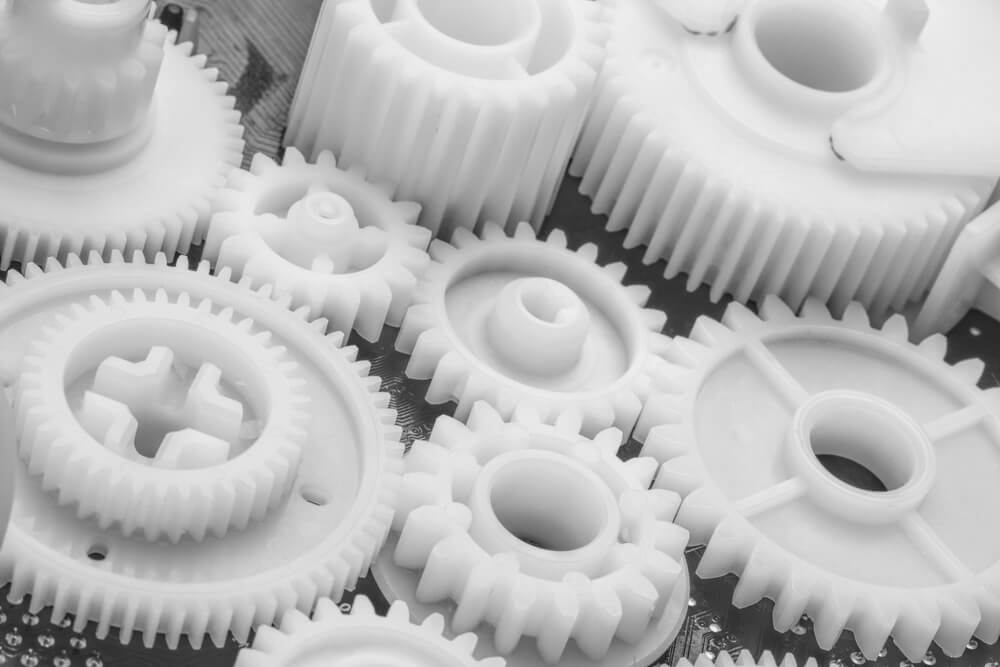
Ultra-high-molecular-weight polyethylene
Common applications include conveyor liners, guide rails, chute linings, and material-handling components. For example, a UHMWPE liner inside a bulk-material chute can reduce friction as products move across the surface. Its toughness also helps it withstand repeated impacts better than many more rigid plastics.
However, UHMWPE has limited stiffness compared with POM and PEEK. Under sustained loads, it can deform over time, while higher temperatures can further reduce its load-bearing performance. It is therefore best suited to applications where abrasion resistance and impact strength matter more than high stiffness or tight dimensional tolerances. [4]
POM (Acetal)
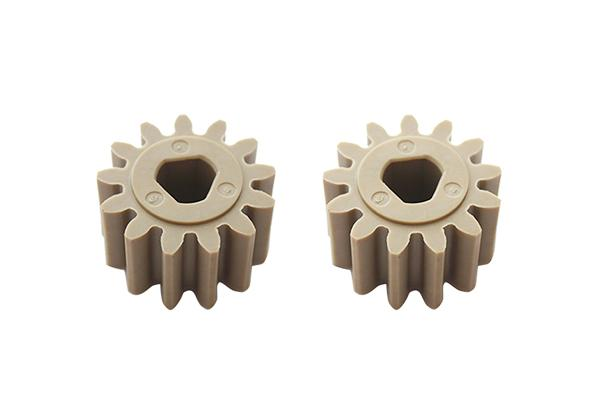
Polyoxymethylene (POM), also called acetal, is a stiff engineering plastic valued for its dimensional accuracy, low friction, and good wear performance. It can be machined into precise parts and is also suitable for injection molding, making it a practical choice for components produced in large quantities.
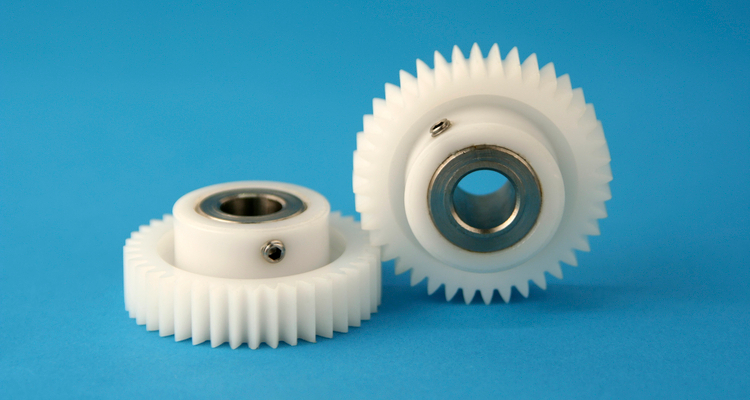
POM is commonly used in precision gears, rollers, conveyor components, and sliding parts. For example, plastic gears in an automated machine can benefit from POM's stiffness and dimensional stability, which help maintain accurate movement during operation.
However, POM is less suitable for demanding high-temperature applications than PEEK. Friction can also generate heat during operation, increasing wear and softening the material under severe conditions. Research on POM gears and sliding contacts shows that wear rates can change sharply with temperature, load, and sliding speed. Engineers should therefore check these conditions before selecting POM for heavily loaded or continuously moving components. [5]
PEEK
Polyether ether ketone (PEEK) is a high-performance engineering plastic that combines mechanical strength, chemical resistance, and high-temperature capability. It can retain useful mechanical properties in conditions that exceed the practical limits of many standard engineering plastics. However, its wear performance depends on the specific grade and operating conditions.
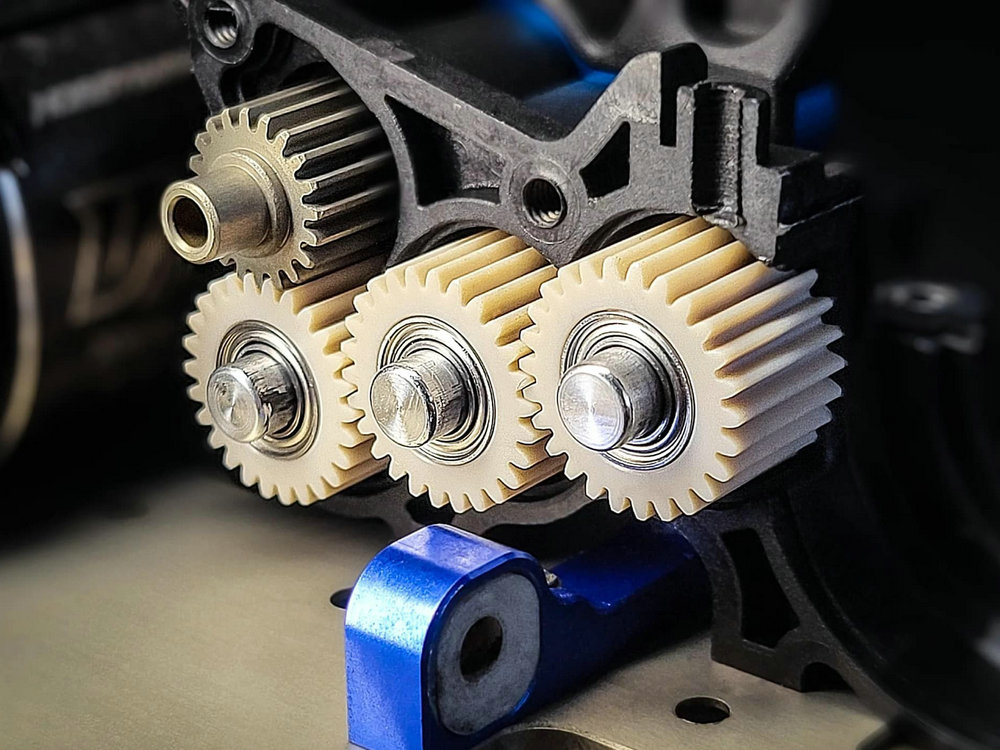
PEEK is used in demanding industrial bearings, seals, bushings, and other components exposed to heat or mechanical stress. For example, a bearing in industrial equipment operating at elevated temperatures may benefit from PEEK's ability to retain strength where POM or UHMWPE may soften or deform.
The main drawback is its higher material cost. Standard PEEK may also offer different friction and wear performance from grades containing additives such as carbon fiber, graphite, or PTFE. These modifications can improve wear resistance or reduce friction, depending on the formulation. For this reason, engineers should compare application-specific PEEK grades rather than assuming every PEEK product performs equally well. [6]
Material Comparison
Vesconite, UHMWPE, POM, and PEEK differ in wear resistance, friction, stiffness, and heat tolerance. The table below provides a general comparison to help narrow the options. Actual performance depends on the material grade, component design, and operating conditions.
| Property | Vesconite | UHMWPE | POM (Acetal) | PEEK |
|---|---|---|---|---|
| Wear resistance | Good for bearing applications | Excellent against abrasion | Good for many sliding parts | Good to excellent in suitable wear grades |
| Friction | Low | Low | Low | Varies by grade |
| Load-bearing capability | Good in suitable bearing conditions | Limited under sustained high loads | Good for moderate loads | High |
| Temperature resistance | Check grade specifications | Best for relatively low temperatures | Moderate | Excellent |
| Dimensional stability | Good, including in wet conditions | Lower under heat and sustained loads | Good | Good at elevated temperatures |
| Typical applications | Bushings, bearings, wear pads | Conveyor liners, guide rails, chute liners | Gears, rollers, precision parts | High-performance bearings, seals, wear parts |
| Relative material cost | Application and grade dependent | Usually low to moderate | Usually moderate | High |
What the Comparison Means in Practice
The table is a starting point, not a final material ranking. Each material has strengths that become more important under certain operating conditions.
- Choose Vesconite when a bearing or bushing needs low friction, low water absorption, and reliable performance in wet conditions.
- Choose UHMWPE when abrasion resistance, impact strength, and low friction are priorities, such as in conveyor liners and material-handling equipment.
- Choose POM when a component needs stiffness, accurate dimensions, and good machinability, such as a precision gear or roller.
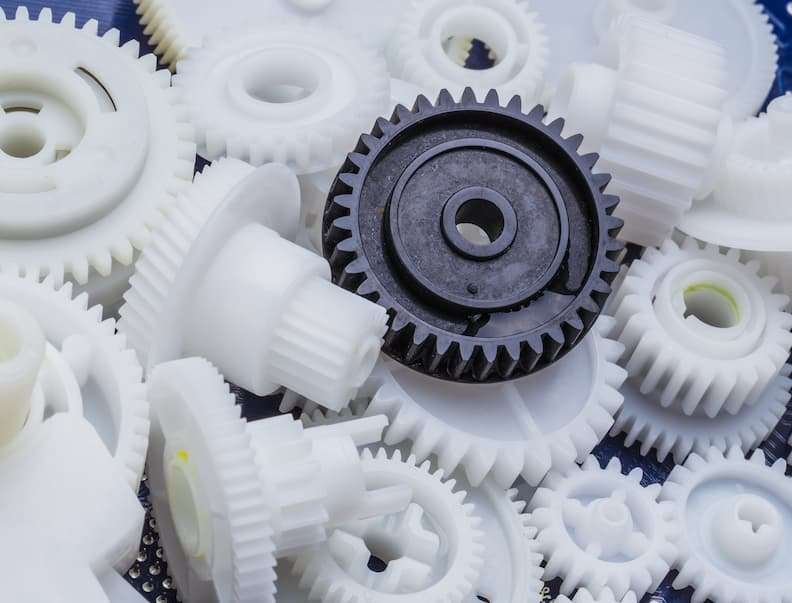
- Choose PEEK when high temperatures, mechanical loads, or demanding operating conditions justify the higher material cost.
Wear performance depends on factors such as contact pressure, sliding speed, surface finish, temperature, and the properties of the opposing surface. Research comparing polymer materials also shows that friction and wear can vary significantly with test conditions. [7]
For this reason, engineers should compare technical data for the specific grades under consideration. Where failure would cause costly downtime, testing the material under representative operating conditions can provide a more reliable basis for selection than general property tables alone.
How to Choose the Right Material for Your Application
Choose a wear-resistant material based on the actual working conditions, not just its listed properties. A conveyor liner, a precision gear, and an industrial bearing face different types of wear and mechanical stress. The following factors can help you select a suitable material and avoid unnecessary replacement costs.
Operating Conditions
Start by checking the working temperature, applied load, sliding speed, and contact pressure. These factors affect friction, heat buildup, deformation, and wear.
For example, UHMWPE may suit a conveyor liner operating at a moderate temperature, while PEEK may be a better option for a bearing exposed to higher temperatures and mechanical stress. Always check the material's rated limits for the intended application.
Type of Wear
Identify how the component will wear during operation. The main types include:
- Abrasive wear: Hard particles or rough surfaces remove material. UHMWPE is worth considering for conveyor liners and chute surfaces exposed to abrasive materials.
- Sliding wear: Two surfaces move against each other. Vesconite may suit bushings and bearings, while POM can work well in sliding components that require accurate dimensions.
- Repeated contact and impact: Components exposed to repeated impacts need toughness as well as wear resistance. UHMWPE may suit material-handling equipment where impact resistance is important.
These are starting points rather than fixed rules. The best choice depends on the contact pressure, surface finish, lubrication, and operating speed.
Environmental Exposure
Moisture, chemicals, dust, and outdoor conditions can affect material life. A component operating underwater has different needs from one exposed to dry dust or cleaning chemicals.
- Wet environments: Consider Vesconite or UHMWPE when low water absorption and moisture resistance are important.
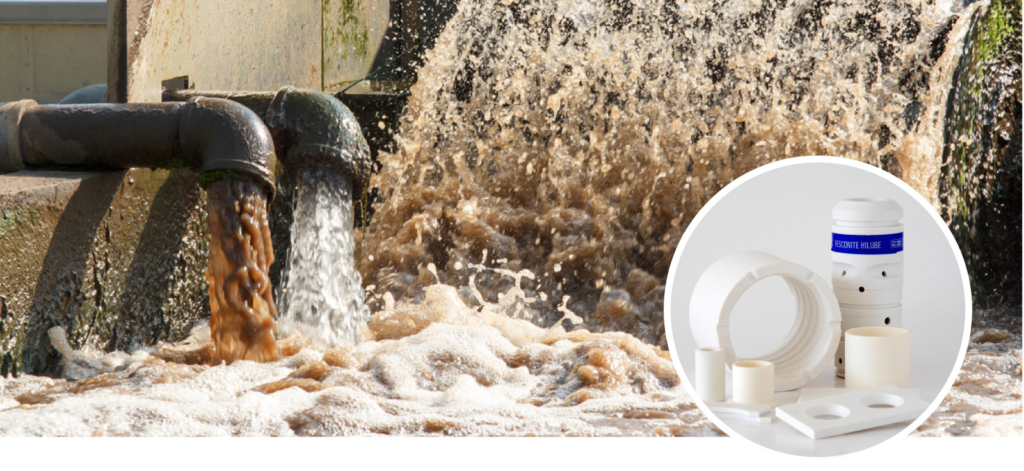
Vesconite for wet environments
- Chemical exposure: Check compatibility with the exact chemical, its concentration, and the operating temperature before selecting a material.
- Dusty environments: UHMWPE may suit liners and guides exposed to abrasive particles, provided the component can handle the applied load.
Material selection should account for both the polymer and its surrounding environment. [8]
Dimensional Stability and Machining
If a component must maintain tight tolerances, consider its stiffness, thermal expansion, and tendency to deform under continuous load. POM is often suitable for precision gears and rollers, while UHMWPE may need more careful design to limit deformation under sustained pressure.
Machining requirements also matter. POM is commonly used for accurately machined components, while PEEK can suit precision parts that must withstand higher temperatures. The selected grade and machining process should meet the component's tolerance requirements.
Budget and Service Life
The lowest purchase price does not always result in the lowest operating cost. A material that wears quickly may require frequent replacement, increasing labor costs and equipment downtime.
Compare the initial material cost with expected service life, maintenance needs, and replacement difficulty. PEEK may justify its higher cost in demanding conditions, while UHMWPE or POM may provide better value in less demanding applications.
Which Material Should You Choose?
Use these examples as a starting point when narrowing your options:
| Application | Material to consider | Main reason |
|---|---|---|
| Wet industrial bearing or bushing | Vesconite | Low water absorption and bearing performance |
| Abrasive conveyor liner | UHMWPE | High abrasion resistance and toughness |
| Precision gear or roller | POM | Stiffness and dimensional accuracy |
| High-temperature bearing | PEEK | Mechanical strength at elevated temperatures |
These recommendations are not universal. Friction and wear can change with temperature, load, speed, and lubrication, even when the same polymer is used. Research on PEEK, for example, shows that contact temperature and sliding conditions can affect wear performance. [9]
Before finalizing a material, compare the manufacturer's technical data with the actual operating conditions. For critical components, testing the selected grade under realistic loads and speeds can help confirm its suitability.
Conclusion
Vesconite, UHMWPE, POM, and PEEK each offer useful properties for wear-resistant components. Vesconite suits many bearing applications, UHMWPE performs well in abrasive environments, POM supports precise components, and PEEK is suited to demanding applications involving high temperatures and mechanical stress.
No single material is best for every application. Engineers should assess the load, sliding speed, temperature, type of wear, environmental exposure, and dimensional requirements before making a choice. Comparing material grades and manufacturer specifications can help prevent premature wear, reduce maintenance costs, and extend component service life.