
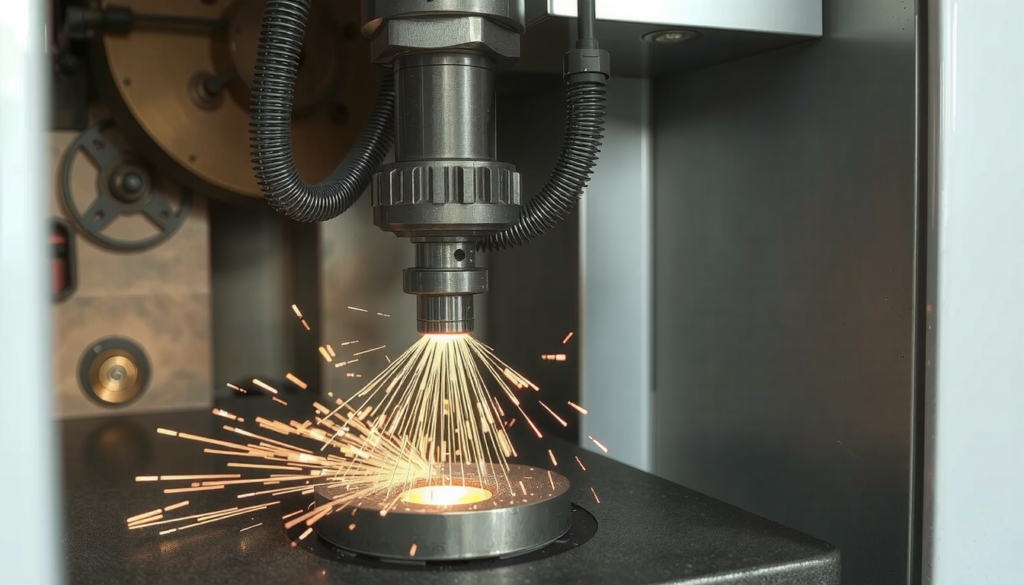
CNC machining delivers precision, repeatability, and geometric capability that few other manufacturing processes can match. However, it is also a cost-intensive process, and without a clear understanding of what drives those costs, budgets can be significantly underestimated at the design stage. For manufacturers, engineers, and product designers alike, understanding CNC machining costs is not just a procurement concern; it is a design discipline.
How Much Does CNC Machining Cost
Machining costs are rarely determined by a single variable. Material selection, part geometry, tolerance requirements, production volume, and secondary finishing operations all contribute to the final price of a machined component. The decisions made during the design phase have a disproportionate influence on these costs, often more so than any negotiation at the quoting stage. This article examines the key cost drivers in CNC machining and identifies practical strategies to reduce expenditure without compromising part quality or functional performance.
Material Selection and Its Impact on CNC Machining Cost
Material choice is one of the earliest and most consequential decisions in the CNC machining process. It affects not only the raw material procurement cost but also the cutting tools required, the cycle time needed to machine the part, and the rate at which those tools wear out. A material selected purely on performance grounds without considering its machinability can increase total part cost substantially beyond what the raw material price alone would suggest.
Why Material Choice Matters
Every material behaves differently under cutting conditions. Some materials machines quickly with minimal tool wear, keeping cycle times short and tooling costs low. Others generate high cutting forces, require slower speeds, and wear inserts rapidly, all of which add cost per part. When multiplied across a production batch, these differences become significant. Material cost is therefore not just the price per kilogram of stock; it is the aggregate of procurement cost, machining time, and tooling consumption combined. [1]
Cost Differences Between Common Materials
The cost profile of frequently used CNC machining materials varies considerably:
- Aluminum: The most cost-effective material to machine in most applications. Aluminum alloys such as 6061 and 7075 cut at high speeds with low cutting forces, producing excellent surface finishes with minimal tool wear. Raw material cost is moderate, and cycle times are short, making aluminum the default choice for cost-sensitive applications where strength-to-weight ratio matters.
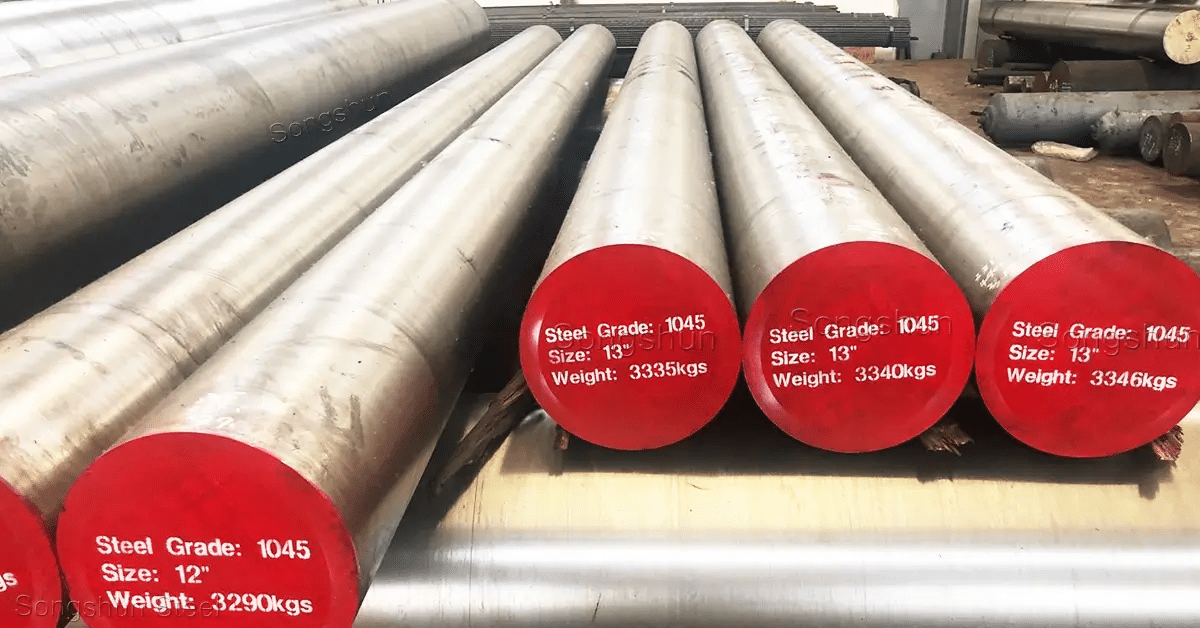
- Mild steel: Moderately priced as a raw material and reasonably machinable under standard cutting conditions. Mild steel is a cost-effective choice for structural components where corrosion resistance is not required, and heat treatment is not specified.
- Stainless steel: More expensive than mild steel in both material cost and machining cost. Grades such as 304 and 316 work-harden during cutting, requiring sharp inserts, moderate cutting speeds, and consistent feed rates to avoid rubbing and premature tool failure. Cycle times are longer than for aluminum or mild steel for equivalent part geometries.
- Titanium: Among the most expensive materials to machine. Titanium alloys have low thermal conductivity, meaning heat generated during cutting concentrates at the tool edge rather than dissipating into the chip. This accelerates tool wear dramatically, increases tooling costs, and requires slower cutting speeds that extend cycle time. A titanium component can cost three to five times more to machine than an equivalent aluminum part.
- Engineering plastics: Materials such as Delrin, PEEK, and nylon are inexpensive to machine in terms of cutting forces and tool wear, but require careful fixturing to manage workpiece deflection and thermal expansion during cutting. For low-load applications, they offer a cost-effective alternative to metallic components. [2]
How Material Machinability Influences Cost
Machinability directly governs cycle time and tooling consumption, both of which are significant cost drivers:
- Easier-to-machine materials allow higher cutting speeds and feed rates, reducing cycle time per part and increasing machine utilization.
- Hard materials require slower parameters, more frequent insert changes, and occasionally specialized tooling grades, all of which add cost.
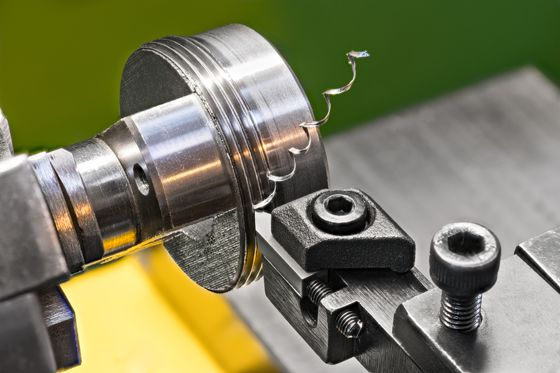
- Materials that generate long, stringy chips, such as some stainless steel grades, require additional attention to chip management, potentially increasing operator intervention time.
A useful comparison is machining a simple mounting bracket in aluminum 6061 versus grade 5 titanium (Ti-6Al-4V). The aluminum bracket might be completed in 8 minutes with a single insert lasting through 50 or more parts. The titanium equivalent, with identical geometry, may require 35 to 40 minutes of cycle time with insert changes every 10 to 15 parts, increasing both machine time cost and tooling cost by a factor of four or more.
Cost Reduction Tips
- Match material performance to actual requirements: Specifying titanium or high-grade stainless steel for a component that will see moderate loads in a benign environment is an avoidable cost. Selecting a material with adequate rather than excessive performance characteristics is one of the simplest cost reduction decisions available at the design stage.
- Consider alternative alloys: In many cases, a lower-alloy steel with appropriate heat treatment, or an aluminum alloy with a suitable anodizing treatment, delivers comparable service performance at significantly lower machining cost than a premium alloy.
- Evaluate engineering plastics: For non-structural components operating in chemical or electrical environments, PEEK or Delrin may meet all functional requirements at a fraction of the cost of a metallic equivalent.
Part Design Complexity and Machining Time
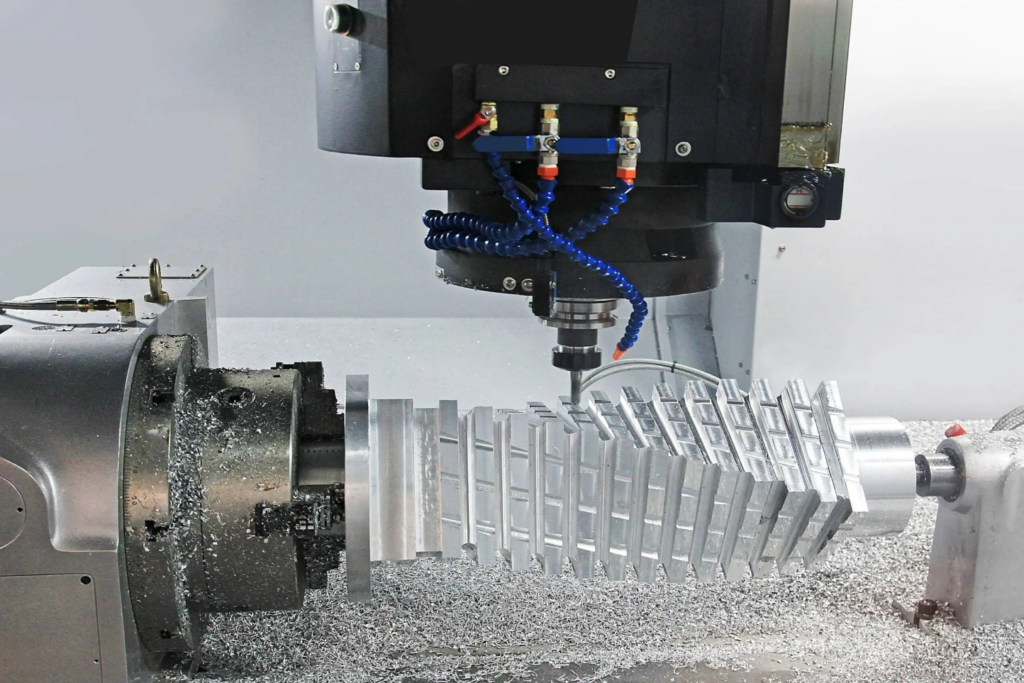
After material selection, part design complexity is the single greatest determinant of CNC machining cost. Geometry drives everything downstream: the number of setups required, the tools needed, the cycle time consumed, and the inspection effort at the end of the process. A part that is over-engineered geometrically, carrying features that serve no functional purpose, costs more to produce at every stage without delivering any additional performance benefit.
How Design Affects Manufacturing Cost
Complex geometries require more machine operations, more tool changes, and, in many cases, additional setups where the part must be repositioned and re-fixtured to access features from different orientations. Each additional setup introduces its own cost in machine time, labor, and potential for accumulated positional error. A part that can be completed in a single setup on a three-axis machining center will almost always cost less to produce than a geometrically similar part requiring two or three setups, even if the raw material and tolerances are identical. [3]
Design Features That Increase Costs
Certain geometric features consistently drive up machining cost and should be used only where functionally justified:
- Deep pockets: Machining deep pockets requires long-reach tooling, which is less rigid and more prone to vibration, necessitating slower cutting parameters and more passes to achieve the required finish. Depth-to-width ratios beyond 3:1 increase cost noticeably; ratios beyond 6:1 can make a feature disproportionately expensive relative to its size.
- Thin walls: Sections below 1.5 mm in metal or 2.5 mm in plastic deflect under cutting forces, requiring reduced depths of cut, slower feed rates, and careful toolpath sequencing to avoid scrapping the part. Each of these adjustments adds cycle time.
- Tight internal corners: CNC milling tools are cylindrical, meaning internal corners can only be produced to a minimum radius equal to the tool radius. Specifying sharp internal corners either requires EDM as a secondary operation or very small end mills run at low feed rates, both of which are expensive. Designing corners with the largest acceptable radius reduces cost directly.
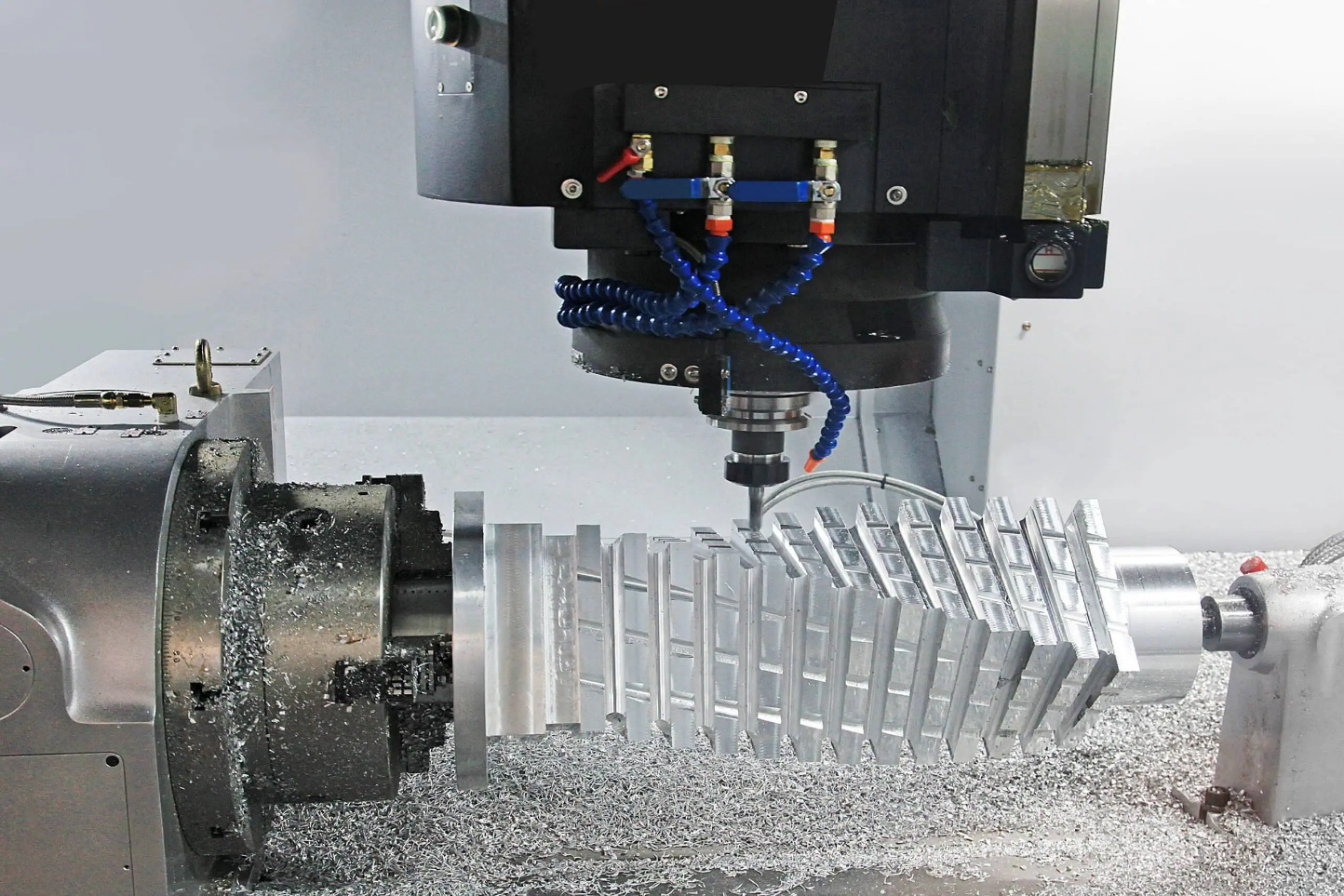
- Complex contours: Sculptured surfaces and complex three-dimensional contours require five-axis machining or multiple three-axis setups with specialized ball-nose tooling. Both approaches increase programming time, cycle time, and machine hourly rate compared to prismatic geometries.
- Undercuts: Features that are not accessible from standard tool orientations require specialized undercut tooling, additional setups, or alternative processes such as broaching. Where undercuts are not functionally essential, eliminating them at the design stage removes a disproportionate cost contributor. [4]
The Role of Tolerances and Surface Finishes
Tolerances and surface finish specifications have a direct and measurable impact on machining cost:
- Tight tolerances: Tolerances tighter than IT7 require slower finishing passes, more frequent in-process measurement, and greater attention to thermal stability and tool wear management. Each of these adds cost. A tolerance of ±0.005 mm on a non-critical feature costs significantly more to produce and verify than ±0.05 mm, with no functional benefit if the feature does not require that precision.
- Fine surface finishes: Achieving Ra values below 0.8 µm typically requires dedicated finishing passes at low feed rates, and in some cases secondary operations such as grinding or honing. Specifying Ra 0.4 µm on a surface that will be painted or covered adds unnecessary cost.
- Inspection cost: Tighter tolerances require more rigorous inspection, including CMM measurement and documented results. Inspection time and documentation add to the total part cost, particularly in low-volume production where setup and inspection costs cannot be amortized across a large batch.
Example
A useful illustration is comparing a simple rectangular aluminum housing with a housing of similar external dimensions but incorporating multiple internal pockets, curved walls, counterbored holes at compound angles, and several features toleranced to ±0.01 mm. The simple housing may require one setup, three tools, and 15 minutes of cycle time. The complex version may require three setups, eight tools, 90 minutes of cycle time, and a CMM inspection routine. The machining cost of the complex part could easily be five to eight times higher, driven entirely by design decisions rather than material or volume differences.
Cost Reduction Tips
- Simplify geometry where function permits: Every feature on a part should earn its place. If a curved wall, deep pocket, or complex contour does not contribute to the part's function, replacing it with a simpler geometry reduces cost without reducing performance.
- Use standard hole sizes and radii: Designing holes to standard drill sizes and internal radii to standard end mill sizes eliminates the need for special tooling and reduces tool change frequency.
- Apply tight tolerances selectively: Identify the features that genuinely require tight tolerances, typically mating surfaces, bearing seats, and alignment features, and specify standard tolerances everywhere else. This simple discipline can reduce inspection time and finishing cycle time significantly across a production batch. [4]
Machine Setup, Tooling, and Labor Costs
Material and design complexity determine what needs to be done to produce a part. Setup, tooling, and labor determine what it costs to do it. These three cost categories are often underestimated at the quoting stage, particularly for low-volume and prototype work, where they can represent a larger share of total part cost than the machining time itself.
Setup Costs in CNC Machining
Before a single cut is made, a significant amount of work is required to prepare the machine, program, and fixturing for production:
- CNC programming and CAM preparation: A CNC programmer must interpret the part drawing, create or import the CAD model, generate toolpaths in CAM software, simulate the program to verify collision-free motion, and post-process the code for the specific machine controller. For a simple part, this may take one to two hours. For a complex multi-setup component, programming can take a full day or more. This time is charged to the job regardless of how many parts are produced.
- Fixture design and fabrication: Custom fixtures are required when standard vises or chucks cannot locate and clamp the part adequately. Designing and machining a custom fixture adds cost that must be recovered across the production run. For a one-off prototype, fixture cost can rival the machining cost of the part itself.
- Machine setup and prove-out: Loading the program, setting tool offsets, proving out the first part, and making adjustments before production begins takes time on the machine. This setup time is typically charged at the full machine hourly rate, making it a meaningful cost component for short production runs. [5]
Tooling Expenses
Cutting tools are a recurring cost in CNC machining that scales with both material difficulty and production volume:
- Cutting tools and inserts: Standard carbide inserts for turning and milling are relatively low in unit cost, but specialized tooling such as form tools, thread mills, small-diameter end mills, and PCD inserts carries significantly higher prices. A single PCD insert for aluminum finishing can cost more than an entire box of standard carbide inserts.
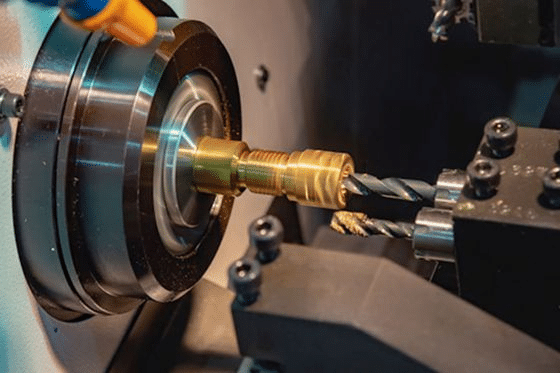
- Tool replacement due to wear: In production runs, inserts are indexed or replaced at defined intervals to maintain dimensional consistency. The frequency of replacement depends on material, cutting parameters, and required tolerance. For difficult materials such as titanium or hardened steel, tooling cost per part can be substantial and must be factored into the quoted price from the outset. [6]
Labor Requirements
CNC machining is largely automated, but it is not labor-free. Three labor categories contribute to the part cost:
- CNC programmers: Responsible for translating engineering drawings into verified machine programs. Programming skill directly affects cycle time efficiency, as a well-optimized program can reduce cycle time by 20 to 30 percent compared to a basic one.
- Machine operators: Load and unload workpieces, monitor the process, perform in-process measurements, manage tool changes, and respond to alarms. In high-volume production with well-established processes, one operator can manage multiple machines simultaneously, reducing labor cost per part. In low-volume or complex work, the operator-to-machine ratio is higher.
- Quality inspectors: Measure finished parts against drawing requirements, operate CMM equipment, and generate inspection records where required. Inspection labor is often overlooked in cost estimates, but becomes significant for parts with many critical dimensions or those requiring documented certification.
Example
The relationship between setup cost and production volume is most clearly illustrated by comparing a one-off prototype with a production batch. Consider a machined aluminum component requiring two hours of programming, one hour of machine setup, and 20 minutes of cycle time per part. For a single prototype, the total time charged is approximately three hours and twenty minutes, of which only twenty minutes is actual cutting time. The setup and programming cost represents 83 percent of the total. For a batch of 50 identical parts, the same setup and programming cost is spread across the batch, reducing the non-cutting overhead per part to under five minutes equivalent, and the cycle time dominates the cost as it should.
Cost Reduction Tips
- Standardize part designs: Using consistent feature sizes, hole patterns, and material specifications across a product family allows fixtures, programs, and tooling to be reused across multiple jobs, amortizing setup investment over a larger number of parts.
- Reuse existing fixtures and tooling: Before designing a custom fixture, evaluate whether an existing modular fixturing system or a simple soft jaw modification can locate the part adequately. Avoiding custom fixture fabrication saves both cost and lead time.
- Combine operations: Designing parts so that all features are accessible in a single setup eliminates additional setup costs entirely. Even a modest reduction from three setups to two can reduce total part cost meaningfully in low-volume production. [6]
Production Volume and Batch Size Effects
Production volume is one of the most powerful levers available for controlling CNC machining cost per part. The fixed costs associated with programming, setup, and fixturing remain largely constant regardless of how many parts are produced in a run. As the batch size increases, these fixed costs are distributed across more parts, reducing the cost contribution per unit progressively. Understanding this relationship allows manufacturers and designers to make informed decisions about order quantities, production scheduling, and the economics of prototyping versus production.

CNC Machining for Small Batch Production
Why Quantity Influences Unit Cost
The unit cost of a CNC-machined part consists of two distinct components: fixed costs that do not change with quantity, and variable costs that scale directly with the number of parts produced. Fixed costs include programming, CAM preparation, fixture setup, and machine prove-out. Variable costs include cycle time per part, tooling consumption, material, and inspection time per part. At low volumes, fixed costs dominate, and the unit cost is high. As volume increases, fixed costs per unit diminish, and variable costs become the primary driver of unit price. This is the fundamental economic structure of CNC machining, and the reason prototype parts invariably cost more per unit than production parts of identical geometry. [7]
Cost Differences Across Production Volumes
The cost profile shifts meaningfully across different volume tiers:
- Single-piece production: Unit cost is at its maximum. The full burden of programming, setup, and prove-out falls on one part. First-article inspection is required, and there is no opportunity to optimize the process through repeated cycles. Prototype pricing reflects this reality and should be budgeted accordingly.
- Low-volume manufacturing (10 to 50 parts): Setup costs begin to spread across the batch, reducing unit cost noticeably compared to single-piece production. However, the per-part overhead remains significant, and any rework or scrap has a proportionally large impact on batch economics.
- Medium-volume production (50 to 500 parts): Setup and programming costs become a minor fraction of total batch cost. Cycle time and material dominate unit cost, and process optimization efforts such as toolpath refinement and cutting parameter tuning deliver measurable returns. Tooling consumption becomes a more visible cost component at this volume level.
- High-volume production (500 parts and above): Unit cost is driven almost entirely by cycle time, material, and tooling. Fixed costs are negligible on a per-part basis. At this volume, investments in cycle time reduction, dedicated fixturing, and automated loading and unloading deliver strong returns on investment. [8]
Economies of Scale in CNC Machining
Beyond simple cost spreading, higher production volumes enable operational efficiencies that further reduce unit cost:
- Reduced labor cost per unit: As operators become familiar with a job, loading, measuring, and monitoring times decrease. In high-volume runs, one operator managing multiple machines simultaneously reduces the labor cost allocated to each part significantly.
- Improved machine utilization: Longer production runs reduce the proportion of machine time spent on setup and changeover relative to cutting time, improving overall equipment effectiveness and reducing the effective hourly cost allocated to each part.
- Process stabilization: Over a long production run, the process settles into a consistent state where tool wear patterns are predictable, inspection intervals can be optimized, and scrap rates decline as operators identify and correct any systematic variation.
Example
A concrete illustration of volume economics is comparing the unit cost of producing 10, 100, and 1,000 identical aluminum housings, each with a cycle time of 25 minutes and a combined setup and programming cost of 300 dollars. At 10 parts, the setup cost alone contributes 30 dollars per part before machining time is considered. At 100 parts, that contribution drops to 3 dollars per part. At 1,000 parts, it is essentially negligible at 0.30 dollars per part. The cycle time cost remains constant across all three scenarios, but its share of total unit cost increases as volume rises, shifting the cost reduction focus from setup optimization to cycle time reduction as quantities grow.
Cost Reduction Tips
- Consolidate orders into larger batches: Where storage and cash flow permit, combining multiple smaller orders into a single larger production run reduces the frequency of setups and spreads fixed costs more effectively. Even doubling a batch size from 25 to 50 parts can produce a meaningful reduction in unit cost.
- Plan production schedules efficiently: Grouping similar parts that use the same material, fixturing, or tooling into sequential production runs reduces changeover time between jobs and improves overall shop floor efficiency.
- Evaluate minimum economic order quantities: For parts that are consumed regularly, calculating the batch size at which setup cost per unit drops below a defined threshold helps establish a rational minimum order quantity that balances inventory cost against machining economics.
Conclusion
CNC machining costs are rarely the result of a single variable. As the sections above demonstrate, material selection, part design complexity, setup and tooling investment, and production volume each contribute independently to the final cost of a machined component, and their interactions compound quickly when multiple cost drivers are present simultaneously. The most important insight across all four areas is consistent: the decisions made at the design stage carry the greatest influence over total production cost, often more so than any negotiation with a supplier after the design is locked.
Engineers and product designers who understand these cost drivers are better positioned to make informed tradeoffs early, when changes are inexpensive, rather than late, when they are not. Selecting a material with adequate rather than excessive performance, simplifying geometry where function permits, designing for single-setup machining, and planning production volumes intelligently are not compromises on quality. They are the discipline of good engineering. Cost-conscious design and precision manufacturing are not competing priorities; applied correctly, they reinforce each other at every stage of the production process.
References
Frank, M., Petrick, I. J., El-Amine Lehtihet, & Voigt, R. C. (2002). Impact Of Tooling Design And Set-Up On The Variability Of Production P/M Components. ResearchGate; unknown. https://www.researchgate.net/publication/242161361_IMPACT_OF_TOOLING_DESIGN_AND_SET-UP_ON_THE_VARIABILITY_OF_PRODUCTION_PM_COMPONENTS
García-Martínez, E., Miguel, V., Mancebo, Á., & Martínez-Martínez, A. (2023). Determination of Cost-Effective Machining Strategies for Rough Pocket Milling of Aluminum by Computer-Aided Manufacturing. Advances in Science and Technology, 132, 176–183. https://doi.org/10.4028/p-2kdotw
How is the cost of CNC machining determined. (2025). Jlccnc.com. https://jlccnc.com/blog/cnc-machining-cost
Jung, J.-Y. (2002). Journal of Intelligent Manufacturing, 13(4), 227–238. https://doi.org/10.1023/a:1016092808320
Minguella-Canela, J., Planas, S. M., Ayats, J. R. G., & López, M. A. de los S. (2019). Study and comparison of the different costs’ schema associated to geometry, material and processing between 3D printing, injection molding and machining manufacturing technologies. Procedia Manufacturing, 41, 280–287. https://doi.org/10.1016/j.promfg.2019.09.010
Nizami Yusubov, Dmitriy Ardashev, Heyran Abbasova, & Ramil Dadashov. (2025). The Influence Of Cutting Conditions And Tool Wear On Machining Efficiency In Cnc Machine Tools. 1, 4–19. https://doi.org/10.61413/IYJP4291
Santiago, A. M., António José Festas, & João Paulo Davim. (2026). Multi-axis CNC milling of complex surfaces in 7075 aluminium for aerospace applications. The International Journal of Advanced Manufacturing Technology, 142(7-8), 3967–3978. https://doi.org/10.1007/s00170-025-17209-9
Soori, M., Arezoo, B., & Dastres, R. (2024). Sustainable CNC Machining Operations, A Review. Sustainable Operations and Computers, 5, 73–87. https://doi.org/10.1016/j.susoc.2024.01.001