
Brass occupies a distinctive position among CNC machining materials, valued for a combination of excellent machinability, attractive appearance, and reliable performance across electrical, plumbing, and decorative applications. Unlike many engineering metals, where machinability and mechanical performance are traded off against each other, brass delivers both reasonably good mechanical properties and some of the easiest machining characteristics of any common metal, making it a frequent choice when precision and production efficiency must be achieved together.
This article covers the composition and grades of brass commonly used in CNC machining, the material properties that influence machining performance, practical machining considerations across milling, turning, and drilling operations, and the industries and applications where brass remains the material of choice.
Understanding Brass as a CNC Machining Material
Brass is one of the oldest engineered alloys still in widespread industrial use, and its continued relevance in CNC machining reflects a combination of properties that few alternative materials match simultaneously.
What Is Brass?
Brass is a copper-zinc alloy, with zinc content typically ranging from 5 to 40 percent depending on the specific grade and its intended mechanical and machining characteristics. The ratio of copper to zinc governs the alloy's color, strength, ductility, and corrosion resistance, with higher zinc content generally increasing strength and reducing cost, while higher copper content improves corrosion resistance and ductility. Small additions of lead, tin, or other elements are introduced in specific grades to enhance machinability, strength, or corrosion performance for particular applications [1].
Common CNC Machining Brass Grades
- C360 Free-Cutting Brass: The most widely used brass grade for CNC machining, containing approximately 3 percent lead to dramatically improve chip formation and surface finish. C360 is the benchmark against which the machinability of other materials is often compared.
- C260 Cartridge Brass: A higher copper content alloy offering excellent ductility and cold-forming characteristics, used where some forming or deep drawing is combined with machining operations.
- C353 and C385 Brass: Engineering brass grades formulated for forging and machining applications, offering a balance of strength and machinability suited to fittings and structural hardware.
- Lead-free brass alternatives: Driven by regulatory restrictions on lead content in potable water applications, lead-free brass grades use bismuth or selenium as machinability enhancers, achieving cutting performance approaching that of leaded brass while complying with drinking water safety standards [2].
Key Characteristics of Brass
- Attractive appearance: Brass has a distinctive golden color that is valued in decorative and consumer-facing applications without requiring additional finishing.
- Corrosion resistance: The copper content provides good resistance to atmospheric corrosion and many aqueous environments, making brass suitable for plumbing and outdoor hardware applications.
- Electrical conductivity: Brass conducts electricity well, supporting its widespread use in electrical connectors, terminals, and contact components.
- Dimensional stability: Brass machines to tight tolerances and holds those dimensions reliably in service, with minimal distortion from residual stress compared to some other machinable metals.
Example
A CNC-machined brass electrical connector produced from C360 brass illustrates these characteristics working together. The free-machining lead content allows the connector's precision features, including threaded sections and contact surfaces, to be produced quickly with excellent surface finish, while the base material's conductivity and corrosion resistance ensure reliable electrical performance throughout the component's service life.
Material Properties That Influence CNC Machining Performance
The properties that make brass attractive in service are largely the same properties that make it favorable under the cutting tool. Understanding this relationship clarifies why brass consistently outperforms many alternative metals in CNC production environments.
Mechanical Properties
- Strength: Brass offers moderate tensile strength, typically in the range of 340 to 470 MPa, depending on grade and condition, sufficient for many structural and fitting applications without requiring the higher strength of steel.
- Hardness: Brass hardness generally falls between 55 and 75 HRB, soft enough to machine easily while still providing adequate wear resistance for many mechanical applications.
- Ductility: Higher copper content brass grades exhibit good ductility, allowing components to be formed or to absorb minor impact without brittle failure.
- Wear resistance: While not as wear-resistant as hardened steel, brass performs adequately in low to moderate friction applications, particularly when combined with appropriate lubrication [3].
Thermal Properties
Brass has good thermal conductivity, allowing heat generated during cutting to dissipate efficiently away from the cutting zone rather than concentrating at the tool edge. This thermal behavior reduces the risk of heat-related tool wear and helps maintain dimensional accuracy during extended machining cycles, in contrast to materials like stainless steel, where lower thermal conductivity concentrates cutting heat at the tool interface.
Corrosion Resistance
Brass performs well in humid atmospheric conditions and many aqueous environments due to the protective oxide layer that forms on the copper-rich surface. In marine and chloride-containing environments, performance varies by grade, with higher copper content alloys generally offering better resistance to dezincification, a corrosion mechanism specific to brass in which zinc is selectively leached from the alloy surface [4].
Electrical Conductivity
Brass conducts electricity at roughly 28 percent of the conductivity of pure copper, a level that is more than adequate for connector, terminal, and contact applications where some resistance is acceptable, while offering better strength and machinability than pure copper would provide for the same component geometry.
Why These Properties Matter in CNC Machining
The combination of moderate hardness, good thermal conductivity, and predictable ductility translates directly into machining benefits:
- Better surface finish: Brass machines to smooth surfaces without the built-up edge formation common in softer, more ductile metals.
- Reduced tool wear: Lower cutting forces and efficient heat dissipation extend tool life significantly compared to harder or more thermally insulating materials.
- Consistent dimensional accuracy: Predictable machining behavior and low residual stress after cutting support tight tolerance achievement without distortion.
Precision brass terminal blocks used in electrical distribution systems depend on this property combination directly. The terminal's conductive performance relies on the base material's electrical properties, while the precisely machined geometry required for reliable wire clamping depends on the dimensional stability and surface finish that brass delivers consistently across production volumes.
Machinability of Brass in CNC Operations
Brass is frequently cited as a benchmark material in machinability ratings, and understanding the specific reasons behind this reputation helps explain its continued popularity for precision CNC components across multiple machining processes.
Brass CNC Machining for Custom Parts
Why Brass Is Considered One of the Most Machinable Metals
Free-cutting brass grades such as C360 are rated at or near 100 on the standard machinability scale used to compare metals, the highest rating among common engineering materials. This exceptional machinability stems from three factors:
- Smooth chip formation: Leaded brass grades produce short, well-broken chips that clear the cutting zone efficiently without wrapping around the tool or workpiece.
- Low cutting resistance: The combination of moderate hardness and the lubricating effect of lead inclusions reduces the forces required to remove material, supporting higher cutting speeds and feed rates.
- Minimal built-up edge formation: Unlike softer, gummier metals, brass does not readily adhere to the cutting edge, supporting a consistent surface finish across extended production runs.
CNC Milling of Brass
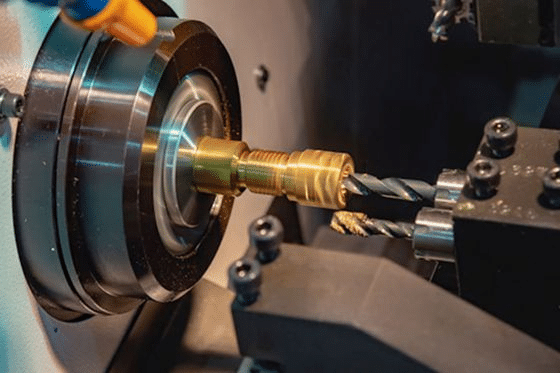
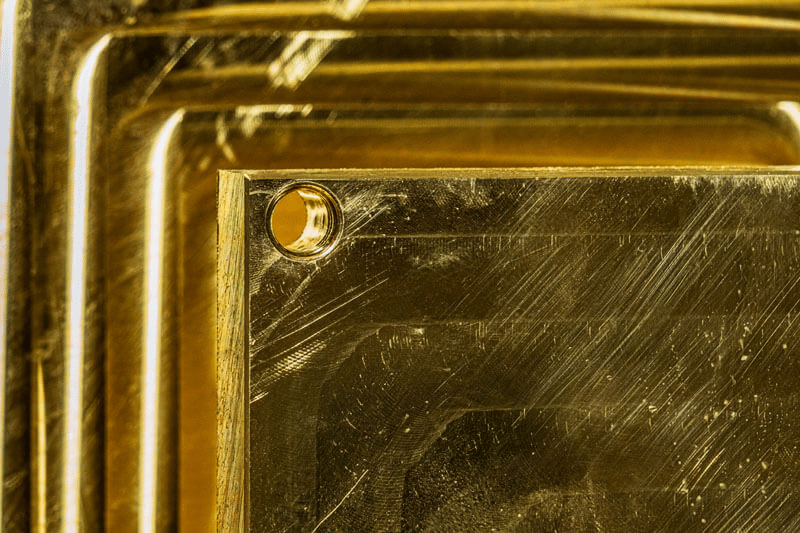
Brass mills cleanly with standard end mills and face mills, supporting aggressive feed rates and high spindle speeds without the chatter or surface tearing that can affect softer or more ductile materials. Typical milled brass components include connector housings, terminal blocks, and decorative hardware, where flat surfaces, pockets, and precision features are produced with excellent as-machined surface finish, often eliminating the need for secondary finishing.
CNC Turning of Brass
Turning is one of the most common processes applied to brass, producing the cylindrical components that dominate brass part applications:
- Threaded parts: Brass threads cleanly with single-point threading tools, producing accurate thread forms for fittings, connectors, and fasteners.
- Bushings: Turned brass bushings benefit from the material's natural lubricity and wear resistance in low-friction bearing applications.
- Fittings and connectors: The combination of corrosion resistance and excellent turned surface finish makes brass a standard choice for plumbing and pneumatic fitting production.
CNC Drilling and Tapping
Brass drills and taps cleanly, producing accurate hole sizes with minimal burr formation compared to more ductile metals. Thread quality in tapped brass holes is consistently reliable, supporting the high-volume production of threaded fittings and connectors where thread integrity directly affects assembly function and sealing performance [5].
Recommended Machining Considerations
- Tool material selection: Uncoated or PVD-coated carbide tooling is standard for brass machining, as the material's moderate hardness does not require the wear resistance of more aggressive coatings.
- Cutting speeds and feeds: Brass supports significantly higher cutting speeds than steel, often in the range of 150 to 300 m/min for turning operations, with correspondingly higher feed rates supporting efficient material removal.
- Coolant requirements: Light coolant or cutting oil application is typically sufficient, as brass generates relatively little cutting heat compared to harder alloys.
- Burr control: While brass produces minimal burring compared to many metals, sharp tool edges and appropriate exit strategies on through-holes and edges further reduce burr formation, minimizing secondary deburring requirements.
Manufacturing a brass pneumatic fitting demonstrates these advantages in combination. CNC turning produces the body diameter and sealing surfaces quickly at high cutting speeds, while single-point threading creates the connection threads with the dimensional accuracy required for reliable pneumatic sealing, all completed in a single setup with minimal tool wear across a high-volume production run.
Advantages and Limitations of CNC Machining Brass
Like any engineering material, brass offers a specific balance of benefits and constraints that must be weighed against the requirements of a given application.
Advantages
- Excellent machinability: Among the highest machinability ratings of any common engineering metal, supporting fast, efficient production.
- High production efficiency: Fast cutting speeds and minimal tool changes translate into shorter cycle times and lower per-part machining cost relative to harder materials.
- Superior surface finish: Brass achieves excellent as-machined surface quality, frequently eliminating the need for secondary finishing operations.
- Long tool life: Low cutting forces and efficient heat dissipation extend tool life significantly compared to steel and stainless steel machining.
- Good corrosion resistance: Adequate performance in atmospheric and many aqueous environments without additional coating.
- Easy plating and polishing: Brass accepts decorative and protective finishes readily, supporting both functional and aesthetic finishing requirements.
Limitations
- Higher material cost than some alternatives: Brass typically costs more per kilogram than mild steel or aluminum, reflecting its copper content.
- Lower strength than certain steels: Brass cannot match the tensile strength and hardness available from alloy or hardened steel grades, limiting its use in heavily loaded structural applications.
- Potential lead-content concerns: Leaded brass grades face regulatory restrictions in certain applications, particularly potable water systems, requiring careful grade selection to ensure compliance.
Comparison with Other CNC Materials
- Brass vs Aluminum: Aluminum is lighter and generally less expensive, but brass offers superior corrosion resistance in aqueous environments and a more premium decorative appearance.
- Brass vs Stainless Steel: Stainless steel offers significantly better strength and corrosion resistance in harsh environments, but brass machines considerably faster and achieves better as-machined surface finish at lower tooling cost.
- Brass vs Copper: Brass offers better machinability and strength than pure copper, while retaining good electrical conductivity, making it preferable for machined components where copper's excessive softness would complicate precision machining.
Brass is frequently preferred over aluminum for plumbing components because aluminum's susceptibility to corrosion in water systems, particularly galvanic corrosion when in contact with dissimilar metals, makes it unsuitable for direct water contact applications without additional protective treatment, while brass performs reliably without such measures.
Typical Applications of CNC-Machined Brass Parts
The combination of machinability, conductivity, and corrosion resistance discussed above translates into a wide range of practical applications across multiple industries.
Electrical and Electronics Industry
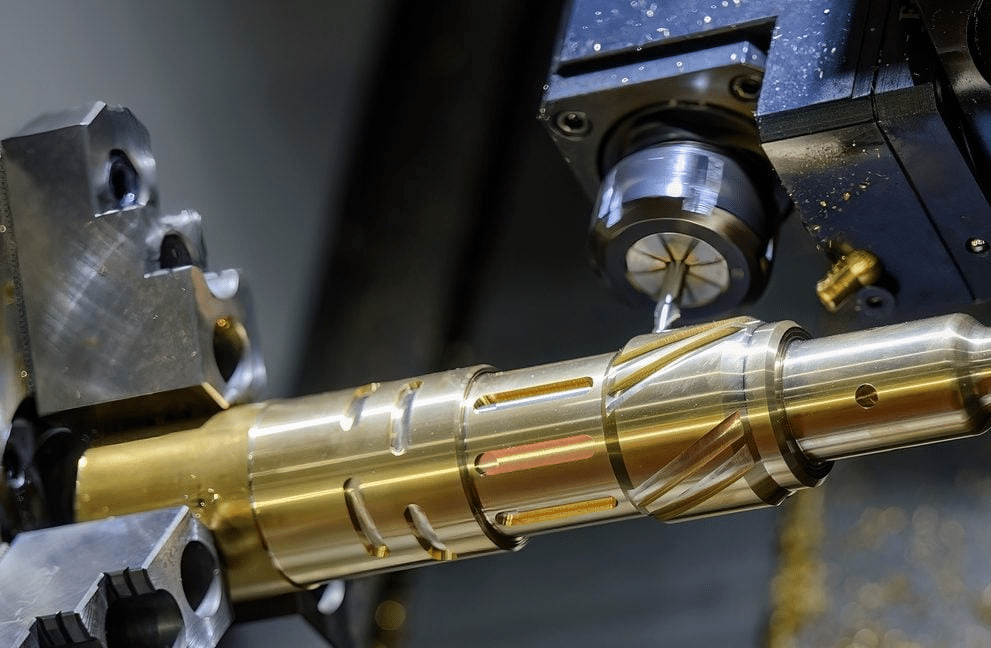
Brass is a standard material for connectors, terminals, pins, and switch components, where its electrical conductivity, corrosion resistance, and ability to be precision machined and plated combine to deliver reliable electrical contact performance over extended service life.
Plumbing and Fluid Systems
Valves, fittings, couplings, and water distribution components rely on brass extensively, leveraging its corrosion resistance in water contact applications, good machinability for producing sealing surfaces and threaded connections, and long-established regulatory acceptance in potable water systems when appropriate lead-free grades are specified.
Automotive Industry
Sensors, fuel system fittings, and electrical connectors in automotive applications often use brass for its combination of corrosion resistance in fuel and coolant environments, electrical conductivity for sensor and connector applications, and machinability supporting cost-effective production at automotive volumes.
Industrial Equipment
Bushings, bearings, and precision mechanical components in industrial machinery benefit from brass's natural lubricity and moderate wear resistance, particularly in applications where galling between mating metal surfaces must be avoided.
Consumer Products
Decorative hardware, musical instrument parts, and lighting components capitalize on brass's attractive appearance and ability to accept polished or plated decorative finishes, combining functional performance with aesthetic appeal.
A CNC-machined brass valve body used in commercial plumbing systems demonstrates the convergence of these advantages. The body requires precise internal geometry for fluid flow control, threaded connections for installation, and long-term corrosion resistance in continuous water contact, all of which brass delivers reliably while remaining cost-effective to machine at the production volumes typical of commercial plumbing component manufacturing.
Best Practices for CNC Machining Brass Components
Achieving consistent, high-quality results in brass CNC machining depends on deliberate decisions made at the design and process planning stages, not just on the material's inherent machinability.
Material Selection Based on Application
Selecting the appropriate brass grade requires matching alloy characteristics to application requirements: C360 for general precision machining where maximum machinability is the priority, lead-free alternatives where potable water compliance is required, and higher copper content grades where enhanced corrosion resistance or ductility is needed.
Design Recommendations
- Wall thickness considerations: While brass machines well even in thin sections, adequate wall thickness should be maintained to avoid distortion during clamping and cutting, particularly in components with asymmetric geometry.
- Hole and thread design: Standard drill and tap sizes should be used where possible to take advantage of brass's excellent drilling and tapping characteristics and minimize specialized tooling requirements.
- Tolerance planning: Brass supports tight tolerances reliably, but tolerances should still be applied selectively to features that require them, avoiding unnecessary inspection and finishing cost on non-critical dimensions [6].
Surface Finishing Options
- Polishing: Enhances the natural appearance of brass for decorative and consumer-facing applications.
- Plating: Nickel, chrome, or precious metal plating is commonly applied to brass connectors and decorative hardware to further enhance corrosion resistance or appearance.
- Passivation: Chemical treatments can be applied to stabilize the surface and reduce tarnishing in service.
- Decorative finishes: Brushed, satin, or antiqued finishes are readily achieved on brass surfaces to meet specific aesthetic requirements.
Quality Control Considerations
- Dimensional inspection: Standard CMM and gauge inspection methods apply directly to brass components, with the material's dimensional stability supporting reliable measurement results.
- Surface finish evaluation: Profilometer measurement confirms that as-machined or finished surfaces meet specified Ra requirements.
- Functional testing: Electrical continuity testing, pressure testing for fluid components, and fit verification for assembly components confirm that finished parts meet their functional requirements.
Optimizing a brass electrical connector design for high-volume CNC production involves selecting C360 brass for maximum machining efficiency, designing contact features around standard tooling sizes to minimize cycle time, applying tight tolerances only to the critical contact and mating dimensions, and specifying nickel plating to enhance long-term contact reliability, together producing a component that balances manufacturing efficiency with functional performance.
Conclusion
Brass stands out among CNC machining materials for combining exceptional machinability with genuinely useful mechanical, thermal, and electrical properties. Its smooth chip formation, low cutting forces, and excellent as-machined surface finish make it one of the most efficient materials to produce on a CNC machine, while its corrosion resistance and conductivity support reliable performance across electrical, plumbing, and mechanical applications.
From electrical connectors and plumbing fittings to automotive components and decorative hardware, brass continues to serve industries that value the specific balance of properties it offers. For engineers and designers evaluating material options, brass deserves serious consideration whenever a project calls for fast, accurate CNC production combined with dependable corrosion resistance and electrical performance, particularly when the application does not demand the higher strength that steel alone can provide.
References
Brass CNC Machining Innovations & Industry Trends. (n.d.). PTSMAKE. https://www.ptsmake.com/brass-cnc-machining-innovations-industry-trends/
Firsa, T., Tadjuddin, M., Udink, A., & Hasanuddin, I. (2020). Effect of machining Parameters on hole accuracy and BURR formation in Micro-Drilling of Brass. Defect and Diffusion Forum/Diffusion and Defect Data, Solid State Data. Part a, Defect and Diffusion Forum, 402, 73–80. https://doi.org/10.4028/www.scientific.net/ddf.402.73
Jasper, S., Subash, R., Muthuneelakandan, K., Vijayakumar, D., & Ida, S. J. (2025). The Mechanical Properties of Brass Alloys: a review. International Conference on Mechanical Engineering Design, 11. https://doi.org/10.3390/engproc2025093011
Khan, A. A., Kaiser, S., & Kaiser, S. (2023). Electrochemical corrosion performance of copper and uniformly alloyed bronze and brass in 0.1 M NaCl solution. Revista Mexicana De Física, 69(5 Sep-Oct). https://doi.org/10.31349/revmexfis.69.051002
Ren, C., Wang, Q., Zhang, Z., Zhang, Z., Yang, H., Zhang, Z., & Zhang, Z. (2019). Enhanced tensile and bending yield strengths of 304 stainless steel and H62 brass by surface spinning strengthening. Materials Science and Engineering A, 754, 593–601. https://doi.org/10.1016/j.msea.2019.03.113
Toulfatzis, A., Pantazopoulos, G., David, C., Sagris, D., & Paipetis, A. (2018). Machinability of Eco-Friendly Lead-Free brass alloys: Cutting-Force and Surface-Roughness optimization. Metals, 8(4), 250. https://doi.org/10.3390/met8040250