
Steel remains one of the most frequently machined materials in CNC manufacturing, valued for its strength, availability, and broad compatibility with standard machining processes. Within this category, mild steel and stainless steel represent two of the most commonly specified options, yet they differ significantly in composition, machining behavior, mechanical performance, and cost. Choosing between them is not a matter of preference; it directly affects cycle time, tooling cost, part durability, and the long-term performance of the finished component.
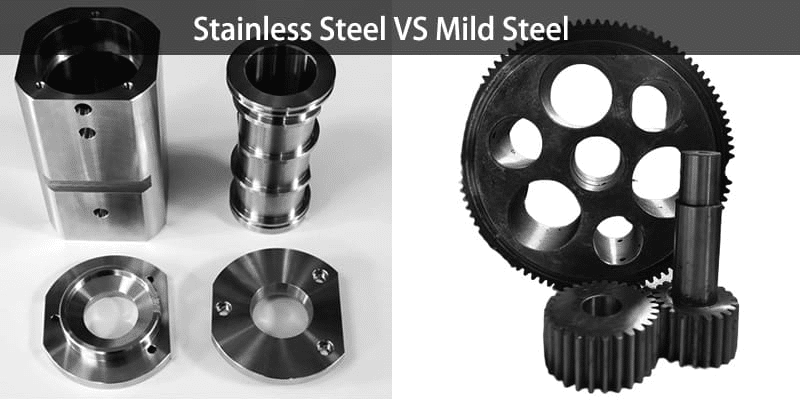
This comparison examines mild steel and stainless steel across the dimensions that matter most to CNC machining decisions: material composition, machinability, mechanical properties, corrosion resistance, and total production cost.
Understanding Mild Steel and Stainless Steel
Before comparing how these materials behave under the cutting tool, it is necessary to understand what distinguishes them metallurgically. Their respective compositions are the root cause of every machining, mechanical, and cost difference discussed in later sections.
What Is Mild Steel?
Mild steel, also known as low-carbon steel, is an iron-carbon alloy containing approximately 0.05 to 0.3 percent carbon by weight, with no significant alloying elements added for corrosion resistance or hardenability. Its low carbon content gives it good ductility, weldability, and machinability, while keeping raw material cost low relative to alloyed or stainless grades. [1]
Common mild steel grades used in CNC machining include:
- A36: A general-purpose structural steel grade widely used for brackets, plates, and fabricated structural components where moderate strength and good weldability are required.
- 1018: A popular general machining grade offering a good balance of machinability, strength, and weldability, commonly used for shafts, pins, and structural parts.
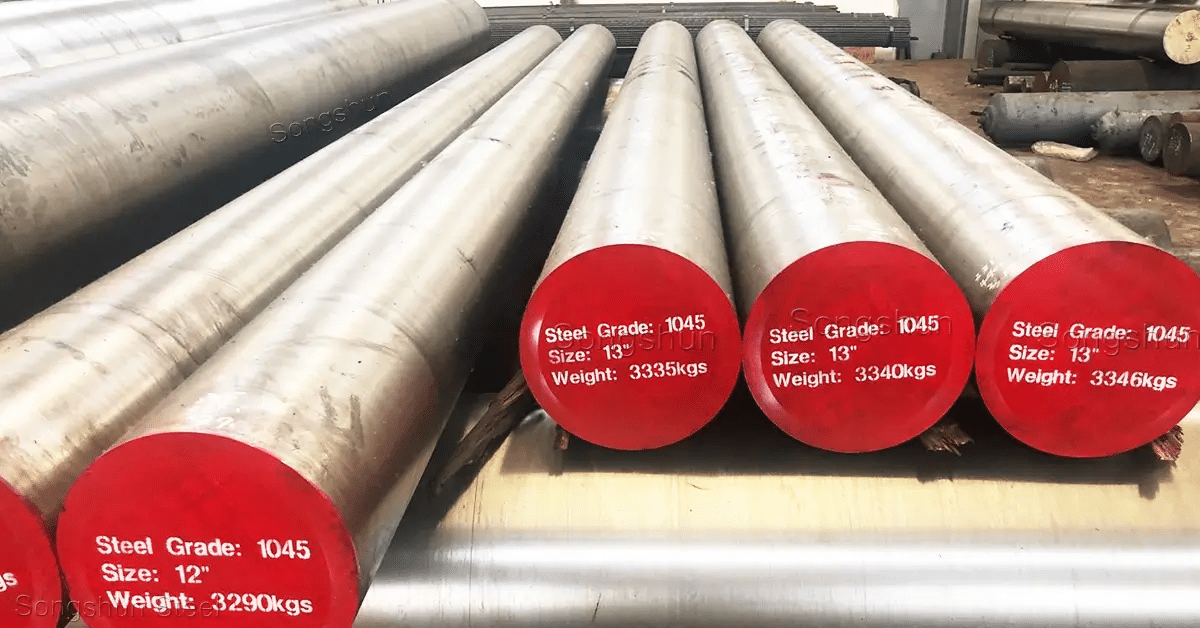
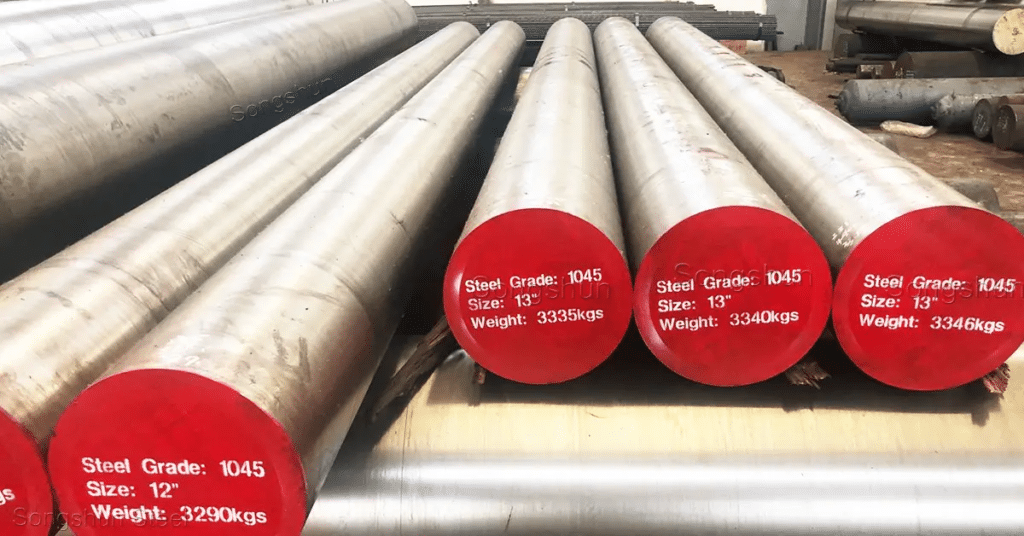
- 1045: A medium carbon grade offering higher strength and hardness than 1018, often used for components requiring greater wear resistance, such as gears and shafts subject to higher loads.
What Is Stainless Steel?
Stainless steel is an iron-based alloy containing a minimum of 10.5 percent chromium, which forms a thin, self-healing passive oxide layer on the surface that provides corrosion resistance. Depending on the grade, additional alloying elements such as nickel, molybdenum, and manganese are added to enhance corrosion resistance, strength, or specific performance characteristics. [2]
Common stainless steel grades used in CNC machining include:
- 303: A free-machining austenitic grade with added sulfur to improve chip formation, making it one of the easier stainless grades to machine while retaining good corrosion resistance.
- 304: The most widely used austenitic stainless grade, offering a strong balance of corrosion resistance, formability, and weldability across general industrial and food-grade applications.
- 316: A molybdenum-bearing austenitic grade offering superior corrosion resistance compared to 304, particularly in chloride-rich environments such as marine and chemical processing applications.
- 420: A martensitic stainless grade that can be heat-treated to higher hardness levels, used in applications requiring wear resistance and a moderate degree of corrosion protection, such as cutlery and surgical instruments.
Key Material Differences at a Glance
- Chemical composition: Mild steel is essentially iron and carbon with minimal alloying; stainless steel contains substantial chromium and often nickel or molybdenum for corrosion resistance.
- Mechanical properties: Mild steel typically offers tensile strengths in the range of 400 to 550 MPa, depending on grade, while austenitic stainless grades such as 304 and 316 offer comparable or slightly lower tensile strength but significantly different work-hardening behavior during machining.
- Corrosion resistance: Mild steel corrodes readily when exposed to moisture and requires a protective coating; stainless steel resists corrosion inherently due to its chromium oxide layer.
- Cost: Mild steel is significantly less expensive as a raw material and generally faster and cheaper to machine; stainless steel commands a price premium in both material and machining cost. [3]
Example
A CNC-machined equipment bracket for an indoor industrial application is well served by 1018 mild steel, offering adequate strength, low cost, and acceptable corrosion resistance when painted or coated. A marine deck fitting exposed to saltwater spray, by contrast, requires 316 stainless steel, where the molybdenum content provides the chloride resistance necessary to prevent pitting corrosion that would compromise the component within months if mild steel were used instead.
CNC Machinability Comparison
Machinability is where the practical difference between mild steel and stainless steel becomes most apparent on the shop floor. While both materials can be machined to high precision, the parameters, tooling, and process control required to achieve that precision differ substantially.
CNC Machining: Steel vs Stainless
Cutting Performance
Mild steel is widely regarded as one of the more forgiving materials to machine. Its moderate hardness, predictable chip formation, and low work-hardening tendency allow for higher cutting speeds and more aggressive feed rates without excessive tool wear or surface degradation. Stainless steel, particularly austenitic grades such as 304 and 316, presents distinct machining challenges. Its tendency to work-harden rapidly under cutting forces, combined with lower thermal conductivity than mild steel, concentrates heat at the cutting edge and accelerates tool wear if parameters are not carefully controlled. [4]
Tool Wear and Tool Life
The work-hardening behavior of austenitic stainless steel is the primary driver of reduced tool life compared to mild steel. As the cutting edge passes through the material, the immediately preceding surface hardens, meaning subsequent passes or any hesitation in feed encounter a harder surface than the bulk material. This effect requires sharp, consistent cutting edges and continuous engagement to avoid accelerated wear. In production environments, the tooling cost per part for stainless steel components is typically higher than for equivalent mild steel parts due to more frequent insert changes and the need for higher-grade coated carbide or ceramic tooling in demanding applications.
Chip Formation and Heat Generation
Mild steel generally produces well-controlled chips that break cleanly with appropriate chip-breaker geometry, supporting efficient and predictable machining cycles. Stainless steel, by contrast, tends to produce longer, more continuous chips, particularly in lower-carbon austenitic grades, which can interfere with the cutting process and machined surface if not managed through appropriate tool geometry and cutting parameters. The work-hardening tendency of stainless steel also generates more heat at the cutting zone for a given material removal rate, requiring more attention to coolant delivery to prevent thermal damage to both the tool and the workpiece surface.
Recommended Machining Parameters
- Cutting speeds: Mild steel can typically be machined at cutting speeds of 90 to 150 m/min with coated carbide tooling, while austenitic stainless steel grades are generally machined at lower speeds of 60 to 100 m/min to manage heat generation and work hardening.
- Feed rates: Mild steel tolerates moderate to aggressive feed rates with good surface finish results. Stainless steel benefits from consistent, moderate feed rates that maintain continuous chip formation and avoid the dwell time that promotes work hardening.
- Coolant requirements: Both materials benefit from coolant application, but stainless steel machining places greater demands on coolant delivery and concentration due to its lower thermal conductivity and higher tendency toward heat-related tool wear.
Mechanical Properties and Performance
Beyond machining behavior, the in-service performance of mild steel and stainless steel components depends on their respective mechanical properties. Strength, hardness, wear resistance, and toughness all factor into material selection for functional, load-bearing applications.
Strength and Hardness
Mild steel grades such as 1045 offer tensile strengths around 570 MPa in the as-rolled condition, with hardness levels that can be increased significantly through heat treatment. Austenitic stainless steels such as 304 and 316 offer tensile strengths in a comparable range, typically 500 to 620 MPa, but cannot be hardened through heat treatment due to their austenitic crystal structure. Martensitic grades such as 420 stainless steel, by contrast, can be heat-treated to hardness levels exceeding 50 HRC, offering a different performance profile suited to wear-critical applications. [5]
Wear Resistance
Wear resistance depends heavily on achievable hardness rather than the material family alone. Heat-treated mild or medium carbon steel can achieve good wear resistance for moderate-duty applications. Martensitic stainless steel grades match or exceed this performance while adding corrosion resistance, making them suitable for wear-critical components operating in corrosive environments, such as surgical instruments and food processing cutting blades. Austenitic stainless grades, lacking the ability to be through-hardened, generally offer lower wear resistance than hardened carbon steel in pure sliding wear applications.
Impact Resistance and Toughness
Austenitic stainless steels such as 304 and 316 exhibit excellent toughness and impact resistance across a wide temperature range, including in cryogenic applications where carbon steel can become brittle. Mild steel offers good toughness at ambient temperatures but is more susceptible to brittle fracture at low temperatures unless specifically formulated for cold-temperature service. This characteristic makes austenitic stainless steel a preferred choice for components subject to impact loading in variable or low-temperature environments.
Long-Term Durability
The long-term durability of a machined component depends on the interaction between mechanical loading and environmental exposure. In a controlled indoor environment without significant moisture or chemical exposure, mild steel components can deliver excellent long-term durability at a fraction of the material cost of stainless steel. In environments involving moisture, chemical exposure, or repeated cleaning cycles, stainless steel substantially outperforms mild steel over the component's service life, even though its initial cost is higher.
Example
Industrial shafts and gears operating in a lubricated, enclosed gearbox environment are commonly produced from medium carbon or alloy steel, where the controlled environment limits corrosion risk and heat treatment provides the wear resistance required for gear tooth surfaces. Structural machine components exposed to washdown cycles or outdoor conditions, however, benefit from stainless steel construction, where corrosion resistance prevents the gradual degradation that would otherwise compromise structural integrity over years of service.
Corrosion Resistance and Environmental Suitability
Corrosion resistance is often the deciding factor in material selection between mild steel and stainless steel, particularly for components exposed to moisture, chemicals, or regulated hygienic environments.
Mild Steel in Different Environments
Mild steel has no inherent resistance to oxidation. Exposed to atmospheric moisture, it begins to rust within days, and the corrosion progresses steadily without intervention. In dry, indoor, climate-controlled environments, mild steel can perform reliably for extended periods, particularly with a basic protective coating. In humid, outdoor, or chemically exposed environments, mild steel requires robust surface protection, such as painting, powder coating, galvanizing, or plating, to achieve acceptable service life. [6]
Stainless Steel Advantages
Stainless steel's chromium oxide layer forms spontaneously on exposure to oxygen and regenerates if damaged, provided sufficient chromium and oxygen remain available at the surface. This self-healing characteristic gives stainless steel a meaningful corrosion resistance advantage that does not depend on an applied coating remaining intact. In harsh environments involving saltwater, industrial chemicals, or frequent washdown, stainless steel, particularly molybdenum-bearing grades such as 316, maintains its surface integrity far longer than coated mild steel, where any coating breach exposes the substrate to immediate corrosion.
Indoor vs Outdoor Applications
For indoor applications with controlled humidity and no chemical exposure, mild steel with appropriate coating represents a cost-effective and durable choice. For outdoor applications, or any environment involving repeated moisture exposure, chemical contact, or sanitation requirements, stainless steel's inherent corrosion resistance typically justifies its higher cost by eliminating the maintenance and coating renewal that mild steel would otherwise require.
Industry Examples
- Food processing: Stainless steel, typically 304 or 316, is standard due to its corrosion resistance, cleanability, and compliance with food safety regulations that prohibit materials prone to flaking or rust contamination.
- Medical equipment: Stainless steel dominates due to its corrosion resistance under sterilization cycles, biocompatibility, and ability to maintain a smooth, easily disinfected surface.
- Construction: Mild steel remains the dominant structural material due to its cost-effectiveness and adequate performance when properly coated, with stainless steel reserved for architectural features or components exposed to severe weathering.
- Marine applications: Stainless steel, particularly 316, is preferred for fittings and hardware exposed to saltwater spray, where mild steel would corrode rapidly even with coating.
Cost Comparison and Production Efficiency
Cost considerations extend well beyond the raw material price tag. The total cost of producing a component in mild steel versus stainless steel includes machining time, tooling consumption, finishing requirements, and the long-term value the material delivers over its service life.
Material Cost Differences
Raw mild steel typically costs significantly less per kilogram than stainless steel, with the price differential driven primarily by the chromium and nickel content required for stainless alloying. Depending on market conditions and grade, stainless steel raw material can cost two to four times more than equivalent mild steel stock, making material cost the most immediately visible difference between the two options. [7]
Machining Cost Impact
Beyond raw material price, machining cost differs due to cycle time and tooling consumption:
- Cycle time: Stainless steel generally requires longer cycle times due to reduced cutting speeds and the need for more conservative feed strategies to manage work hardening and heat generation.
- Tool consumption: Higher tool wear rates in stainless steel machining increase the frequency of insert replacement, adding directly to per-part tooling cost.
- Maintenance requirements: Machines used predominantly for stainless steel work often experience increased wear on coolant systems and chip management components due to the more demanding cutting conditions involved.
Finishing and Post-Processing Costs
Mild steel components destined for environments with any moisture exposure require a protective finish such as painting, powder coating, or plating, each adding processing time, material cost, and lead time to the production schedule. Stainless steel components, while sometimes finished for aesthetic purposes through polishing or brushing, do not require a protective coating for corrosion resistance, eliminating that cost category for functional applications.
Total Cost of Ownership
When the initial machining cost is the only consideration, mild steel almost always appears less expensive. When total cost of ownership is considered, including coating maintenance, potential corrosion-related failures, and component replacement frequency in demanding environments, stainless steel frequently delivers better long-term value despite its higher upfront cost. The correct cost comparison depends entirely on the operating environment and expected service life of the component.
Choosing the Right Material for CNC Machining Projects
With the comparative groundwork established across machinability, mechanical performance, corrosion resistance, and cost, the final step is translating these factors into a practical selection decision for a given project.
When to Choose Mild Steel
Mild steel is the appropriate choice when:
- Budget is a primary constraint, and the operating environment does not expose the component to significant moisture or chemical attack
- The application is structural, where strength and stiffness matter more than surface corrosion resistance, and protective coating is an acceptable part of the production process
- The part serves a general industrial function in a controlled indoor environment, such as machine bases, brackets, or fixtures operating within a maintained facility
When to Choose Stainless Steel
Stainless steel is the appropriate choice when:
- The component operates in a corrosion-prone environment, including outdoor exposure, marine conditions, or chemical processing settings
- Hygienic performance is required, such as in food processing or medical applications, where surface cleanability and resistance to bacterial harboring are regulatory requirements
- High-performance characteristics are needed, including toughness across a wide temperature range or freedom from coating maintenance over the component's service life
Decision-Making Checklist
A practical selection process should evaluate:
- Operating environment: Indoor and controlled, or exposed to moisture, chemicals, and washdown cycles
- Strength requirements: Structural load-bearing needs versus general-purpose mechanical function
- Budget constraints: Upfront cost sensitivity versus total cost of ownership over the component's service life
- Production volume: How machining cost differentials scale across the intended batch size
- Surface finish expectations: Whether a coated, painted finish is acceptable or a bare, corrosion-resistant surface is required
Real-World CNC Machining Examples
- Automotive brackets (mild steel): Structural brackets within a vehicle's protected underbody or engine bay environment commonly use coated mild steel, balancing strength and cost effectively.
- Medical device components (stainless steel): Surgical instruments and device housings require stainless steel for sterilization compatibility, biocompatibility, and regulatory compliance.
- Marine hardware (stainless steel): Fittings, fasteners, and structural hardware exposed to saltwater require 316 stainless steel to withstand chloride-induced corrosion over the years of service.
- Machine bases and fixtures (mild steel): Workholding fixtures and machine bases operating in a controlled shop environment are well served by mild steel, offering adequate stiffness and durability at low cost.
Conclusion
Mild steel and stainless steel each bring distinct advantages to CNC machining, and the comparison across machinability, mechanical performance, corrosion resistance, and cost makes clear that neither material is universally superior. Mild steel offers faster machining, lower material cost, and adequate performance in controlled environments, while stainless steel delivers corrosion resistance, hygienic performance, and long-term durability in demanding conditions, at a higher initial cost.
The right choice depends entirely on the specific requirements of the application: the operating environment, the mechanical loads involved, the production budget, and the expected service life of the component. Manufacturers and product designers who evaluate these factors deliberately, rather than defaulting to habit or assumption, consistently make material decisions that deliver the best balance of performance and cost for their specific project.
References
Ebrahimi, N., Roshanfar, M., Momeni, M., & Naboka, O. (2025). Corrosion Performance of atmospheric corrosion resistant steel bridges in the current climate: A performance review. Materials, 18(15), 3510. https://doi.org/10.3390/ma18153510
Feng, Y., Dai, B., He, J., Liu, Z., Yang, F., & Jiang, B. (2024). Improvement of strength in low-carbon Nb–Ti weathering steel through Ce microalloying. Journal of Materials Research and Technology, 33, 2136–2152. https://doi.org/10.1016/j.jmrt.2024.09.221
Gramlich, A., Helbig, C., Schmidt, M., & Hagedorn, W. (2024). A comprehensive design approach to increase the performance of steels under minimal costs and environmental impacts. Sustainable Materials and Technologies, 41, e01040. https://doi.org/10.1016/j.susmat.2024.e01040
Hanawa, T. (2010). Overview of metals and applications. In Elsevier eBooks (pp. 3–24). https://doi.org/10.1533/9781845699246.1.3
Khidhir, G. I., & Baban, S. A. (2019). Efficiency of dissimilar friction welded 1045 medium carbon steel and 316L austenitic stainless steel joints. Journal of Materials Research and Technology, 8(2), 1926–1932. https://doi.org/10.1016/j.jmrt.2019.01.010
Ozcatalbas, Y., & Ercan, F. (2003). The effects of heat treatment on the machinability of mild steels. Journal of Materials Processing Technology, 136(1–3), 227–238. https://doi.org/10.1016/s0924-0136(03)00273-5
Service characteristics of carbon and alloy steels. (1998). In ASM International eBooks (pp. 274–300). https://doi.org/10.31399/asm.hb.mhde2.a0003104