
Surface finishing is the process of treating the outer surface of a CNC-machined part to meet specific functional, aesthetic, or protective requirements. Once a part leaves the machine, its raw surface is rarely the final product. Tool marks, micro-roughness, and exposed base material all need to be addressed before the component is ready for its intended environment. The right finishing process transforms a machined part into one that performs reliably, resists degradation, and meets the visual standards its application demands.
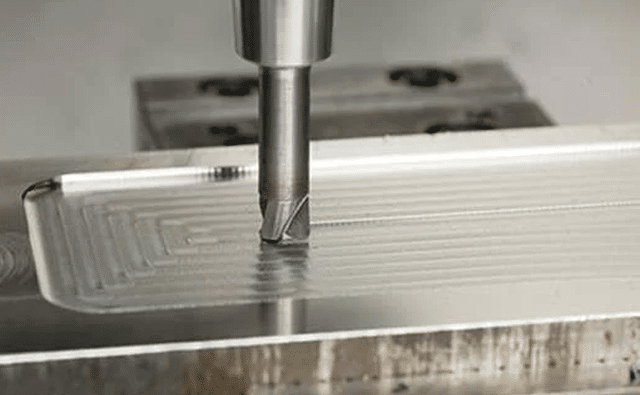
CNC Machining Surface Finishes
This guide covers the most widely used surface finishing methods in CNC machining, compares their performance across key criteria, and provides a practical framework for selecting the right finish based on material, application, operating environment, and budget.
What Is Surface Finishing in CNC Machining?
Surface finishing in CNC machining refers to any secondary process applied to a machined part to modify its surface characteristics beyond what the cutting operation itself produces. These processes can alter surface texture, add protective coatings, improve dimensional consistency, or enhance visual appearance. While CNC machining produces parts with good dimensional accuracy, the raw machined surface is often unsuitable for direct use in demanding applications without some form of additional treatment [1].
Surface Texture, Roughness, and Coatings
These three terms are related but describe different aspects of a part's surface condition, and understanding the distinction is important for specifying the correct finishing process.
- Surface texture refers to the overall geometric character of the surface, including lay, waviness, and roughness. It describes the pattern left by the machining process and any subsequent finishing operations.
- Surface roughness is a measurable subset of surface texture, typically expressed as Ra (arithmetic mean roughness) in micrometers. It quantifies the microscopic peaks and valleys on a surface and is the most commonly specified surface parameter in engineering drawings. A lower Ra value indicates a smoother surface [1].
- Coatings are materials applied to the surface of a part to add properties that the base material does not provide on its own, such as corrosion resistance, hardness, color, or electrical insulation. Coatings change the surface chemistry or add a distinct layer on top of the base material, whereas texture and roughness modifications alter the existing surface geometry.
Main Objectives of Surface Finishing
CNC parts are finished for a range of functional and commercial reasons, and most finishing decisions are driven by one or more of the following objectives.
- Improved appearance. Raw machined surfaces carry visible tool marks and a utilitarian look that is unsuitable for consumer-facing products. Finishing processes such as polishing, brushing, and anodizing produce surfaces that meet aesthetic standards in industries from consumer electronics to automotive interiors.
- Wear resistance. Components that experience sliding contact, abrasion, or repeated impact require surfaces that resist material loss. Hard anodizing, electroplating, and certain coatings significantly extend the wear life of machined parts in these conditions.
- Corrosion protection. Bare metal surfaces are vulnerable to oxidation and chemical attack in humid or chemically aggressive environments. Finishing processes create barriers between the base material and the environment, preventing or slowing corrosion that would otherwise compromise the part structurally.
- Reduced friction. In moving assemblies, surface finish directly affects friction coefficients and the efficiency of relative motion between components. Polishing and certain low-friction coatings reduce contact resistance, improving mechanical efficiency and reducing heat generation.
- Better product lifespan. A properly finished part resists the environmental and mechanical factors that cause premature failure. Finishing is therefore not purely a cosmetic consideration; it is a direct investment in component longevity and reduced replacement cost [2].
Why Surface Finishing Matters in CNC Manufacturing
A CNC-machined part that meets all dimensional specifications can still fail in service if its surface condition is inadequate for the application. Surface finishing is not an optional add-on to the manufacturing process. It is the stage that determines whether a component will perform as designed over its intended service life. The connection between surface condition and functional performance is well established in manufacturing engineering, with surface integrity recognized as a critical determinant of fatigue life, wear behavior, and corrosion resistance in finished components [3].
How Surface Finishing Affects Part Performance
- Mechanical performance. Surface condition directly influences how a part behaves under load. Micro-cracks, residual tensile stresses, and rough surface textures left by machining can act as stress concentrators, reducing fatigue strength significantly below the material's rated capacity. Finishing processes that introduce compressive residual stresses, such as shot peening or burnishing, actively improve fatigue resistance by closing surface-initiated crack propagation paths [3].
- Durability. Components exposed to cyclic loading, abrasive contact, or environmental degradation rely on surface finishing to extend their operational life. A part with a well-specified protective finish will outlast an unfinished equivalent in virtually every demanding application, reducing replacement frequency and the associated downtime costs.
- Precision and tolerances. Certain finishing processes add material to a surface, such as electroplating or powder coating, while others remove it, such as electropolishing or lapping. Both types alter the final dimensions of a part. Engineers must account for the thickness of any applied finish when specifying machined dimensions, particularly in close-tolerance assemblies where even a few microns of additional material can cause interference.
- Customer perception. In consumer-facing products, surface finish is often the first quality indicator a customer encounters. An inconsistent, rough, or visually uneven finish signals poor manufacturing quality regardless of the part's dimensional accuracy. Industries such as consumer electronics and automotive interiors invest heavily in finishing consistency because surface appearance directly influences brand perception and product value.
Industries Where Surface Finishing Is Critical
Surface finishing requirements vary significantly by industry, driven by the specific performance demands each sector places on its components.
- Aerospace. Components must meet strict fatigue life requirements while minimizing weight. Anodizing and chemical conversion coatings are standard for aluminum structures, while titanium components often rely on their natural oxide layer supplemented by specific treatments for particular environments.
- Automotive. Both functional and decorative finishes are required across powertrain, structural, and interior components. Corrosion protection, wear resistance, and visual consistency are all finishing objectives in this sector.
- Medical. Surgical instruments, implants, and diagnostic equipment require surfaces that are smooth enough to prevent bacterial adhesion, chemically inert enough to resist sterilization processes, and biocompatible enough for direct patient contact. Electropolishing is the dominant finishing method in this sector for these reasons.
- Electronics. Tight dimensional tolerances, thermal management requirements, and consumer-facing aesthetics all place specific demands on surface finishing in electronics manufacturing. Anodizing and brushing are widely used for enclosures and structural components.
Electropolished medical components illustrate how finishing directly enables product function rather than simply improving appearance. Surgical instruments and implantable device components are electropolished to achieve surface roughness values low enough to prevent microbial adhesion and to survive repeated autoclave sterilization cycles without surface degradation. A rougher surface, even one that meets dimensional tolerances, would create sites for bacterial colonization and compromise the hygiene standards that medical applications mandate [4].
Factors to Consider Before Choosing a Surface Finish
Selecting a surface finish without a structured evaluation process leads to one of two outcomes: an under-specified finish that fails in service, or an over-specified one that adds cost without adding value. The right finishing decision starts with a clear understanding of the material being machined, the functional demands of the application, the visual requirements of the end product, and the budget available for the finishing stage. Each of these variables narrows the field of viable options before any process comparison begins [5].
Material Compatibility
Not every finishing process is compatible with every base material. Applying an incompatible finish can damage the part, produce inconsistent results, or fail to adhere properly in service.
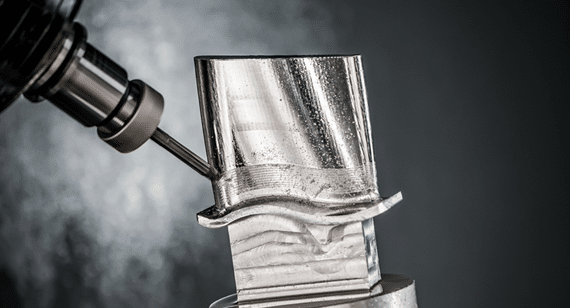
Surface Finish for CNC-Machined Aluminum
- Aluminum. Highly receptive to anodizing, which builds directly on the aluminum oxide layer. Also compatible with powder coating, bead blasting, and chemical conversion coatings. Aluminum's reactivity makes it well-suited to electrochemical finishing processes.
- Stainless steel. Passivation is the standard finishing process for stainless steel, enhancing the natural chromium oxide layer that provides corrosion resistance. Electropolishing and brushing are also widely used. Powder coating is less common on stainless steel, but it is applied in specific decorative applications.
- Titanium. Titanium's natural oxide layer provides a strong baseline corrosion resistance, so finishing is often focused on surface texture rather than protection. Anodizing can be applied to titanium for color differentiation and mild additional protection. Machining and polishing are used where a smooth surface texture is required for medical or aerospace applications.
- Brass. Compatible with electroplating, polishing, and lacquering. Brass is frequently plated with nickel or chrome for decorative and protective purposes in plumbing, electronics, and instrumentation components.
- Plastics. Engineering plastics used in CNC machining have limited finishing options compared to metals. Painting, vapor polishing for certain thermoplastics, and light bead blasting are the most practical options. Electroplating is possible on some plastics with specialized pre-treatment, but it is not standard practice [5].
Functional Requirements
The operating conditions a part will encounter define the minimum performance standard any finishing process must meet.
- Corrosion resistance. Parts exposed to moisture, saltwater, or chemical environments need finishing processes that create durable barriers against oxidation and chemical attack. Anodizing, passivation, and electroplating are the primary options depending on the base material.
- Heat resistance. Components operating at elevated temperatures require finishes that maintain adhesion and protective properties without degrading. Powder coatings have practical upper temperature limits, while anodized and passivated surfaces generally perform better at higher temperatures.
- Electrical conductivity. Some applications require the finished surface to remain electrically conductive, which rules out insulating finishes such as standard anodizing. Chemical conversion coatings, such as chromate treatment, preserve conductivity while providing corrosion protection, making them common in aerospace electrical assemblies.
- Low friction. Bearing surfaces, sliding contacts, and threaded fasteners benefit from finishes that reduce surface roughness and friction coefficients. Polishing, PTFE-based coatings, and electropolishing are effective options depending on the material and load conditions.
Appearance Requirements
In consumer and commercial products, the visual outcome of the finishing process is often as important as its functional performance.
- Matte finish. Bead blasting produces a uniform, low-reflectance matte texture that is widely used in industrial equipment, electronics enclosures, and automotive interior components where glare reduction and a functional appearance are required.
- Glossy finish. Polishing and certain electroplating processes produce high-reflectance surfaces used in decorative hardware, optical components, and premium consumer products.
- Decorative textures. Brushing creates a consistent linear grain pattern associated with premium product aesthetics in consumer electronics and architectural hardware.
- Color customization. Anodizing is the most practical method for adding durable color to aluminum components. The process integrates color into the oxide layer rather than applying it as a surface coating, giving it significantly better durability than paint in applications subject to abrasion or UV exposure.
Cost and Production Volume
Finishing cost scales differently depending on the process, and the economics shift considerably between prototype and production quantities.
- Prototype vs. mass production. Bead blasting and manual polishing are cost-effective for small quantities because they require minimal setup. Anodizing and powder coating involve batch processing and setup costs that become economical only at higher volumes.
- Cost-effectiveness. The finishing cost must be evaluated against the value it adds to the part. A precision aerospace bracket may justify hard anodizing at a high cost per part. A structural bracket in a non-corrosive environment may require nothing beyond a light deburring operation.
Environmental Exposure
The environment a finished part will operate in is one of the most reliable predictors of finishing requirements.
- Moisture. Consistent exposure to water or high humidity demands corrosion-resistant finishes with good barrier properties and long-term adhesion.
- Chemicals. Parts in contact with cleaning agents, fuels, lubricants, or process chemicals need finishes that resist chemical attack without delaminating or discoloring.
- Outdoor conditions. UV exposure, temperature cycling, and precipitation all degrade finishes that are not specifically formulated for outdoor use. Powder coating with UV-stable pigments and hard anodizing are among the more durable options for outdoor applications [6].
Common Surface Finishing Methods Used in CNC Machining
The finishing method chosen for a CNC-machined part determines its final surface properties as much as the base material does. Each process works differently, suits different materials, and delivers a distinct combination of appearance, protection, and functional performance. Understanding how each method works and where it is best applied is essential for making an informed finishing decision.
Anodizing is an electrochemical process that converts the surface of aluminum into a dense, stable aluminum oxide layer. The part is submerged in an electrolytic solution, and an electrical current is passed through it, growing the oxide layer into and out of the base material rather than simply depositing a coating on top. This gives anodized surfaces excellent adhesion and wear resistance because the finish is integral to the part rather than applied externally.
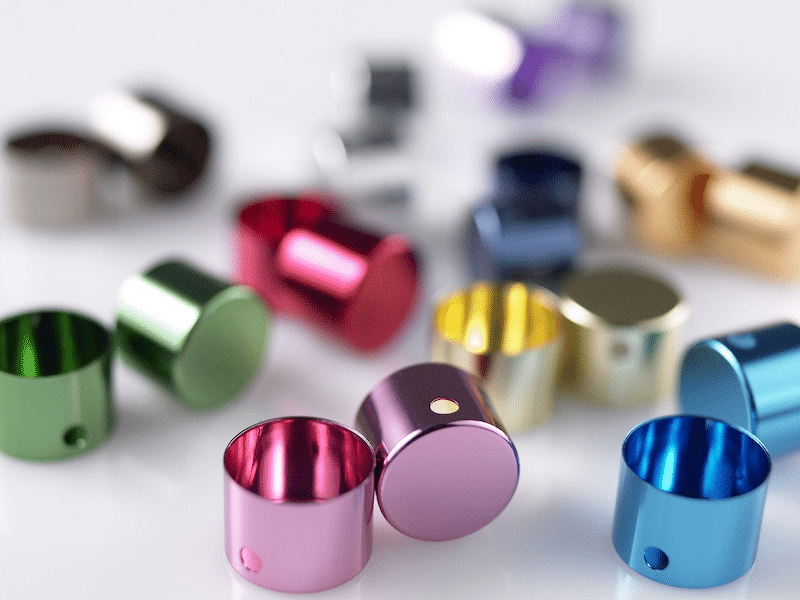
CNC Machining & Anodized Aluminum
Advantages:
- Significantly improves corrosion and wear resistance compared to bare aluminum.
- Accepts dye penetration during the process, enabling consistent and durable color finishes
- Adds minimal dimensional change, typically 0.0025 mm per surface, making it compatible with tight-tolerance parts
- Hard anodizing produces surface hardness values up to 70 Rockwell C, substantially harder than the base aluminum.
Common applications: Aerospace structural components, consumer electronics enclosures, medical device housings, and sporting equipment where a durable, lightweight, and visually consistent finish is required [7].
Powder Coating
Powder coating applies a dry thermoplastic or thermoset polymer powder electrostatically to the part surface, which is then cured in an oven to form a continuous, hard protective layer. It is one of the most durable decorative and protective finishes available for CNC-machined metal parts and is widely used across industrial and consumer applications.
Advantages:
- Delivers a thick, impact-resistant coating with good corrosion and UV protection
- Available in a wide range of colors, textures, and gloss levels, giving designers considerable aesthetic flexibility
- More environmentally favorable than liquid paint because it contains no solvents, and overspray can be reclaimed and reused
- Cost-effective at medium to high production volumes where batch processing is practical
Common applications: Automotive brackets and housings, outdoor enclosures, industrial machinery components, and consumer goods where a durable decorative finish is required alongside meaningful corrosion protection.
Bead Blasting
Bead blasting propels fine glass or ceramic beads at the part surface under controlled air pressure, producing a uniform matte texture by creating consistent micro-indentations across the surface. It does not add material or significantly alter dimensions, making it a non-invasive finishing option for parts where tolerances must be preserved.
Advantages:
- Produces a clean, uniform matte appearance that removes machining marks and surface inconsistencies
- Removes surface contaminants, light oxidation, and burrs without aggressive material removal
- Can be applied selectively to specific areas of a part where appearance or texture requirements differ from other surfaces
- Serves as an effective pre-treatment before anodizing or powder coating, improving adhesion of subsequent finishes
Common applications: Consumer electronics enclosures, automotive interior components, medical device housings, and any application where a consistent, non-reflective surface texture is required.
Polishing
Polishing uses abrasive compounds, buffing wheels, or lapping films to progressively reduce surface roughness to very low Ra values, producing smooth or mirror-like surfaces. It is both a functional and decorative finishing process, depending on the roughness target and the application requirements.
Advantages:
- Achieves very low surface roughness values, reducing friction in sliding contact applications and improving fluid flow in channels and bores
- Produces reflective surfaces for decorative hardware, optical components, and premium consumer products
- Improves fatigue resistance by removing surface stress concentrators left by machining operations
- Compatible with a wide range of metals, including aluminum, steel, titanium, and brass
Common applications: Fluid handling components, mold and die surfaces, medical instruments, decorative hardware, and bearing surfaces where low friction and smooth contact are functional requirements [8].
Electroplating
Electroplating deposits a thin layer of metal, most commonly nickel, chrome, zinc, or gold, onto the part surface through an electrochemical process. The deposited layer adds surface properties that the base material does not provide, including hardness, corrosion resistance, electrical conductivity, or decorative appearance.
Advantages:
- Nickel plating delivers significant improvements in surface hardness and wear resistance.
- Chrome plating produces a highly reflective, corrosion-resistant surface with strong decorative appeal.
- Zinc plating provides sacrificial corrosion protection, corroding preferentially to protect the base material underneath.
- Enables very precise thickness control, making it suitable for restoring worn dimensions on precision components
Common applications: Automotive trim and mechanical components, electronic connectors, industrial tooling, and decorative hardware where specific surface properties beyond the base material's capability are required [9].
Brushing
Brushing draws abrasive belts or wire brushes across the part surface in a single consistent direction, producing a fine linear grain texture. It is primarily a decorative finishing process, though the slight surface work hardening it introduces can offer marginal improvements in surface durability.
Advantages:
- Creates a distinctive linear grain pattern associated with premium product aesthetics in consumer electronics, architectural hardware, and appliances
- Removes minor surface marks and machining lines while producing a visually consistent texture across the part
- Relatively low cost compared to electroplating or hard anodizing, making it accessible for medium-volume production runs.
Common applications: Laptop and tablet enclosures, kitchen appliances, architectural panels, and industrial equipment panels where a professional, refined appearance is the primary finishing objective.
Passivation
Passivation is a chemical treatment applied to stainless steel parts that removes free iron and other surface contaminants introduced during machining, restoring and strengthening the natural chromium oxide layer that gives stainless steel its corrosion resistance. It does not add a coating or alter the part's dimensions in any measurable way.
Advantages:
- Restores the full corrosion resistance of stainless steel after machining operations that disturb the passive layer
- Produces no dimensional change, making it safe for precision components with tight tolerances
- Required by many industry standards in medical, food processing, and aerospace applications as a mandatory post-machining treatment
- Improves surface cleanliness by removing embedded machining residues that could initiate corrosion
Common applications: Surgical instruments, food processing equipment, pharmaceutical manufacturing components, and aerospace fittings, where the full corrosion resistance of stainless steel must be maintained after machining.
Conclusion
Surface finishing is an integral part of the CNC machining process, not a cosmetic afterthought. The finishing stage determines how a part performs against wear, corrosion, friction, and environmental exposure over its service life. Each method covered in this guide, from anodizing and powder coating to passivation and electroplating, serves a distinct set of functional and aesthetic requirements, and no single process is the right answer across all applications. The decision depends on the base material, the operating environment, the mechanical demands of the application, and the budget available for the finishing stage.
The most effective finishing decisions are made early in the design process, before machining begins, so that dimensional allowances, material compatibility, and production costs can all be accounted for properly. A finish specified too late, or chosen purely on cost grounds without evaluating functional requirements, consistently leads to performance shortfalls or unnecessary rework. Matching the finishing process to the full set of application requirements, rather than defaulting to the cheapest or most familiar option, is what separates components that perform reliably in service from those that fall short of their design intent.
References
Chaudhry, V., & Kailas, S. V. (2013). Fretting studies on self-mated stainless steel and chromium carbide coated surfaces under controlled environment conditions. Wear, 301(1–2), 524–539. https://doi.org/10.1016/j.wear.2013.01.084
Chen, W., Shao, Y., Li, X., Zhao, G., & Fu, J. (2014). Nanotopographical surfaces for stem cell fate control: Engineering mechanobiology from the bottom. Nano Today, 9(6), 759–784. https://doi.org/10.1016/j.nantod.2014.12.002
Davoodi, F., Taghian, M., Carbone, G., Saboori, A., & Iuliano, L. (2023). An overview of the latest progress in internal surface finishing of the additively manufactured metallic components. Materials, 16(10), 3867. https://doi.org/10.3390/ma16103867
Gugua, E. C., Ujah, C. O., Asadu, C. O., Von Kallon, D. V., & Ekwueme, B. N. (2024). Electroplating in the modern era, improvements and challenges: A review. Hybrid Advances, 7, 100286. https://doi.org/10.1016/j.hybadv.2024.100286
Hashimoto, F., Yamaguchi, H., Krajnik, P., Wegener, K., Chaudhari, R., Hoffmeister, H., & Kuster, F. (2016). Abrasive fine-finishing technology. CIRP Annals, 65(2), 597–620. https://doi.org/10.1016/j.cirp.2016.06.003
Jawahir, I., Brinksmeier, E., M’Saoubi, R., Aspinwall, D., Outeiro, J., Meyer, D., Umbrello, D., & Jayal, A. (2011). Surface integrity in material removal processes: Recent advances. CIRP Annals, 60(2), 603–626. https://doi.org/10.1016/j.cirp.2011.05.002
Jose, S. A., Lapierre, Z., Williams, T., Hope, C., Jardin, T., Rodriguez, R., & Menezes, P. L. (2025). Wear- and Corrosion-Resistant coatings for extreme environments: Advances, challenges, and future perspectives. Coatings, 15(8), 878. https://doi.org/10.3390/coatings15080878
Lee, J., Um, C., & Lee, I. (2005). Rheological properties of resin composites according to variations in monomer and filler composition. Dental Materials, 22(6), 515–526. https://doi.org/10.1016/j.dental.2005.05.008
Paschke, H., Weber, M., Kaestner, P., & Braeuer, G. (2010). Influence of different plasma nitriding treatments on the wear and crack behavior of forging tools evaluated by Rockwell indentation and scratch tests. Surface and Coatings Technology, 205(5), 1465–1469. https://doi.org/10.1016/j.surfcoat.2010.07.053