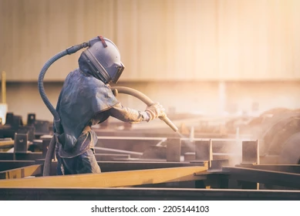
Surface Treatment Shot Peening/ Sand Blasting in Post-Processing of Vacuum Chambe
How do industries ensure that metal parts are resilient to wear and tear, don’t corrode, or function better over time? What methods are applied to

How do industries ensure that metal parts are resilient to wear and tear, don’t corrode, or function better over time? What methods are applied to
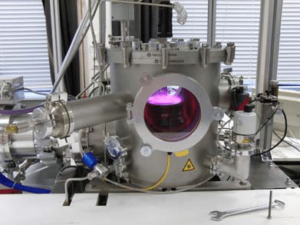
Heat treatment enhances vacuum chamber durability and performance in harsh conditions by improving strength, reducing stress, and refining microstructure.
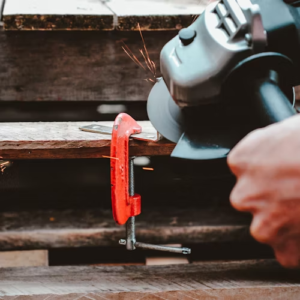
Vacuum chamber post-processing can be effectively protected from wear, corrosion, and harsh temperatures by selecting an appropriate coating or plating procedure. As technology continues to evolve, new developments in sustainable manufacturing methods, nanocoatings, and smart materials are critical to achieving new levels of performance and reliability.
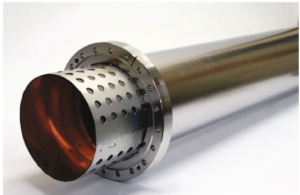
Cleaning and degreasing vacuum chambers are essential for maintaining optimal performance by eliminating contaminants. Advanced methods, such as cryogenic techniques, plasma cleaning, and laser cleaning, offer safe, reliable, and environmentally friendly solutions. Embracing these innovations, along with future advancements in automation and sustainable technologies, will ensure improved maintenance, greater efficiency, and higher cleanliness standards in critical applications.

This article details the post-processing of the vacuum chamber, including cleaning procedures, heat treatment, sanding, sandblasting, welding, leak testing.The operations of careful cleaning, surface treatment, and leak testing are essential in prolonging the life and dependability of vacuum chambers, which makes them useful in applications requiring great precision.
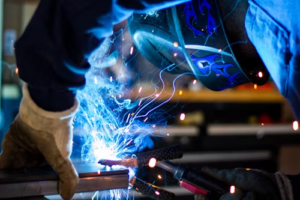
Laser Beam Welding uses a highly focused laser beam to join materials with precision, making it ideal for industries like aerospace, automotive, and electronics. The article explains the process, types of lasers used, and its benefits. Additionally, it discusses the historical development of Laser Beam Welding, safety precautions, and challenges, including the high initial costs and the need for skilled operators.
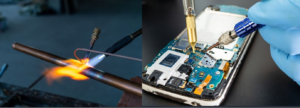
Brazing and soldering both use filler metals to join two or more metal parts permanently. While disassembling these joints is difficult, it is not impossible. These methods fall between fusion welding and solid-state welding in the range of joining techniques.
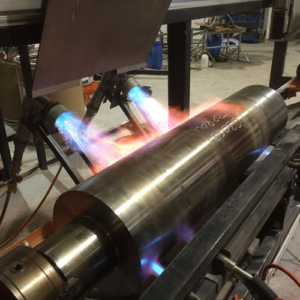
Roll Welding is a leading technology in today’s metal fabrication, enabling you to create dependable and strong connections between different materials in industries such as aerospace, automotive or construction. Understanding the full potential of these applications is challenging without proper knowledge of roll welding. It’s like knowing the geography only makes sense when you can also read a map.
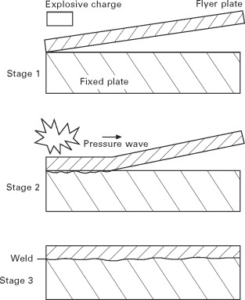
Although welding has always been essential to industry and construction, our methods and technology also change as these sectors develop. Explosive welding is one technique that is becoming increasingly popular; it’s a process that sounds as dramatic as it is useful. However, what is explosive welding exactly, and why is it regarded as the next major innovation in the joining of the materials industry? Let’s explore this in more detail in this article. So, let’s begin.
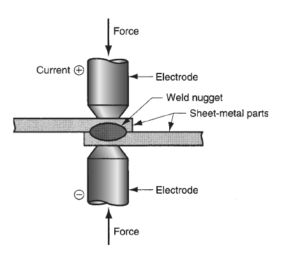
Resistance welding (RW) encompasses a range of fusion-welding techniques that achieve coalescence through a mix of heat and pressure.
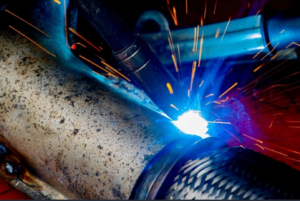
Electron beam welding (EBW) is a technique that achieves coalescence using a focused stream of high-velocity electrons directed at the weld joint.
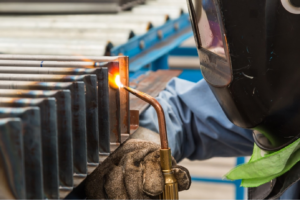
Oxyfuel Gas Welding (OFW) is a welding method that uses oxygen and a mixture of different fuels to produce a flame. The main distinction between