
Forging vs. Machining for Large Custom Titanium and 316 Stainless Steel Parts
For a large titanium or 316 stainless steel component, the manufacturing decision is often not simply forging or CNC machining. Machining directly from plate, bar, billet, or block provides geometric flexibility, but it can require substantial material removal. A forged preform can place material closer to the finished shape, yet critical surfaces and dimensions may still require precision machining.
The practical forging vs. machining decision is therefore often a comparison between direct machining from wrought stock and using a forged blank followed by finish machining. Part size, stock availability, geometry, material removal, production quantity, tolerance, and inspection requirements all affect the route.
Forging vs. Machining: What Decision Are You Actually Making?
Forging reshapes metal through controlled deformation, while machining removes material to create controlled geometry. For many large custom parts, these processes are used together rather than as competing alternatives. The Forging Industry Association specifically compares forgings with shapes machined from bar and plate and identifies material utilization, product size, and directional grain flow as relevant considerations. [6]
A machined component may start from rolled plate, billet, bar, block, or even forged stock. A forging may also leave additional material around areas that later become bores, bearing seats, flange faces, threads, sealing surfaces, or precision datums.
This matters when comparing forged vs. machined parts. Final mechanical performance is influenced by alloy, product form, thermomechanical history, heat treatment, orientation, surface condition, geometry, and loading—not simply by whether the final part was machined. Research on Ti-6Al-4V has shown that crystallographic orientation can affect fatigue crack initiation behavior. [4]
The more useful question is: Which process should establish the starting form, and which should create the final functional geometry?
When Direct Machining From Wrought Stock Makes Sense
Direct machining is often practical when suitable stock is readily available and the amount of excess material is manageable.
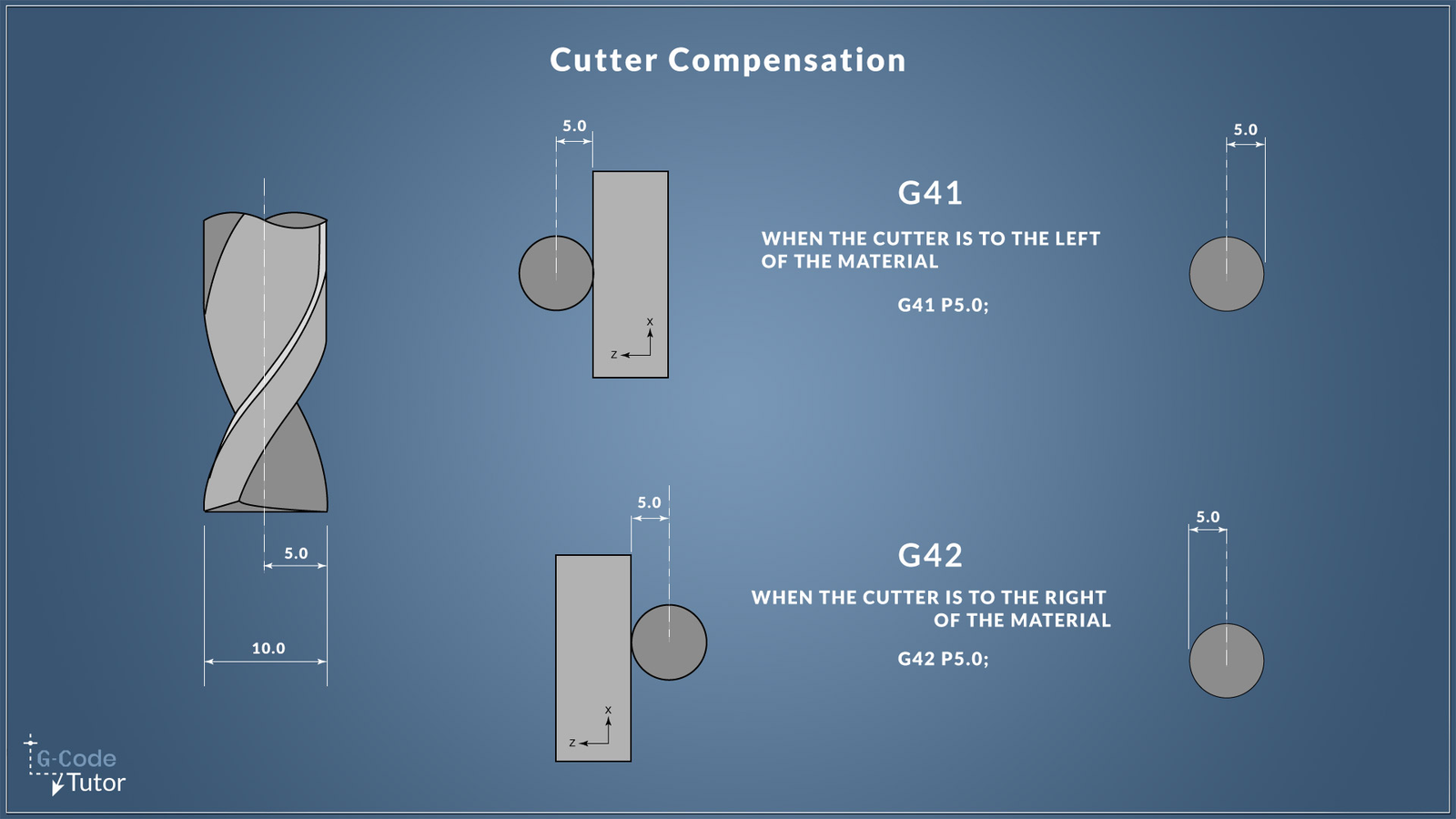
It is particularly useful for prototypes, low-volume parts, and designs that may change. Updating CNC programming or fixturing can be more practical than developing or modifying a dedicated forged preform.

Source: Seco Tools
Machining also works well when the component contains complex pockets, bores, contours, multi-face features, or tightly located interfaces. Multi-axis CNC machining can produce several of these features within controlled setups.
The tradeoff becomes more significant when a finished part occupies only a small portion of a large starting block. This can result in long roughing cycles, substantial chip generation, cutting-tool consumption, and extended machine occupancy. With Ti-6Al-4V, low thermal conductivity also contributes to high temperatures near the tool-chip interface during cutting. [1]
Low quantity alone does not automatically make machining the correct choice. Stock availability, product-form requirements, geometry, and final performance requirements still matter.
When a Forged Preform Makes Sense for Large Custom Parts
A forged preform becomes attractive when its starting geometry can be brought much closer to the finished component before CNC machining begins.
Large shafts, hubs, discs, blocks, and rings are common examples. Rather than removing most of an oversized rectangular or cylindrical blank, the manufacturer can begin with a forging whose mass distribution already resembles the finished part.
The Forging Industry Association identifies material utilization, available product size, and directional material flow as potential advantages of forging compared with machining shapes directly from bar or plate. These benefits remain application-specific and should not be interpreted as meaning every forging is stronger or less expensive. [6]
Open-Die and Near-Net-Shape Forging
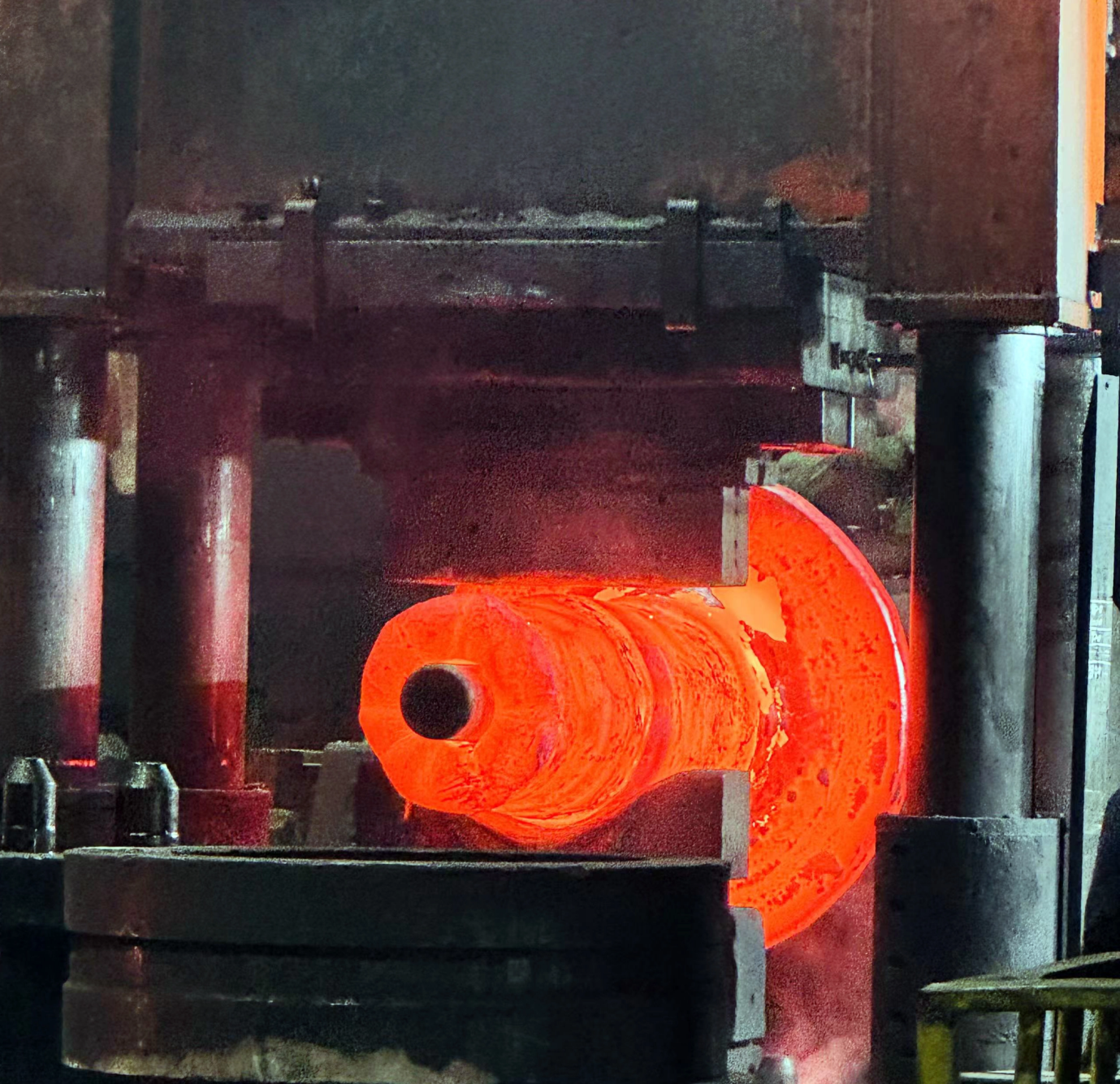
Open-die forging is particularly relevant to large shafts, discs, hubs, rings, and block-type components.
A near-net-shape forging places material closer to the intended final geometry. The goal is normally to reduce unnecessary stock removal while retaining enough machining allowance for final precision features.
A Forging Industry Association case study also documents a large open-die forged mining-shovel hub for which finish machining was used as a secondary operation. Although the example involves steel rather than titanium or 316 stainless steel, it demonstrates how a large forging can function as a preform rather than a finished precision component. [7]

Source: WALKSON
Forging Followed by Precision Machining
A forged component may proceed through heat treatment or conditioning as required, followed by rough machining, finish machining, and inspection.
This is why forging should often be considered the first stage of the manufacturing route rather than the final shaping operation.
How Titanium and 316 Stainless Steel Change the Process Decision
Titanium and 316-series stainless steel can both be forged and machined, but their manufacturing behavior changes the economics and process controls involved.
Titanium / Ti-6Al-4V
In a titanium forging vs machining decision, the amount of material removed can be especially important.
NIST research on Ti-6Al-4V machining connects high tool-chip interface temperatures with the alloy's low thermal conductivity and heat generated in the cutting zone. This makes cutting strategy, tool condition, and machining time important when removing large volumes of titanium. [1]
For large titanium parts machining, a forged preform may therefore reduce the amount of rough stock that must be removed before final features are produced.
That does not mean forged titanium is automatically stronger than machined titanium. TIMET notes that Ti-6Al-4V properties depend on material condition and microstructure, while research on Ti-6Al-4V fatigue behavior demonstrates the importance of crystallographic orientation. [3] [4]
ASTM B381-26 covers titanium and titanium-alloy forgings and includes Grade F-5, corresponding to Ti-6Al-4V. The applicable material specification, mechanical-property requirements, and inspection requirements still need to be defined for the individual component. [2]
316 / 316L Stainless Steel
The 316 stainless steel forging decision involves different machining concerns. Austenitic 316-series stainless steels can work-harden during cutting and require attention to chip formation, tool wear, cutting conditions, and machine rigidity.
Alleima's Sanmac 316/316L technical data discusses machining factors including chip breaking, built-up edge, tool wear, machine stability, and work hardening. The same technical documentation confirms that 316/316L billet material can be hot worked, although supplier-specific processing parameters should not be treated as universal forging instructions. [5]
316 and 316L should also remain distinct specifications during sourcing. A drawing should identify the required grade and applicable material specification rather than using "316 stainless steel" as a substitute for a complete material requirement.
From Forged Shape to Functional Precision
A forged blank can establish the basic mass and section distribution of a component, but many function-critical features still require machining.
A near-net forged hub, for example, may already approximate its outside profile, flange, or central opening. Material is normally retained around areas that need controlled final dimensions.
Typical finish-machined features include:
- Precision bores and bearing seats;
- Internal and external threads;
- Sealing and flange faces;
- Mating surfaces;
- bolt patterns;
- Datum faces;
- Shoulders;
- Tightly located interfaces.
The final tolerance cannot be represented by one universal CNC value. It depends on feature size, material, machine, fixture rigidity, tool access, thermal conditions, setup strategy, and inspection method.
Surface requirements follow the same logic. An as-forged surface may be acceptable in a non-functional area, while sealing, bearing, sliding, or mating surfaces may require machining, grinding, or another controlled finishing process.
Large-Part Setup, Alignment, and Inspection
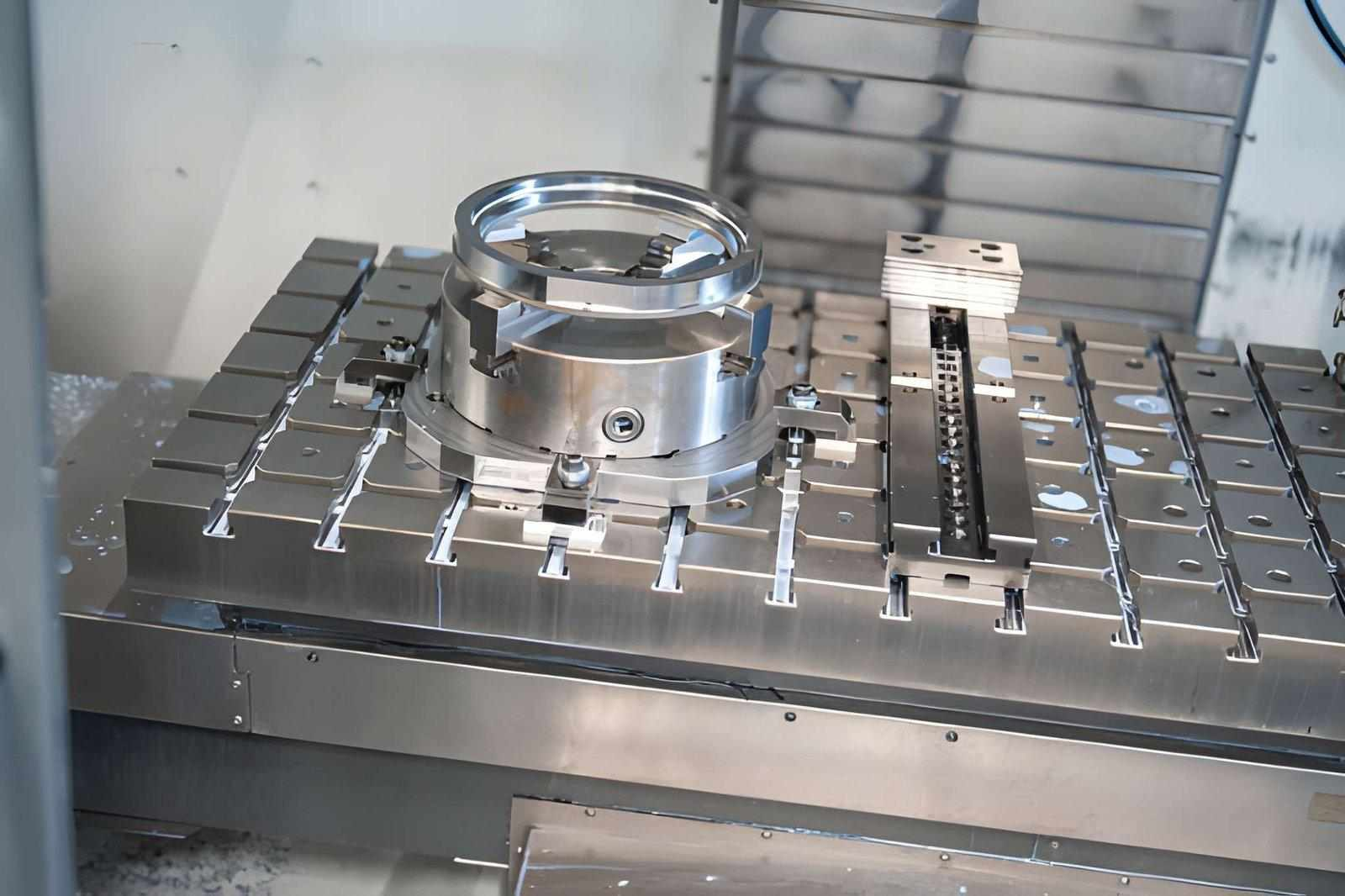
Large-part machining depends on more than whether a component fits within a machine's nominal travel. Fixture rigidity, tool reach, orientation, datum control, repositioning, and inspection access also affect manufacturability.
A forged preform may not present every surface in exactly the same location relative to the finished geometry. Before heavy machining begins, the manufacturer may need to establish the actual stock position relative to the intended datums.
Renishaw describes the use of machine-tool probing with large castings and forgings to establish part location and stock condition. Adaptive machining can then use measured position, alignment, or available stock to adjust the process to the actual near-net component. [8]

Source: NILES-SIMMONS / NSH Group
After machining, CMM inspection can verify controlled relationships between datums, bores, faces, and other function-critical features. Material verification or NDT may also be required when specified by the drawing, applicable standard, or customer requirements. ASTM B381-26 allows relevant ultrasonic, X-ray, or surface-inspection requirements to be specified by the purchaser where required. [2]

Source: NASA/JPL-Caltech
Cost and Production Economics
The correct cost comparison is the complete manufacturing route, not the price of one individual process.
Direct-Machining Cost Drivers
Direct machining can include:
- Oversized stock;
- CNC programming;
- Fixtures and workholding;
- Rough and finish machining;
- Cutting tools and tool wear;
- Multiple setups;
- Inspection;
- Scrap or rework risk.
For machining large titanium parts, stock removal becomes particularly important because cutting heat, tool condition, and machine time can make heavy roughing a significant production cost. [1]
Forged-Preform + Machining Cost Drivers
A forged route can include:
- Starting billet;
- Forging development;
- Tooling or dies where required;
- Heating and forming;
- Heat treatment where specified;
- NDT where required;
- Machining allowance;
- Rough and finish machining;
- Inspection;
- Large-part handling.
Near-net forging can reduce material removal, but that saving must be weighed against the additional cost of producing the forging. There is no universal production quantity at which forging automatically becomes cheaper. [6]
| Decision Factor | Direct Machining From Wrought Stock | Forged Preform + Finish Machining |
|---|---|---|
| Starting form | Bar, plate, billet, or block | Forged blank or near-net preform |
| Geometry flexibility | High | Depends on forging route |
| Material removal | Can be substantial | Can be reduced |
| Upfront tooling | Mainly machining fixtures and tools | May include forging tooling or development |
| Design changes | Generally easier | May affect preform or tooling |
| Low-volume work | Often practical | Can still be practical in selected cases |
| Final precision | Established by machining | Commonly established by finish machining |
| Inspection | Final dimensional/material checks | Preform checks plus final-part inspection as specified |
How to Choose Between the Two Routes
Direct machining tends to make sense when suitable stock is available, quantities are limited, the design may change, and complex precision geometry dominates the part.
A forged preform deserves stronger consideration when the component is large, its mass distribution can be approximated efficiently before machining, or machining from stock would remove a large amount of expensive material.
Product-form or structural requirements can also control the choice. If the drawing or material specification requires a forging, that requirement takes priority over a simple comparison of machining hours.
For many large custom metal parts, the most practical answer is not forging or machining alone. It is a forged preform followed by the machining required to produce the final functional component.
What to Provide for Manufacturability and RFQ Review
A supplier needs more than overall dimensions and a material name to evaluate the manufacturing route. A useful RFQ should include:
- 2D drawing and available 3D CAD data;
- Exact titanium, 316, or 316L specification;
- Quantity;
- Tolerances and critical datums;
- Surface requirements;
- Heat-treatment or mechanical-property requirements;
- NDT requirements where applicable;
- Dimensional inspection requirements;
- Required starting product form, if specified.
BaiChuan Precision publishes 3-, 4-, and 5-axis CNC machining capabilities and lists titanium and stainless steel among its machining materials. For large-component work, its website lists a maximum gantry machining-center stroke of 6500 × 4200 × 1800 mm and a CMM inspection range of 4000 mm. These figures describe published equipment capabilities rather than guarantees for every workpiece geometry or setup. [9]
FAQs
Are forged titanium parts always stronger than machined titanium parts?
No. Performance depends on alloy, product form, thermomechanical history, heat treatment, orientation, geometry, surface condition, and loading. [3] [4]
Do forged parts still need CNC machining?
Often. Bores, threads, sealing faces, bearing seats, mating surfaces, datum features, and other precision interfaces commonly require machining after forging. [7]
When should Ti-6Al-4V be forged instead of machined from billet?
A forged preform is worth evaluating when machining from billet would require substantial stock removal or when the required product form or engineering specification favors forging. [1] [6]
Can 316 stainless steel be forged and then machined?
Yes. 316-series stainless steels can be hot worked and subsequently machined, but the exact route must match the required grade, material condition, and specification. [5]
Is forging economical for low-volume custom parts?
It can be, but quantity alone does not determine the answer. Part size, stock availability, forging method, tooling requirements, material removal, and final machining demand all influence total manufacturing cost. [6]
What should be included in an RFQ for a large forged-and-machined component?
Provide the drawing or CAD model, exact material specification, quantity, tolerances, critical datums, surface requirements, heat treatment, NDT, inspection requirements, and any mandatory starting product form.
Conclusion
Direct machining is often practical when suitable wrought stock is available, quantities are limited, designs may change, and precision geometry dominates the component. A forged preform becomes more attractive when the part is large, its shape can be approximated efficiently before machining, excessive stock removal would otherwise be required, or the engineering specification favors a forged product form.
For many large titanium and 316 stainless steel parts, forging and machining work together: forging establishes the preform, while CNC machining produces the controlled surfaces and final functional geometry.
References
[1] Heigel, J. C. et al. Infrared Measurement of the Temperature at the Tool-Chip Interface While Machining Ti-6Al-4V. Journal of Materials Processing Technology, 2017.
https://www.nist.gov/publications/infrared-measurement-temperature-tool-chip-interface-while-machining-ti-6al-4vDOI: 10.1016/j.jmatprotec.2016.11.026
[2] ASTM International. ASTM B381-26 — Standard Specification for Titanium and Titanium Alloy Forgings. 2026.
https://store.astm.org/standards/b381
[3] TIMET. TIMETAL 6-4, 6-4 ELI & 6-4-.1Ru Technical Data Sheet.
https://www.timet.com/documents/datasheets/alpha-and-beta-alloys/timetal-6-4.pdf
[4] Bantounas, I., Dye, D., and Lindley, T. C. The Effect of Grain Orientation on Fracture Morphology During High-Cycle Fatigue of Ti-6Al-4V. Acta Materialia, 2009.
https://doi.org/10.1016/j.actamat.2009.04.018
[5] Alleima. Sanmac 316/316L Technical Data.
https://www.alleima.com/en/technical-center/material-datasheets/billets/sanmac-316316l/
[6] Forging Industry Association. How Forgings Compare to Other Processes.
https://www.forging.org/fia/content/about/design-engineering-center-content/How_Forgings_Compare_to_Other_Processes.aspx
[7] Forging Industry Association. Case Study No. 8 — Hub for Mining Shovel.
https://www.forging.org/content/about/design-engineering-center-content/case-studies/Case_Study_No._8_Hub_for_Mining_Shovel.aspx
[8] Renishaw. Heavy Industry — Precision at Every Scale.
https://www.renishaw.com/en/39162.aspx
[9] BaiChuan Precision. High and Ultra-high Vacuum Chambers — Large-Part Machining and Inspection Capabilities.
https://bccncmilling.com/industries/vacuum-chambers/