
Why Is 5-Axis CNC Machining Particularly Suitable for Complex Parts?
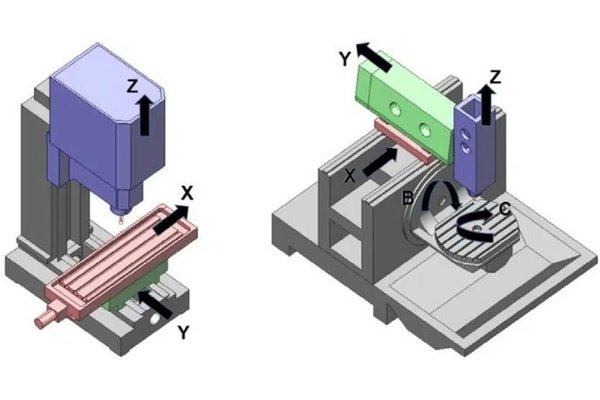
Machining complex parts can be challenging when the geometry includes multiple angles, curved surfaces, deep cavities, or features that are difficult to reach with a conventional CNC machine. With 3-axis machining, the cutting tool is limited to movement along three linear axes, so the workpiece may need to be repositioned and clamped several times to reach different surfaces. Each additional setup adds time and creates another opportunity for alignment errors.
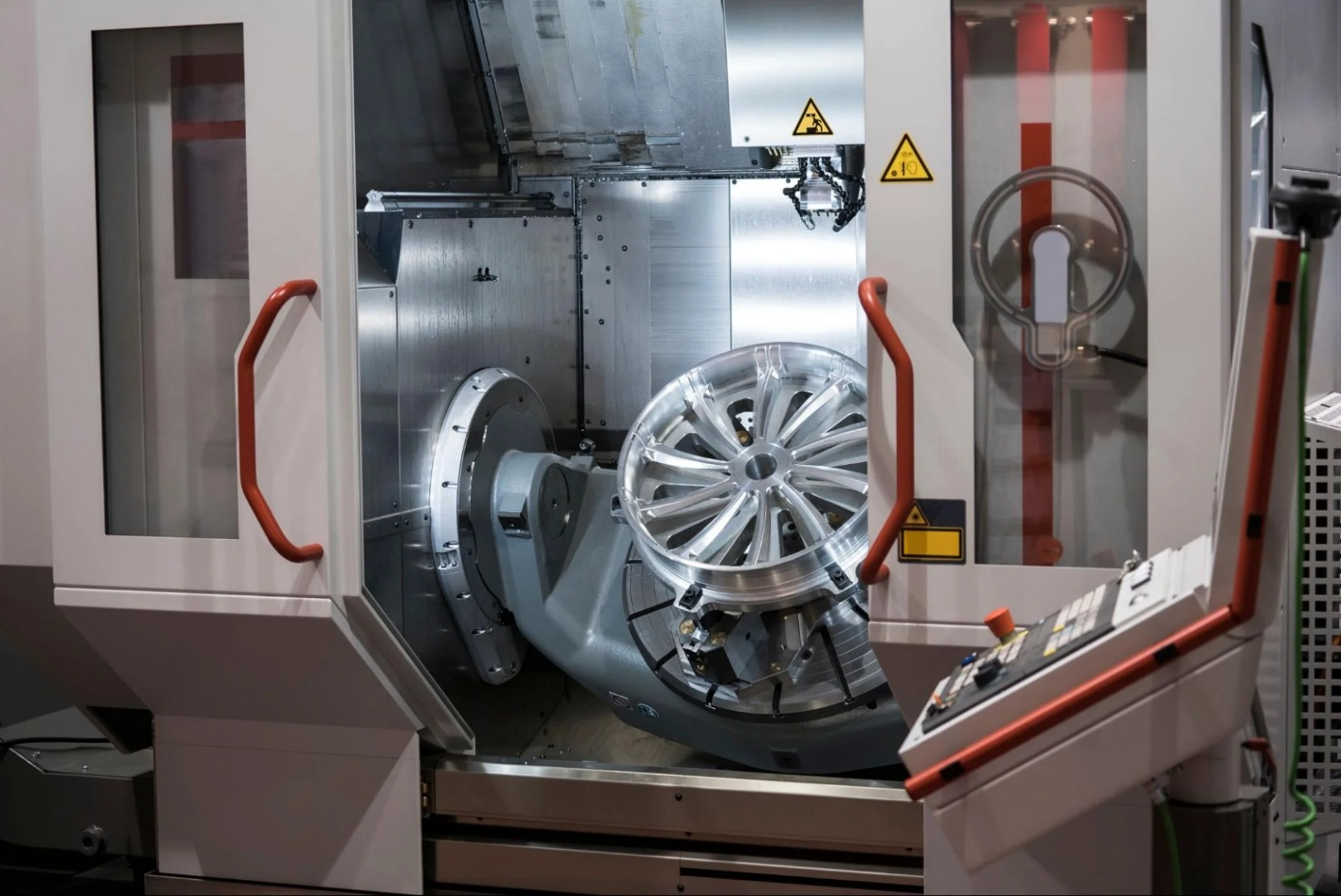
5-axis CNC machining provides greater flexibility by allowing movement along three linear axes and two rotational axes. This enables the cutting tool to approach the workpiece from multiple directions and machine complex features with fewer setups. As a result, 5-axis machining is particularly useful for prototypes, R&D components, and single-piece production where complex geometry, dimensional accuracy, and shorter development times are important.
CNC Machining Precision | 3-Axis vs 5-Axis Technology
What Makes a Part "Complex" for CNC Machining?
A CNC part becomes complex when its geometry requires the cutting tool to approach the workpiece from multiple directions or maintain changing orientations during machining. Complexity is not necessarily related to the size of the component. Even a small part can be difficult to machine if it contains curved surfaces, deep cavities, undercuts, or tight tolerances. [1]
Common features that increase machining complexity include:
- Multi-angled surfaces: Surfaces positioned at different angles may require the workpiece or cutting tool to be repositioned to achieve proper access.
- Curved or free-form surfaces: Components such as turbine blades and impellers have continuously changing geometries, making tool orientation important for maintaining suitable cutting conditions and surface quality. [2]
- Deep cavities and narrow channels: Recessed features can limit tool access. The tool may reach the area but still lack enough clearance to machine it effectively.
- Undercuts and inclined holes: These features often cannot be machined efficiently from a single fixed tool direction and may require additional orientations.
- Multiple machined sides: Some components need machining on several surfaces. Conventional 3-axis machining may therefore require the workpiece to be removed, repositioned, and clamped again.
- Tight tolerances and surface-finish requirements: When dimensional accuracy and surface quality are critical, tool orientation and machine movement become increasingly important. [3]
For these parts, repeated repositioning can increase setup time and introduce additional opportunities for alignment errors. This is where the additional rotary movement of 5-axis machining becomes particularly useful.
How 5-Axis CNC Machining Handles Complex Geometries
The main advantage of 5-axis machining is not simply the number of axes. It is the freedom to change the cutting tool's orientation while machining the workpiece. The three linear axes control movement along X, Y, and Z, while the two additional rotary axes allow the tool or workpiece to tilt and rotate. This makes it possible to approach complex surfaces from directions that are difficult to achieve with a conventional 3-axis setup.
Simultaneous access to multiple surfaces
With 5-axis machining, the cutting tool can continuously adjust its orientation as it moves across the workpiece. This is particularly useful for curved and multi-angled surfaces where a fixed tool direction would create poor accessibility or require several separate operations.
For example, consider a turbine blade with a curved airfoil surface. Rather than machining the surface from a limited direction and repositioning the blade repeatedly, a 5-axis machine can adjust the tool orientation as it follows the changing geometry. Research on five-axis tool-path planning shows that controlling tool orientation is important for avoiding interference while maintaining effective machining conditions [4].
This capability is also valuable for parts such as:
- Impellers: The cutter can reach the curved surfaces between blades more effectively.
- Molds and dies: Complex cavities and contoured surfaces can be machined with better tool access.
- Aerospace components: Angled and free-form surfaces can often be machined without repeatedly changing the workpiece orientation.
Fewer setups and less repositioning
One of the most practical benefits of 5-axis machining is the reduction in the number of setups required. On a 3-axis machine, a complex component may need to be removed from the fixture and repositioned several times so that different surfaces can be reached.
In contrast, a 5-axis machine can often access several sides of the same component while it remains securely positioned. This reduces the amount of time spent on clamping, alignment, and workpiece repositioning. It can also help preserve the positional relationship between features that need to be machined from different directions [5].
This is especially useful when producing a prototype. If a single complex component requires four or five orientations on a conventional machine, preparing and checking each setup can become a significant part of the total machining process. A 5-axis approach can simplify this workflow.
Better tool orientation
The additional rotary axes also give the programmer greater control over the angle at which the cutting tool contacts the workpiece. Maintaining a suitable tool orientation can improve accessibility and help control machining conditions across a curved surface.
Tool orientation can also influence surface quality and machining performance. Poor orientation may increase the risk of tool interference, unfavorable cutting conditions, or excessive tool movement. Optimizing the orientation therefore becomes particularly important when machining complex surfaces with changing curvature [6].
Why Fewer Setups Improve Accuracy and Save Time
Reducing the number of setups is one of the main advantages of 5-axis machining for complex parts. Every time a workpiece is removed and repositioned, there is another opportunity for alignment variation. Machining more features within the same setup can therefore reduce setup-related errors and help maintain the relationship between different features. [7]
Reducing setup-related errors
With conventional machining, a complex component may require several setups to reach different surfaces. Each repositioning involves:
- Realignment: The workpiece must be accurately positioned again.
- Reclaiming: The fixture must securely hold the part in its new orientation.
- Reference setting: New work offsets or reference points may need to be established.
- Verification: The new setup may require additional inspection.
Small positioning differences between setups can become important when features need to maintain tight positional relationships. [8]
A 5-axis machine can often access multiple surfaces while keeping the workpiece in one setup. This reduces the amount of repositioning required and simplifies the overall machining process.
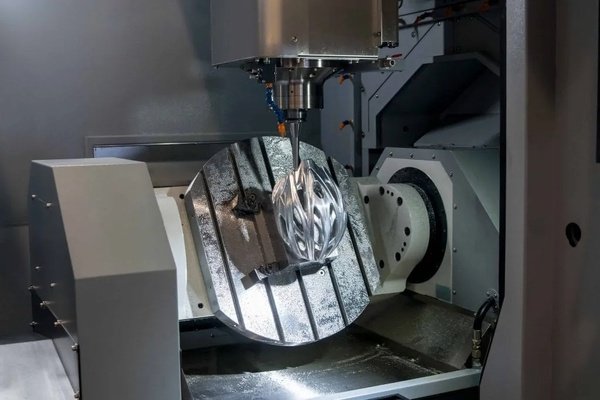
5-Axis CNC Machining
Saving time beyond cutting
The time saved with fewer setups is not limited to actual cutting. A complex part also requires time for:
- Fixture preparation: Creating or adjusting fixtures for different orientations.
- Workpiece alignment: Establishing the correct position after every repositioning.
- Tool and program preparation: Setting up additional operations for different orientations.
- Inspection: Checking the part after multiple operations and setups.
- Operator handling: Removing, turning, reclamping, and referencing the workpiece.
For a one-off prototype, these activities can represent a significant proportion of the total manufacturing effort. A 5-axis setup can consolidate more of these operations into a single machining process.
Maintaining feature-to-feature relationships
The benefit becomes especially important when several features must align accurately. For example, an aerospace component with angled holes and contoured surfaces may require precise relationships between features machined from different directions.
Keeping more of these operations within the same setup can reduce setup-related variation. Research has also shown that workpiece positioning and setup conditions can influence accessibility, machining efficiency, and contour accuracy in five-axis machining. [9]
Fewer setups do not guarantee higher accuracy, but they can remove some sources of setup-related variation while also reducing machining preparation time.
Why 5-Axis CNC Machining Is Ideal for Prototyping
5-axis machining is particularly useful for prototypes because prototypes often involve complex geometries, low production quantities, and repeated design changes.
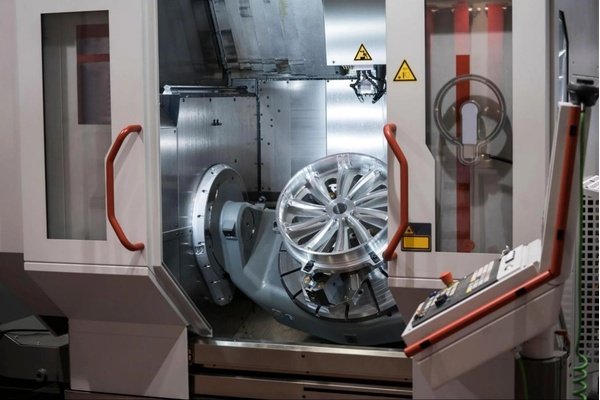
5-Axis CNC Machining for Prototyping
- Fewer setups: More surfaces can often be machined in a single setup, reducing repositioning and alignment work.
- Faster iterations: Engineers can move more quickly through the cycle of design → prototype → testing → modification → new prototype.
- Lower fixture requirements: Fewer machining orientations can reduce the need for multiple custom fixtures.
- Better access to complex features: Additional rotary movement helps the tool reach curved surfaces, angled features, and recessed areas.
- Suitable for one-off parts: The setup flexibility is valuable when only one or a few prototype components are required.
- Supports R&D work: Research teams can produce and modify complex components without developing a large-scale production process.
- Improved machining efficiency: Optimized tool orientation can help reduce unnecessary tool movement while maintaining suitable cutting conditions [10].
For example, when developing an impeller or aerospace component, several design iterations may be required before the final geometry is approved. The flexibility of 5-axis machining can make these repeated prototype cycles more practical.
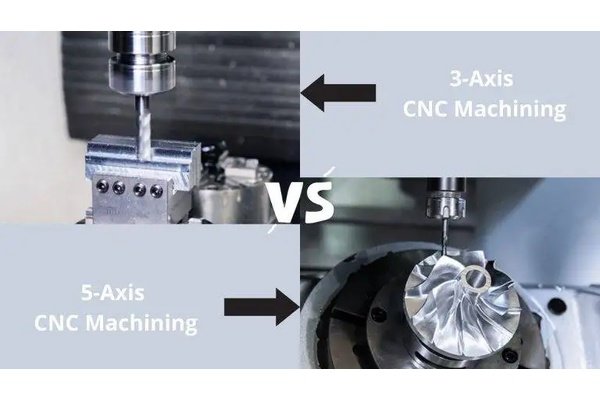
5-Axis vs. 3-Axis CNC Machining for Complex Parts
The choice between 3-axis and 5-axis CNC machining largely depends on the geometry of the part. A 3-axis machine remains an effective and economical option for components with relatively simple surfaces and features that can be reached from one or a few orientations. For complex parts, however, the additional rotary movement of a 5-axis machine can reduce repositioning and improve tool accessibility.
| Factor | 3-Axis CNC | 5-Axis CNC |
|---|---|---|
| Complex surface access | Limited | Excellent |
| Number of setups | Often more | Often fewer |
| Repositioning | More frequent | Reduced |
| Angled features | More difficult | Easier |
| Prototype iterations | Can take longer | Often faster |
| Fixture requirements | Often higher | Often reduced |
| Complex one-off parts | Suitable in some cases | Highly suitable |
5-Axis machining is most useful when the complexity of a part makes conventional setups inefficient.
Five-axis machining can also provide greater control over tool orientation, which is important when machining curved surfaces and complex geometries [11].
However, 5-axis is not automatically the better choice. For a simple bracket, plate, or pocketed component, 3-axis machining may be faster and more economical. The main advantage of 5-axis becomes clear when part complexity and accessibility make repeated setups the bigger manufacturing challenge.
When Should You Choose 5-Axis CNC Machining?
5-axis machining is most useful when the complexity of a part makes conventional setups inefficient.
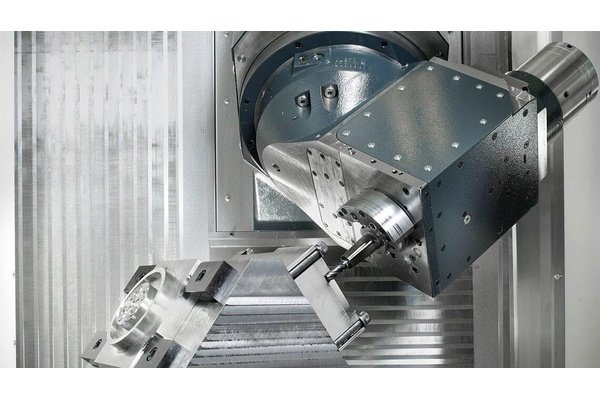
5-Axis CNC Machine
Consider it when:
- The part has multiple angled or curved surfaces: Additional rotary movement allows the cutting tool to approach these surfaces from more suitable directions.
- Several sides require machining: A single setup can often provide access to multiple surfaces, reducing repositioning.
- Frequent repositioning would be required: Fewer setups can reduce alignment work and setup-related variation.
- Feature-to-feature accuracy is important: Keeping related features within the same setup can help maintain their positional relationship.
- The part is difficult to fixture: Complex geometries may be easier to machine when the tool can change orientation rather than relying on multiple workholding arrangements.
- You are producing a prototype or one-off part: The flexibility of 5-axis machining can be valuable when only a small number of complex components are required.
- Design iterations are expected: R&D projects can benefit from a machining process that accommodates repeated geometry changes.
The final choice should still consider the part geometry, material, tolerances, machine capability, tooling, and production quantity. 5-axis machining is most worthwhile when these factors make accessibility and setup reduction significant concerns.
Conclusion
5-axis CNC machining is particularly suitable for complex parts because it provides greater freedom to approach the workpiece from multiple directions. This can reduce the number of setups, limit repositioning, and make difficult surfaces and angled features easier to machine.
For prototypes, R&D components, and single-piece production, these advantages can be especially valuable. When part complexity is the main manufacturing challenge, 5-axis machining can offer a more efficient and flexible alternative to repeated 3-axis setups. The right choice still depends on the geometry, tolerances, material, machine capabilities, and production requirements.
References
[1] Lee, Y. S. (1997). Admissible tool orientation control of gouging avoidance for 5-axis complex surface machining. Computer-Aided Design, 29(7), 507-521. DOI: 10.1016/S0010-4485(97)00002-X
[2] Jun, C. S., Cha, K., & Lee, Y. S. (2003). Optimizing tool orientations for 5-axis machining by configuration-space search method. Computer-Aided Design, 35(6), 549-566. DOI: 10.1016/S0010-4485(02)00077-5
[3] Xiao, Q. B., Wan, M., Zhang, W. H., & Yang, Y. (2022). Tool orientation optimization for the five-axis CNC machining to constrain the contour errors without interference. Journal of Manufacturing Processes, 76, 46-56. DOI: 10.1016/j.jmapro.2022.01.071
[4] Lee, Y. S. (1997). Admissible tool orientation control of gouging avoidance for 5-axis complex surface machining. Computer-Aided Design, 29(7), 507-521. DOI: 10.1016/S0010-4485(97)00002-X
[5] Xiao, Q. B., Wan, M., Zhang, W. H., & Yang, Y. (2022). Tool orientation optimization for the five-axis CNC machining to constrain the contour errors without interference. Journal of Manufacturing Processes, 76, 46-56. DOI: 10.1016/j.jmapro.2022.01.071
[6] Jun, C. S., Cha, K., & Lee, Y. S. (2003). Optimizing tool orientations for 5-axis machining by configuration-space search method. Computer-Aided Design, 35(6), 549-566. DOI: 10.1016/S0010-4485(02)00077-5
[7] Bohez, E. L. J. (2002). Compensating for systematic errors in 5-axis machining. Computer-Aided Design.
[8] A general framework of workpiece setup optimization for the five-axis machining. (2020). International Journal of Machine Tools and Manufacture, 149, 103508. DOI: 10.1016/j.ijmachtools.2019.103508
[9] A workpiece setup optimization method for 5-axis machining with motion coherence and stiffness enhancement. (2024). https://doi.org/10.1016/j.precisioneng.2024.05.008
[10] Jun, C. S., Cha, K., & Lee, Y. S. (2003). Optimizing tool orientations for 5-axis machining by configuration-space search method. Computer-Aided Design, 35(6), 549-566. DOI: 10.1016/S0010-4485(02)00077-5
[11] Lee, Y. S. (1997). Admissible tool orientation control of gouging avoidance for 5-axis complex surface machining. Computer-Aided Design, 29(7), 507-521. DOI: 10.1016/S0010-4485(97)00002-X