
CNC-machined parts are widely used in marine systems, offshore equipment, coastal infrastructure, and other environments where exposure to water is unavoidable. From boat hardware and propulsion components to structural brackets and precision assemblies, these parts are expected to perform reliably even under harsh conditions.
However, saltwater presents a serious challenge for metal components. Its combination of salt, moisture, and oxygen accelerates corrosion, which gradually weakens materials and reduces their service life. Over time, this leads to surface damage, loss of accuracy, and potential part failure. This article explains how saltwater affects CNC-machined parts and outlines practical ways to prevent damage and extend durability.
Why Saltwater Is Highly Corrosive
Saltwater is far more aggressive toward metals compared to freshwater because of its chemical makeup and constant exposure to oxygen. When CNC-machined parts are placed in marine environments, corrosion does not happen slowly or evenly. It often begins quickly and spreads in localized areas, especially where moisture is trapped or where protective layers are weak.
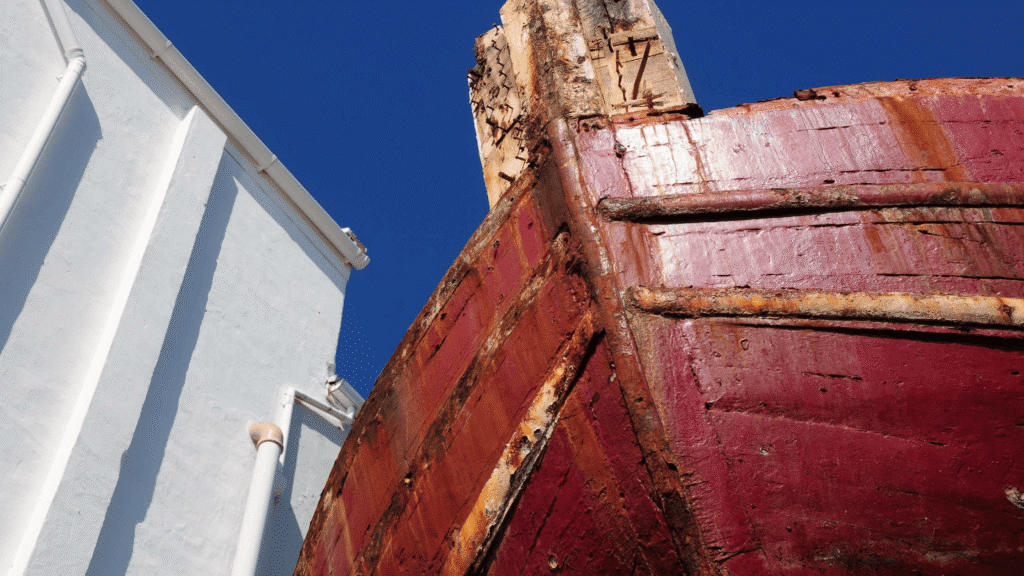
The main reason saltwater is so damaging comes from how it supports electrochemical reactions on metal surfaces. These reactions steadily break down the material, especially in environments where parts are continuously wet and exposed to air.
Several factors make saltwater particularly corrosive:
- High salt content (chlorides)
Chloride ions penetrate protective oxide layers on metals. Once this layer is broken, the underlying metal becomes exposed and starts corroding. For example, steel bolts on boat fittings often show rust within a short time of exposure.
- Presence of oxygen and moisture together
Oxygen dissolved in water accelerates oxidation. When combined with constant moisture, the corrosion process becomes continuous rather than intermittent. This is why parts exposed to splashing seawater degrade faster than parts that only get occasional wetting.
- Electrochemical reaction acceleration
Saltwater acts as a conductor, allowing electrons to move easily between metal surfaces. This speeds up corrosion reactions, especially where different metals are in contact. A common example is corrosion forming around fasteners on marine panels where stainless steel and aluminum meet.
When compared to freshwater environments, the difference in corrosion rate is significant. Freshwater contains fewer ions, so the electrochemical activity is weaker. In coastal or offshore conditions, however, saltwater maintains a constant conductive environment, which keeps corrosion active almost continuously.
A practical example can be seen in marine hardware. Steel components used on boats operating in seawater often show visible rust and surface pitting much faster than similar parts used in inland water systems like lakes or reservoirs.
Common CNC Materials and Their Vulnerability
CNC-machined parts are produced using a wide range of materials, and each one reacts differently when exposed to saltwater. Some materials naturally resist corrosion better, while others degrade quickly unless they are properly protected or treated. Understanding these differences is important when selecting materials for marine or coastal applications.
In real-world marine environments, material choice often determines whether a component lasts months or years. Even small differences in composition can significantly affect performance under constant salt exposure.
Aluminum
Aluminum is widely used in CNC machining because it is lightweight and easy to machine. It naturally forms a thin oxide layer that offers some protection against corrosion.
- This oxide layer helps slow down surface damage, especially in short-term exposure. For example, aluminum housings used in marine sensors can perform well if exposure is limited.
- In long-term saltwater contact, pitting corrosion becomes a concern, particularly in stagnant water zones. Small pits may develop on exposed surfaces of boat fittings or underwater drone frames.
Stainless Steel
Stainless steel is often chosen for marine environments due to its corrosion resistance, but performance varies by grade.
- Grade 304 stainless steel performs well in mild environments but can still show rust staining in coastal areas. Handrails near seawater often develop surface discoloration over time.
- Grade 316 stainless steel offers better resistance due to added molybdenum. It is commonly used in offshore platforms and marine fasteners where exposure is continuous.
Carbon Steel
Carbon steel is strong and cost-effective, but it is highly vulnerable to saltwater corrosion without protection.
- Once the protective coating is damaged, rust spreads quickly across the surface. Structural brackets on unprotected marine equipment often fail due to this rapid degradation.
- Even short exposure to salt spray can initiate corrosion, especially at joints and edges where moisture collects.
Brass and Copper
Brass and copper are used in specific marine applications, especially where electrical conductivity or antimicrobial properties are required.
- Brass performs better than carbon steel but can suffer dezincification in saltwater, weakening the material over time. Marine valves are a common example where this issue appears.
- Copper resists corrosion relatively well but can still form surface patina and degrade slowly under continuous exposure, such as in underwater fittings or wiring components.
Each of these materials behaves differently when exposed to saltwater, and selecting the right one depends heavily on the operating environment and expected service life.
Types of Corrosion in Saltwater Environments
Saltwater does not damage CNC-machined parts in a single uniform way. Instead, it triggers different forms of corrosion depending on the material, design, and exposure conditions. In many marine failures, more than one type of corrosion can be observed on the same component, especially in assemblies with mixed metals or trapped moisture.
Understanding these corrosion types helps in predicting where failure is likely to start and how it can be prevented during design and material selection.
Pitting Corrosion
Pitting corrosion is one of the most dangerous forms because it develops in small, localized spots and can go unnoticed until significant damage has occurred.
- It often begins where the protective oxide layer is broken, allowing chloride ions to attack the surface directly. For example, aluminum CNC housings used in underwater sensors may look fine externally while deep pits develop underneath.
- These pits can grow inward, weakening the structure even when most of the surface appears unaffected.
Galvanic Corrosion
Galvanic corrosion occurs when two different metals are in electrical contact in the presence of saltwater, which acts as an electrolyte.
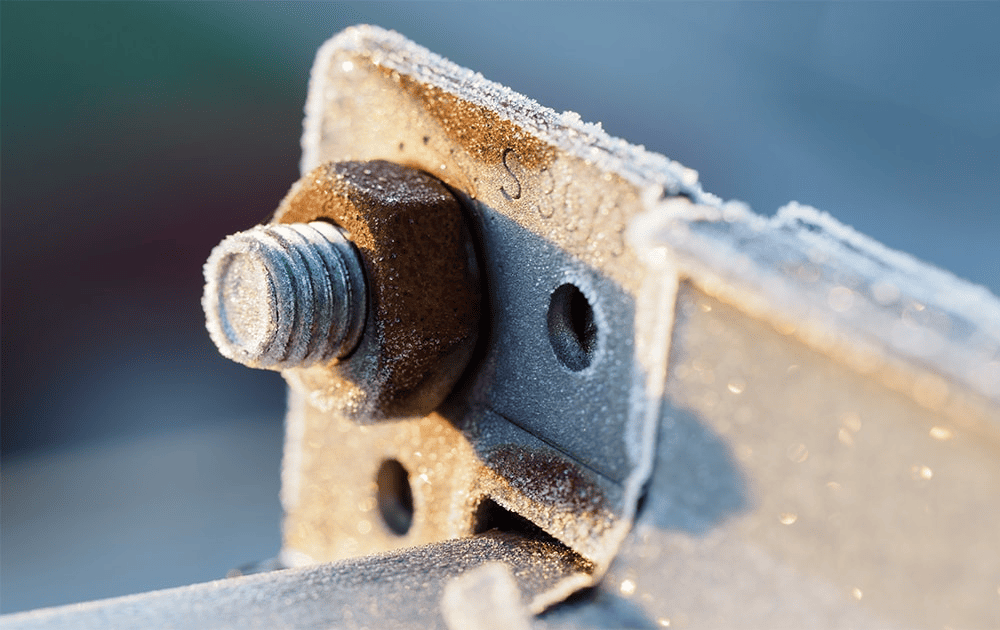
- The less noble metal corrodes faster while the more noble metal remains protected. A common case is aluminum panels joined with stainless steel fasteners on marine equipment, where corrosion often forms around the aluminum.
- This reaction is more severe when the surface area of the noble metal is larger than that of the less noble one, increasing the corrosion rate on the weaker material.
Crevice Corrosion
Crevice corrosion develops in tight spaces where water flow is limited, and oxygen cannot circulate properly.
- It is commonly found under washers, gaskets, and bolted joints in CNC assemblies used in marine environments. For instance, sealed enclosures on offshore instruments often show corrosion beneath mounting points.
- The lack of oxygen inside these small gaps creates a chemically aggressive environment that accelerates localized attack.
Uniform Corrosion
Uniform corrosion spreads more evenly across the surface, gradually thinning the material over time.
- Carbon steel components exposed to seawater without proper coating often show this type of degradation, where rust develops consistently across the entire surface.
- While easier to predict compared to pitting, it still leads to structural weakening if not controlled.
Each of these corrosion types behaves differently, but they often work together in real marine conditions, making early detection and prevention essential for CNC-machined parts.
Impact on CNC-Machined Parts Performance
When CNC-machined parts are exposed to saltwater over time, corrosion does more than just affect the surface. It gradually changes how the part performs under load, how accurately it fits within assemblies, and how long it can remain in service without failure. In marine and offshore environments, even small levels of corrosion can create noticeable operational issues.
The impact is usually progressive, starting with minor surface changes and eventually affecting structural and functional reliability.
- Loss of strength and structural integrity
As corrosion progresses, the material begins to thin or develop weak points. For example, offshore mounting brackets made from untreated steel can slowly lose load-bearing capacity, increasing the risk of bending or failure under stress.
- Surface degradation and increased roughness
Corroded surfaces become uneven, which affects both appearance and function. In marine pump components, surface roughness can increase friction, leading to reduced efficiency and higher wear on connected parts.
- Reduced precision and tolerance deviation
CNC parts are designed with tight tolerances, but corrosion alters dimensions over time. A practical case is precision shafts used in marine actuators, where even slight pitting can cause misalignment and vibration during operation.
- Higher maintenance demands and downtime
As damage accumulates, parts require more frequent inspection, cleaning, or replacement. On marine vessels, corroded fasteners or fittings often lead to repeated maintenance cycles, increasing operational costs and downtime.
These effects often appear gradually, which makes early-stage corrosion easy to overlook until performance issues become unavoidable.
Surface Finishes and Coatings for Protection
Protecting CNC-machined parts from saltwater often depends on how well the surface is treated. Even when the base material has moderate corrosion resistance, surface finishes and coatings create an additional barrier that slows down or prevents direct contact with saltwater. In marine environments, this layer often determines whether a component performs reliably or starts degrading early.
Different finishing methods are used depending on the material and application. Some improve corrosion resistance, while others add both protection and durability under mechanical stress.
- Anodizing for aluminum parts
Anodizing strengthens the natural oxide layer on aluminum, making it more resistant to saltwater exposure. For example, anodized aluminum frames used in marine drones tend to resist surface pitting better than untreated components, especially in coastal environments.
- Powder coating for general protection
Powder coating creates a thick, durable surface layer that acts as a physical barrier against moisture and salt. Marine enclosures and brackets often use this finish because it helps reduce direct exposure, even in areas with frequent splashing.
- Electroplating with zinc or nickel
Electroplating adds a protective metal layer over the base material. Zinc is commonly used for sacrificial protection, while nickel provides a more stable barrier. A typical example is zinc-plated fasteners used in boat assemblies to slow down corrosion around joints.
- Passivation for stainless steel
Passivation enhances the corrosion resistance of stainless steel by removing free iron from the surface and improving the protective oxide layer. Marine-grade stainless steel fittings often undergo passivation to maintain performance in long-term saltwater exposure.
Each of these treatments works differently, but the goal remains the same: reduce direct exposure of the base metal to saltwater and extend the functional life of the CNC-machined part.
Material Selection Strategies for Saltwater Use
Choosing the right material is often the most important decision when designing CNC-machined parts for saltwater environments. While coatings and surface treatments help, the base material determines how well a part can resist corrosion over long periods of exposure. In marine applications, poor material selection usually leads to early failure, even if the design and machining quality are high.
Engineers typically balance corrosion resistance, cost, and mechanical performance when selecting materials for offshore or coastal use.
- Marine-grade stainless steel (316 or similar grades)
This is one of the most reliable choices for saltwater exposure due to its higher resistance to chloride attack. For example, 316 stainless steel is commonly used in marine fasteners, boat fittings, and offshore structural parts where continuous exposure is expected.
- Aluminum alloys with improved corrosion resistance
Certain aluminum grades perform better in marine conditions, especially when combined with anodizing. These alloys are often used in lightweight marine structures such as drone frames or sensor housings where weight reduction is important.
- Avoiding standard carbon steel in exposed environments
Carbon steel offers strength and low cost, but it corrodes rapidly in saltwater unless heavily protected. In many offshore brackets and support frames, switching away from carbon steel has significantly increased service life and reduced maintenance cycles.
- Trade-offs between cost and durability
Higher-grade materials reduce long-term maintenance costs but increase upfront investment. For instance, choosing stainless steel over carbon steel in coastal equipment may increase initial cost but significantly reduce replacement frequency.
Material selection is not only about resistance but also about matching the environment with expected service conditions. A part that performs well inland may fail quickly once exposed to continuous saltwater contact.
Design Considerations to Reduce Corrosion Risk
Even with the right material and coating, design plays a major role in how CNC-machined parts behave in saltwater environments. Poor design can trap moisture, accelerate corrosion, and create weak points where damage starts early. On the other hand, thoughtful design choices can significantly slow down degradation and improve service life in marine conditions.
In many real-world failures, corrosion does not start because of the material alone but because water and salt are allowed to stay in contact with the surface for long periods.
- Avoiding crevices and tight gaps where moisture collects
Small gaps between components often trap saltwater, creating ideal conditions for localized corrosion. For example, tightly fitted marine brackets without proper spacing can develop hidden corrosion beneath contact surfaces.
- Designing for proper drainage and water flow
Allowing water to escape reduces the time salt remains on the surface. Drainage holes in CNC enclosures used on offshore sensors help prevent water accumulation after waves or spray exposure.
- Separating dissimilar metals to prevent galvanic reactions
When different metals are in direct contact, corrosion can accelerate in the less resistant material. In marine assemblies, using insulating washers between aluminum panels and stainless steel fasteners helps reduce this risk.
- Improving accessibility for inspection and maintenance
Parts that are easier to reach are more likely to be cleaned and inspected regularly. For instance, modular CNC components on marine equipment are often designed so that fasteners can be checked without full disassembly.
Design decisions like these often determine whether corrosion becomes a minor maintenance issue or a long-term structural problem.
Maintenance and Preventive Practices
Even well-designed CNC-machined parts with corrosion-resistant materials can still degrade over time if they are not properly maintained. Saltwater leaves behind salt deposits that continue to attract moisture, which means corrosion can progress even after the part is no longer directly exposed to seawater. Regular maintenance plays a critical role in extending service life, especially in marine and coastal environments.
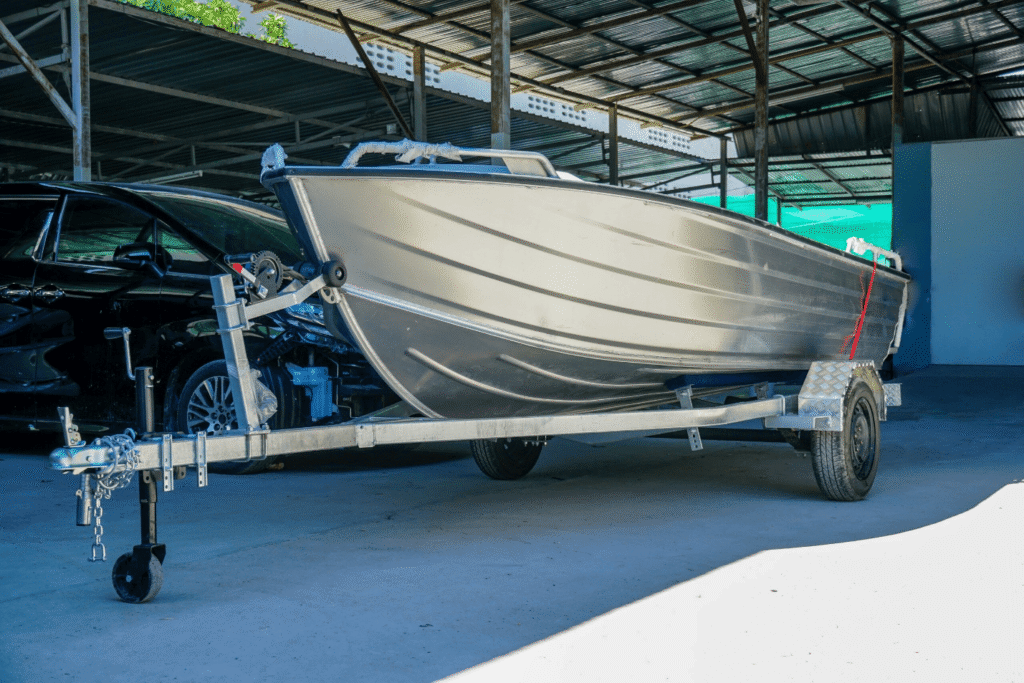
Prevent Aluminum Boat Corrosion in Saltwater
In practice, most long-term failures are linked not only to exposure but also to lack of consistent cleaning and inspection routines.
- Rinsing with fresh water after exposure
Removing salt deposits is one of the simplest yet most effective steps. For example, marine equipment such as deck-mounted CNC components often lasts significantly longer when rinsed after every seawater exposure.
- Routine visual inspections for early signs of corrosion
Small changes such as discoloration or surface spotting can indicate early-stage corrosion. Offshore CNC assemblies are often checked during scheduled maintenance to catch these signs before they spread.
- Applying protective oils or corrosion inhibitors
Light coatings can help block moisture from reaching the surface. In marine mechanical systems, protective oils are commonly applied to exposed moving parts like shafts and joints to reduce oxidation.
- Replacing vulnerable components on a scheduled basis
Some parts are designed to be consumable in harsh environments. For instance, fasteners in coastal installations are often replaced periodically even if they still appear functional, as a preventive measure against sudden failure.
Maintenance is not just about fixing damage after it appears. In saltwater environments, it is more about controlling exposure and preventing small issues from developing into structural problems.
Conclusion
Saltwater exposure creates one of the most challenging environments for CNC-machined parts. The combination of moisture, oxygen, and chlorides speeds up corrosion and gradually affects both surface quality and structural performance. Over time, this can lead to reduced accuracy, weakened strength, and higher maintenance demands, especially in marine and offshore applications.
The good news is that this damage is not unavoidable. With the right approach, the lifespan of CNC components can be significantly extended. Material selection plays the first role, followed by protective surface treatments like anodizing, coating, or passivation. Design choices that prevent water trapping and reduce metal contact issues also make a major difference. Finally, consistent maintenance ensures that early signs of corrosion are controlled before they develop into serious failures.
In real-world use, the most reliable CNC parts in saltwater environments are rarely the ones that rely on a single solution. They are the ones where material choice, surface protection, smart design, and routine care all work together to reduce long-term risk.