
Why is the hourly cost of five-axis CNC machining higher, yet the unit cost is often lower?
A five-axis CNC machine may have a higher hourly rate than a conventional three-axis mill, but that does not necessarily make it more expensive to manufacture a finished component. For parts with multiple angled features, complex surfaces, or demanding setup requirements, five-axis machining can reduce the total production work enough to offset the higher machine rate.
The key to understanding 5-axis CNC machining cost is the difference between paying for machine time and paying for a completed part. Setup, programming, workholding, cutting time, inspection, and production quantity all influence the final price. A higher-rate machine can be the more economical choice when it eliminates enough of those expenses.
Why Is the Hourly Rate of Five-Axis CNC Machining Higher?
Five-axis CNC machining often costs more per hour because the equipment is more complex to purchase, operate, program, and maintain.
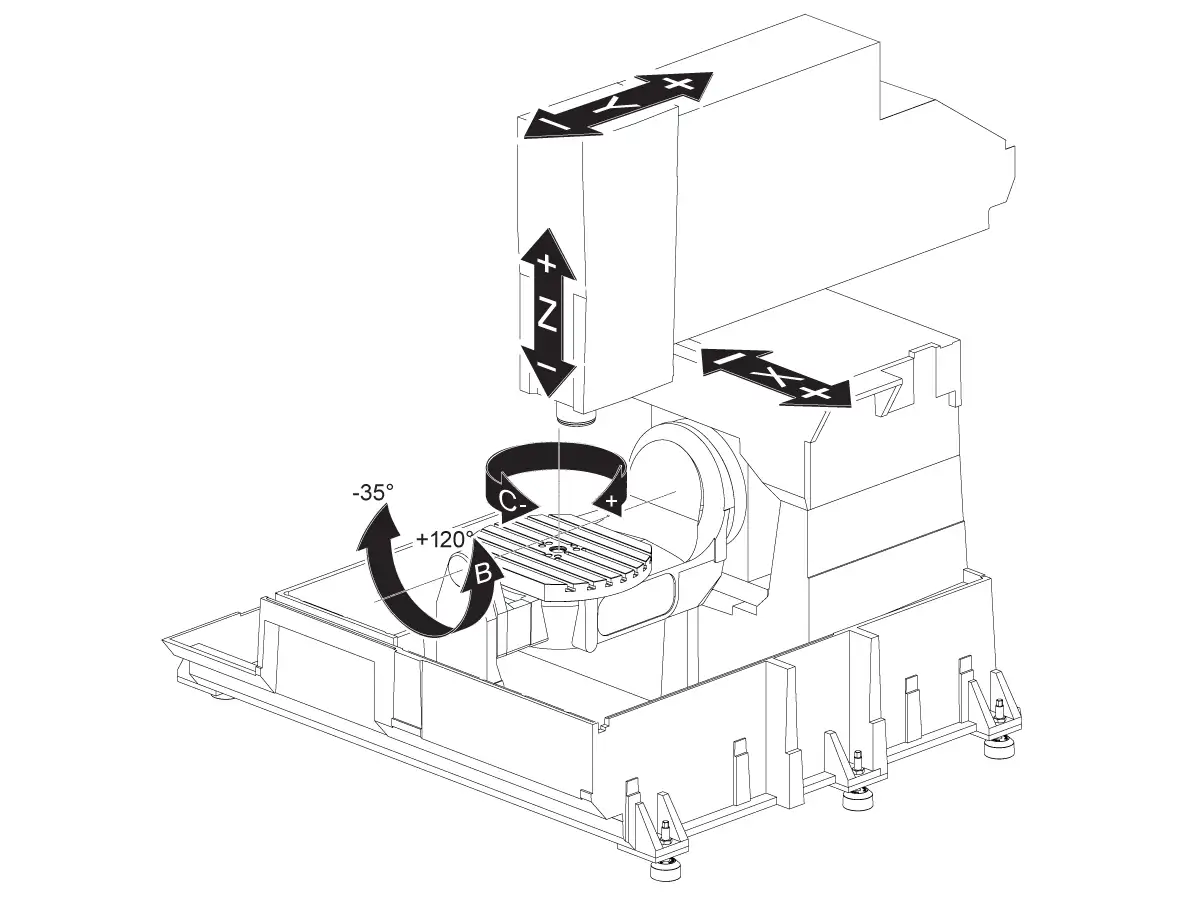
A conventional three-axis mill moves the cutting tool relative to the workpiece along three linear axes: X, Y, and Z. A standard five-axis configuration adds two rotary axes, allowing the tool or workpiece to be oriented at different angles. These additional movements provide greater manufacturing flexibility but also introduce more demanding mechanical and control requirements.
Several factors contribute to the hourly-rate difference:
- Machine investment: Rotary-axis assemblies, advanced controls, and multi-axis components can increase equipment acquisition and maintenance costs.
- Programming: Complex five-axis toolpaths may require specialized CAM software, post-processing, simulation, and experienced programmers.
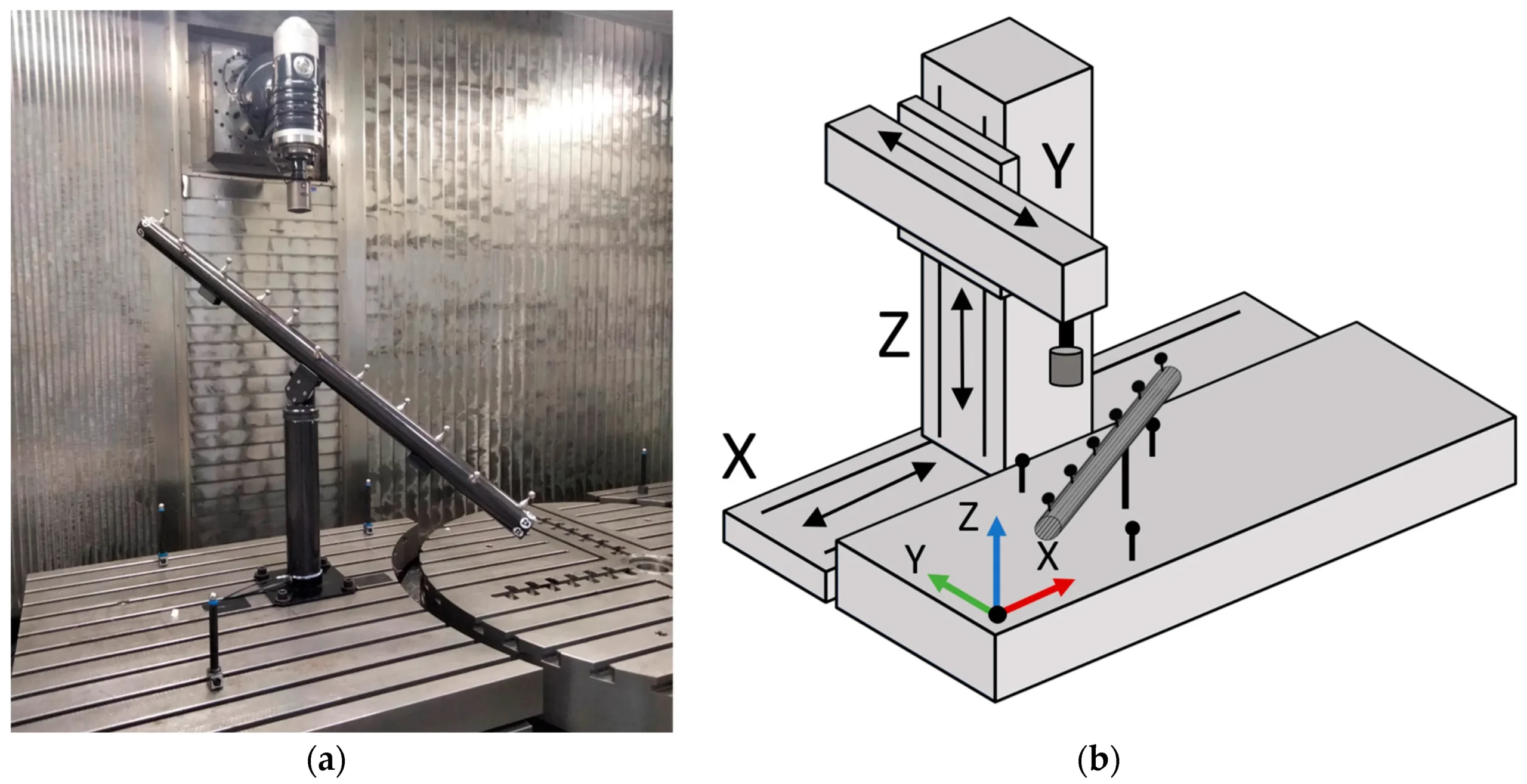
- Calibration: Accurate multi-axis machining depends on controlling geometric, rotary-axis, and thermal errors.
- Operating costs: Maintenance, machine utilization, labor arrangements, and depreciation influence how a shop calculates its hourly rate.
The complexity is not limited to moving additional axes. Simultaneous five-axis machining requires coordinated motion while maintaining the intended relationship between the cutting tool and the workpiece.
NIST's research on machine-tool calibration identifies geometric, kinematic, and thermal errors as important considerations in machining accuracy.
NIST
Hourly rates also vary between suppliers. Some shops include operator labor and certain setup activities in their machine rates, while others quote these expenses separately. Consequently, hourly prices are not always directly comparable.
How Can Five-Axis Machining Reduce the Work Required per Part?
Five-axis machining can lower unit cost by reducing the number of manufacturing operations needed to complete a component.
The most significant opportunities generally involve fewer setups, improved tool accessibility, and reduced non-cutting time. These advantages are particularly relevant when several features must be machined from different orientations.
Fewer Setups, Re-Clamping Operations, and Fixture Changes
Consider a component with holes, pockets, and mounting surfaces on several angled faces.
On a three-axis mill, the operator may need to remove the workpiece, rotate it, secure it in another fixture, and establish a new machining reference before accessing the next set of features.
Each setup consumes time without necessarily removing material. It can also introduce additional fixture costs and opportunities for positioning errors.
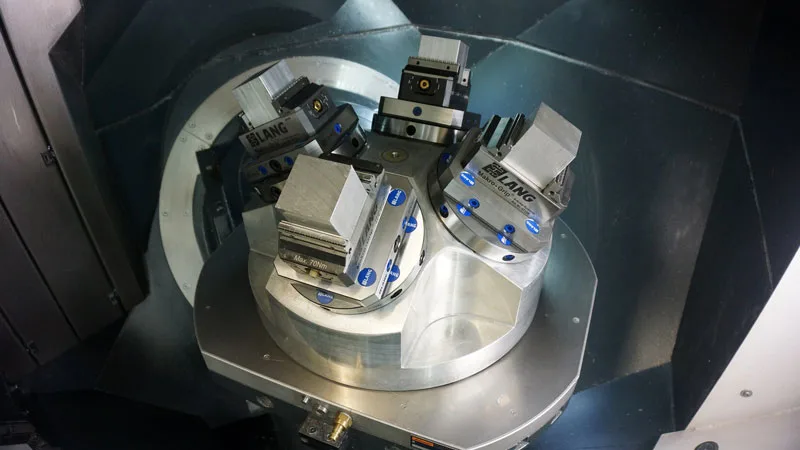
A five-axis machine can rotate the workpiece or cutting tool to access several orientations while the component remains secured in the same fixture.
This can reduce:
- Manual repositioning and alignment.
- Repeated workholding operations.
- Special fixture requirements.
- Non-cutting machine time.
- Certain risks associated with transferring datums between setups.
The savings become meaningful when the eliminated operations would otherwise consume a substantial portion of production time.
Five-axis machining does not eliminate every setup. The surface used to hold the workpiece, for example, may still require a separate finishing operation.
Better Tool Access and More Efficient Machining
Tool orientation can also influence cutting efficiency.
A deep pocket or angled surface may require a long, slender cutting tool when approached from a fixed three-axis direction. Long tool overhang can increase deflection and vibration risk, potentially limiting cutting parameters.
Five-axis positioning may allow the tool to approach the same feature from a more favorable angle. This can make a shorter, more rigid cutter practical.
For suitable geometries, improved accessibility can support more efficient machining strategies and reduce the need for separate operations.
These benefits are not automatic. Toolpath quality, material behavior, cutting conditions, and machine configuration still determine the actual cycle time.
How Do Three-Axis, Indexed 3+2, and Simultaneous Five-Axis Machining Compare?
The economical machining route depends on the required tool orientations and how the component can be held during production.
Not every part that benefits from five-axis equipment requires simultaneous five-axis cutting.
Three-axis machining is effective for accessible prismatic features, such as flat surfaces, straightforward pockets, and holes that can be reached from a limited number of directions.
Indexed 3+2 machining uses rotary axes to position the tool or workpiece at a selected angle. The orientation remains fixed while the machine performs the cutting operation, then changes for another machining area.
Simultaneous five-axis machining coordinates linear and rotary movement during cutting. It is particularly useful when tool orientation must change continuously along a complex surface.
| Comparison Factor | Three-Axis Machining | Indexed 3+2 Machining | Simultaneous Five-Axis Machining |
|---|---|---|---|
| Tool access | Fixed direction per setup | Multiple indexed orientations | Continuously changing orientations |
| Setup requirements | May require re-clamping | Can consolidate multi-face operations | Can consolidate complex operations |
| Programming | Generally less complex | Additional positioning and clearance planning | Advanced multi-axis toolpaths |
| Workholding | Conventional or dedicated fixtures | Requires rotary clearance | Requires clearance throughout coordinated motion |
| Hourly-rate considerations | Often lower for comparable equipment | Multi-axis machine rate applies | Advanced machining rate may apply |
| Suitable geometry | Accessible prismatic features | Angled holes and multi-sided features | Complex contours and sculpted surfaces |
| Cost consideration | Efficient when additional setups are limited | Can reduce repositioning without continuous rotary cutting | Justified when complex tool motion adds meaningful value |
The important distinction is that five-axis capability and simultaneous five-axis cutting are not the same requirement.
For a component containing several angled holes and flat faces, indexed 3+2 machining may provide the necessary access without the programming demands of continuous five-axis motion.
A complex impeller or sculpted component may justify simultaneous machining because the cutter must change orientation while following the surface.
Selecting the least complicated process that reliably meets the drawing requirements is often central to controlling manufacturing cost.
What Determines the Total Five-Axis CNC Machining Cost per Part?
The total five-axis CNC machining cost per part depends on more than the machine's hourly charge. Buyers must evaluate the complete manufacturing route, including preparation, production, inspection, and any required secondary operations.
Two cost categories are especially important: one-time expenses and recurring production expenses.
One-Time Programming, Setup, and Fixture Costs
Before production begins, a machine shop may need to prepare the CAM program, select tools, establish workholding, set offsets, and verify the initial machining operations.
These expenses are often described as non-recurring engineering or preparation costs.
For a prototype, much of this work may be allocated to a single component. When the same preparation supports a larger production batch, its cost can be distributed across more parts.
This explains why CNC machining setup cost can strongly influence prototype and small-batch pricing.
Five-axis machining may require more elaborate programming, but its ability to consolidate operations can reduce the preparation associated with multiple separate setups.
Whether that produces a net saving depends on both sides of the comparison.
Recurring Cost per Accepted Finished Part
Recurring expenses include machine time, operator handling, cutting-tool consumption, inspection, and finishing.
Machine-time cost can be expressed as:
\[ \text{Machine-Time Cost}=\text{Hourly Rate}\times\text{Charged Time} \]
This calculation alone does not represent the complete manufacturing cost.
A more useful measure is:

The total includes applicable material, preparation, machining, tooling, quality-control, and finishing expenses. Costs already included in the machine rate should not be counted again.
Accepted-part quantity matters because scrap and rework can affect the cost of delivering components that meet the drawing.
Production volume also changes how preparation expenses are distributed. A larger batch does not automatically make five-axis machining cheaper. If its recurring cost per part remains higher, increasing quantity may not reverse the result.
The correct economic comparison is the total cost of producing an equivalent acceptable component through each feasible manufacturing route.
What Does a Real Three-Axis Versus Five-Axis Manufacturing Comparison Show?
A manufacturing comparison published by DMG MORI illustrates how five-axis machining can reduce production work for a complex component.
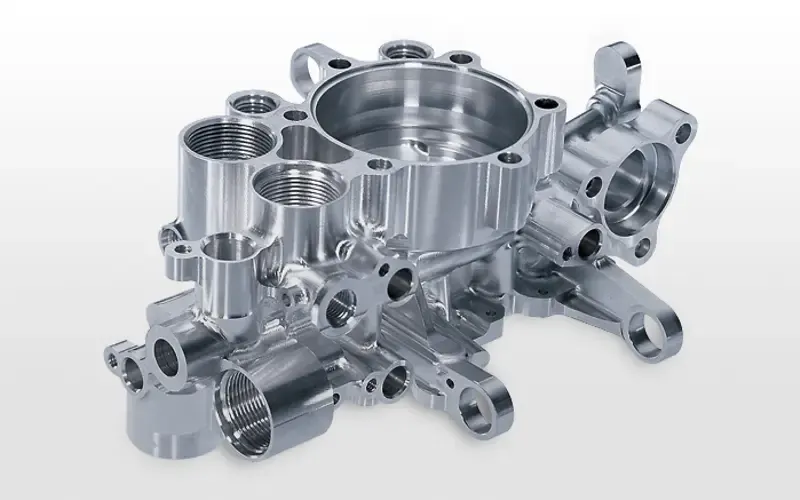
In its high-pressure fluid-manifold example, DMG MORI reports that the three-axis process required at least five setups, while the five-axis approach required two.
The reported machining cycle also changed from 48 minutes with three-axis machining to 33 minutes with five-axis machining-approximately a 31% reduction in cycle time.
The cutting-tool requirement fell from 17 tools to eight.
DMG MORI
These results illustrate several important mechanisms:
- Fewer setups reduce repeated handling and preparation.
- A shorter machining cycle reduces the time required to process the component.
- Fewer cutting tools can simplify the tooling requirements for that particular manufacturing route.
The example does not establish a universal reduction in manufacturing cost.
DMG MORI's figures describe a specific application, and the published comparison does not provide complete machine rates, programming expenses, fixture costs, and final unit prices for both routes.
It demonstrates how manufacturing efficiency can improve. Determining the actual financial benefit still requires a complete cost comparison.
When Is Three-Axis Machining Still the Lower-Cost Choice?
Three-axis machining can remain the more economical option when a component's geometry does not require the additional accessibility provided by five-axis equipment.
A simple mounting bracket with flat surfaces and readily accessible holes, for example, may be produced efficiently using conventional three-axis milling.
If the part requires little repositioning, five-axis machining may provide limited opportunities to reduce setup or cycle time.
Three-axis machining can be particularly competitive when:
- The geometry is accessible through straightforward machining operations.
- Existing fixtures already support efficient production.
- Programming requirements are relatively simple.
- Additional rotary-axis positioning does not significantly reduce processing time.
- A proven manufacturing route meets the specified tolerances and surface requirements.
Five-axis machining may also introduce programming or fixture expenses that outweigh the operational savings for a particular job.
Batch quantity is another consideration. A specialized five-axis fixture or program may be worthwhile for repeat production, but its preparation cost must be justified by the work it saves.
There is no universal quantity or setup-count threshold at which five-axis machining becomes the cheaper option.
The decision should reflect the component's geometry, the available equipment, and the supplier's actual manufacturing plan.
How Do Material, Tolerance, and Inspection Requirements Affect Unit Cost?
Material selection and quality requirements influence machining time, tooling consumption, finishing, and inspection expenses.
They can therefore change the cost comparison between three-axis and five-axis manufacturing routes.
Creating the Geometry and Finishing Functional Features
Different materials respond differently to cutting operations.
Aluminum alloys commonly permit efficient machining with suitable tools and cutting conditions. Stainless steel behavior varies by grade, with some grades presenting work-hardening and tool-wear challenges.
Titanium alloys require particular attention to heat generation and tool performance. Their relatively low thermal conductivity can concentrate heat near the cutting zone, making tool selection and cutting strategy important.
These characteristics affect machining economics regardless of axis count.
Part geometry and functional requirements also matter. A machine may be capable of producing the basic component shape, but critical bores, threads, mating surfaces, or precision datums may require additional operations to meet the drawing.
Surface finishing and deburring can add further costs where specified.
Five-axis tool access may help complete certain features efficiently, but it does not eliminate all secondary work.
Dimensional Verification and Quality Control
Reducing workpiece repositioning may help maintain dimensional relationships between features by limiting certain datum-transfer errors.
That does not mean five-axis machining automatically achieves tighter tolerances.
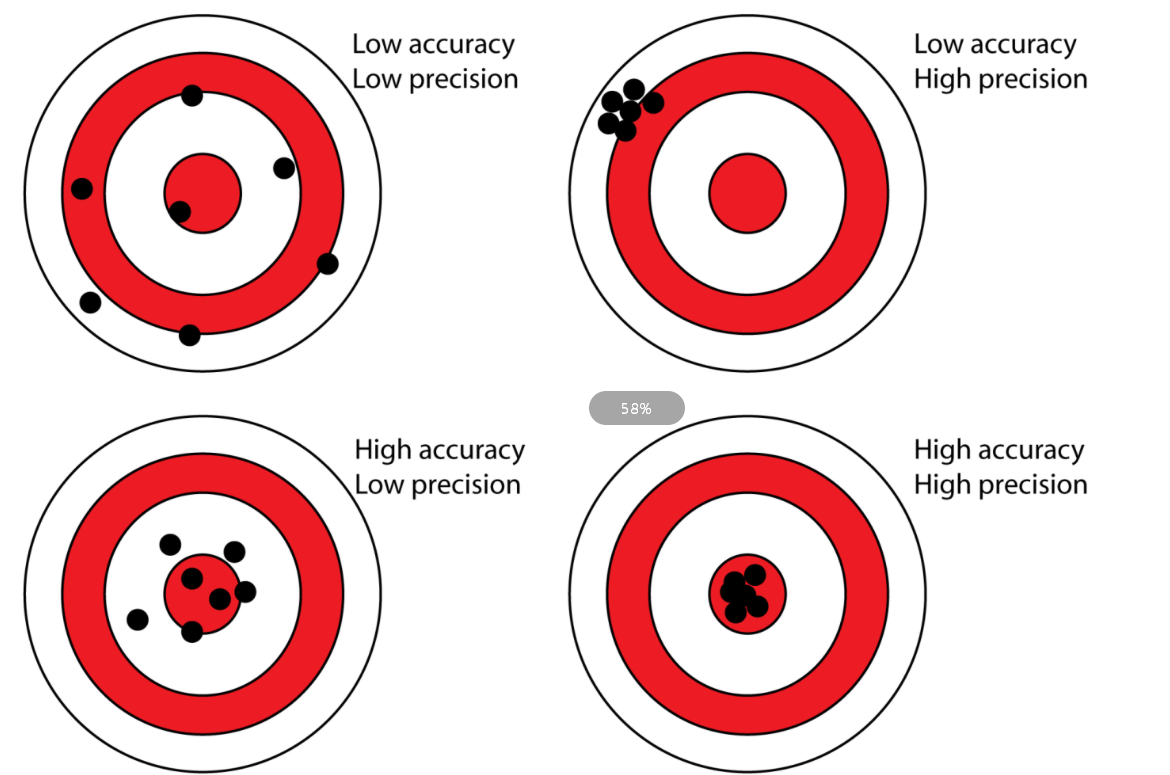
Actual accuracy depends on machine calibration, tool condition, workholding, thermal behavior, cutting forces, and the machining strategy.
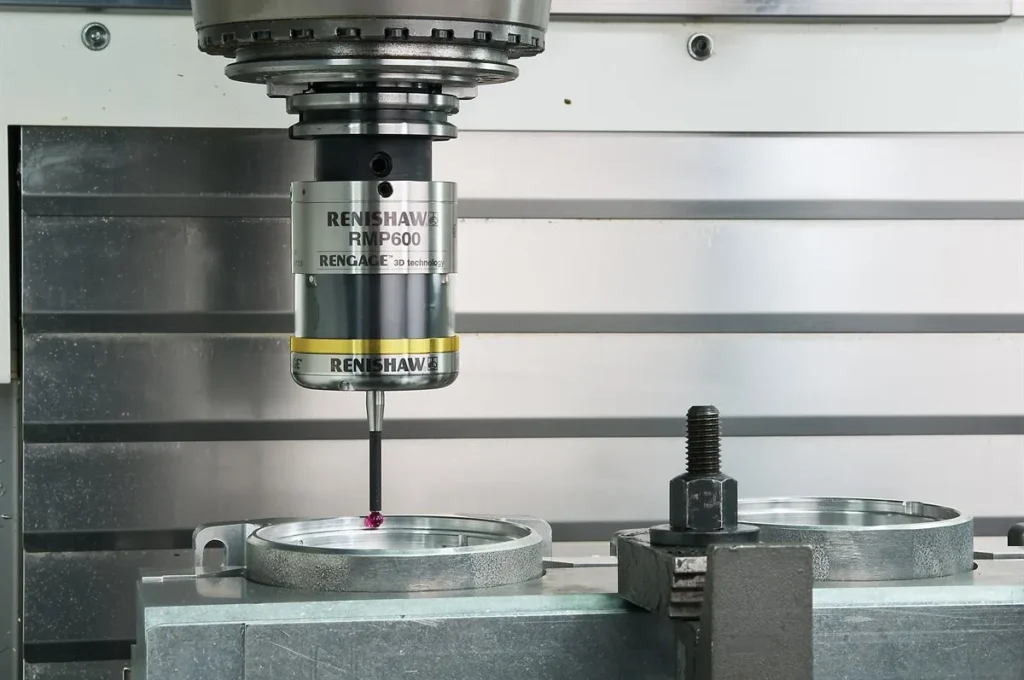
In-process probing can support setup alignment and measurement during machining. Coordinate measuring machines (CMMs) and other inspection methods may be used to verify specified dimensional requirements.
The required inspection scope depends on the component and its intended application.
For an accurate unit-cost comparison, buyers should account for the manufacturing and verification work needed to deliver acceptable finished parts-not simply the time spent cutting material.
How Should Buyers Compare Three-Axis and Five-Axis CNC Quotations?
Buyers should compare the total cost of equivalent finished components rather than selecting a supplier based on the lowest advertised machine-hour rate.
A meaningful comparison starts with consistent technical information.
Before requesting quotations, provide:
- CAD model and engineering drawing: Define the component geometry and required features.
- Material specification: Identify the correct alloy, grade, and relevant stock requirements.
- Production quantity: State the initial order and any anticipated repeat production.
- Tolerances and datums: Identify dimensions and geometric relationships that are functionally important.
- Surface requirements: Specify finishing, deburring, and surface-treatment needs.
- Inspection requirements: Clarify dimensional verification and documentation expectations.
It is also useful to ask how the supplier intends to manufacture the part.
Will the process require multiple setups? Can indexed machining provide the necessary access? Does simultaneous five-axis movement deliver a meaningful advantage? Are programming, tooling, inspection, and finishing included in the quotation?
The answers help explain differences between supplier prices.
For engineers investigating how to reduce CNC machining cost, reviewing feature accessibility, unnecessary geometric complexity, fixture requirements, and tolerance specifications can reveal practical opportunities for improvement.
The lowest hourly machine rate is not necessarily the lowest-cost manufacturing route. The comparison should establish which process can reliably deliver the required component at the most appropriate total cost.
Conclusion
Five-axis CNC machining may carry a higher hourly rate because of its equipment, programming, and operating requirements. Its economic advantage emerges when better tool accessibility, fewer setups, and more efficient manufacturing reduce the total cost per acceptable finished part.
Three-axis machining remains a practical, economical choice for many accessible components. Indexed 3+2 machining can provide an effective middle ground, while simultaneous five-axis machining is justified when the geometry requires coordinated tool movement.
The correct selection depends on the drawing, material, quantity, tolerances, and complete manufacturing route.
BaiChuan Precision offers three-, four-, and five-axis CNC milling services for custom components. Engineers and procurement teams can submit their drawings and production requirements for a manufacturability review and quotation based on the needs of the part.
BaiChuan
References
1. Lee, M., & Kulvatunyou, B. (2019). Design-for-Cost. NIST.
2. DMG MORI. 5-Axis Excellence.
_3. Seco Tools. Production Economy: Global Optimization._
4. Siemens NX. (2013). Making the Jump to Five-Axis Machining Easier.
5. Gao, W., et al. (2023). Machine Tool Calibration.
6. Renishaw. Standard-Accuracy Machine Tool Touch Probes.
7. Kennametal. (2023). 10 Tips for Milling Titanium.
8. BaiChuan Precision. CNC Milling.