
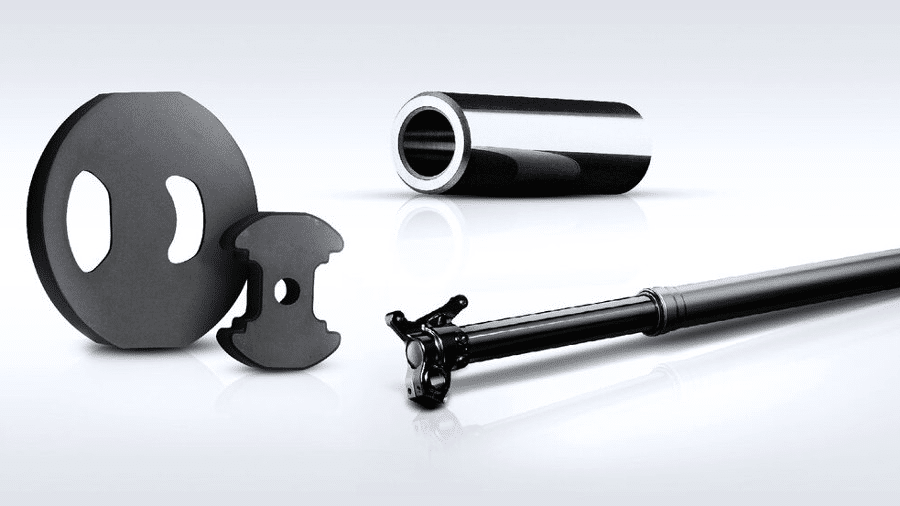
DLC Coating for CNC Machined Parts: Benefits, Limitations & Applications
A CNC-machined shaft can meet its dimensional tolerances and still develop wear at a sliding interface. Similarly, a precision valve component may have the correct geometry but experience friction, galling, or surface damage during repeated operation. These problems are often related to surface contact behavior rather than machining accuracy alone.
DLC coating for CNC machined parts can improve wear resistance, reduce friction, and protect functional surfaces. Yet its effectiveness depends on the base material, coating composition, operating environment, and preparation of the machined surface. Engineers must evaluate these factors together before deciding whether DLC is suitable for a component.
What DLC Coating Changes on a CNC-Machined Surface
Diamond-like carbon (DLC) is a family of predominantly amorphous carbon coatings used to modify the surface properties of manufactured components. Its structure contains varying proportions of sp³ carbon bonds, associated with diamond-like hardness, and sp² bonds, associated with graphite-like characteristics.
Unlike crystalline diamond, DLC does not have a regular diamond crystal structure. Its mechanical and tribological properties can be adjusted through carbon bonding, hydrogen content, additional elements, and deposition conditions.
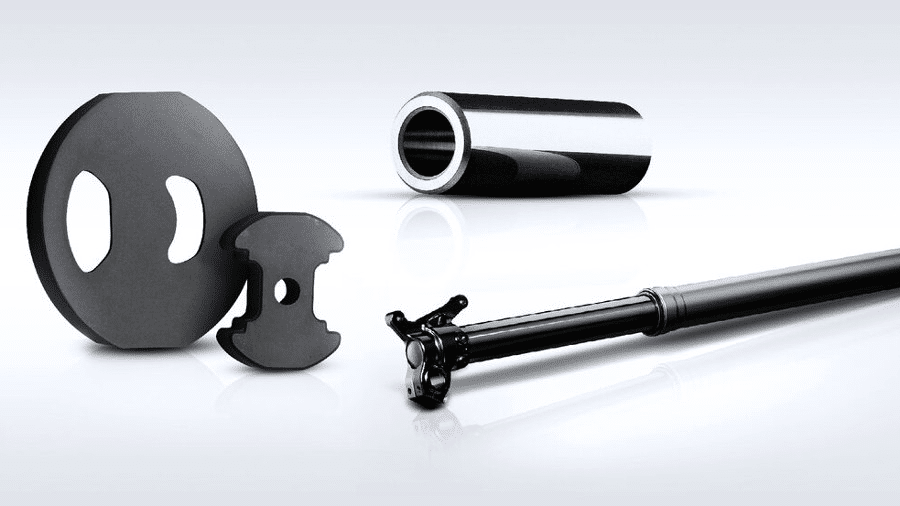
Two important coating families are:
- Hydrogenated DLC (a-C:H): Commonly produced using plasma-assisted chemical vapor deposition and used in various mechanical and sliding applications.
- Tetrahedral amorphous carbon (ta-C): A hydrogen-free, sp³-rich coating known for high hardness and wear-resistant applications.
Modified and multilayer DLC systems can also incorporate elements or intermediate layers to address particular adhesion and contact requirements.
For CNC-machined components, DLC primarily changes the behavior of the contacting surface. It does not replace the structural function of the substrate. A coated steel shaft, for example, still relies on the steel beneath the film to support mechanical loads.
That distinction matters when assessing DLC coating benefits.
When DLC Improves Wear Resistance and Friction
DLC can improve component performance when wear or friction at a contacting surface limits reliable operation. Its combination of hardness and potentially low sliding friction makes it useful for selected mechanical interfaces.
Abrasive wear occurs when hard particles or surface asperities remove material during contact. A suitable hard DLC coating can reduce this damage. Adhesive wear develops when contacting surfaces form local junctions that separate during movement. DLC may help limit these interactions and reduce material transfer.
These properties can also improve resistance to galling, particularly where repeated sliding creates a risk of metal-to-metal adhesion.
Friction reduction requires more careful evaluation. The coefficient of friction is not a fixed property of DLC independent of its surroundings.
It depends on several interacting conditions:
- Coating formulation and surface condition.
- Material and roughness of the mating surface.
- Contact pressure and sliding speed.
- Presence and type of lubricant.
- Temperature, humidity, and surrounding atmosphere.
Oerlikon Balzers reports dry friction coefficients of approximately 0.1–0.2 against steel for selected BALINIT DLC products. These are manufacturer-specific values, not guaranteed results for every coated component.
Research from Argonne National Laboratory demonstrates why such qualifications matter. Controlled experiments comparing hydrogenated and hydrogen-free carbon coatings found substantial changes in friction as water vapor was introduced into the test environment. The coatings responded differently because their surface chemistry and interaction with moisture differed.
A DLC formulation performing well in dry conditions may therefore behave differently in humid air, vacuum, or lubricated operation.
For engineering selection, DLC coating wear resistance and friction reduction should be evaluated under conditions representative of the actual component. A laboratory hardness value or friction coefficient alone cannot establish expected service life.
How Substrate Material Affects DLC Coating Suitability
DLC can be deposited on several engineering metals, but successful deposition does not necessarily mean that the finished component can withstand its intended loads.
Because DLC films are thin, the underlying material must provide adequate mechanical support. If concentrated contact pressure causes the substrate to deform, the coating can crack or separate despite its high surface hardness.
DLC Coating on Steel and Stainless Steel
Carbon steels, alloy steels, and tool steels are relevant substrates for wear-sensitive components such as shafts, guides, molds, and moving mechanical elements.
Heat-treated steel can provide a mechanically supportive base for a DLC film. The appropriate coating system still depends on substrate hardness, surface preparation, and adhesion requirements.
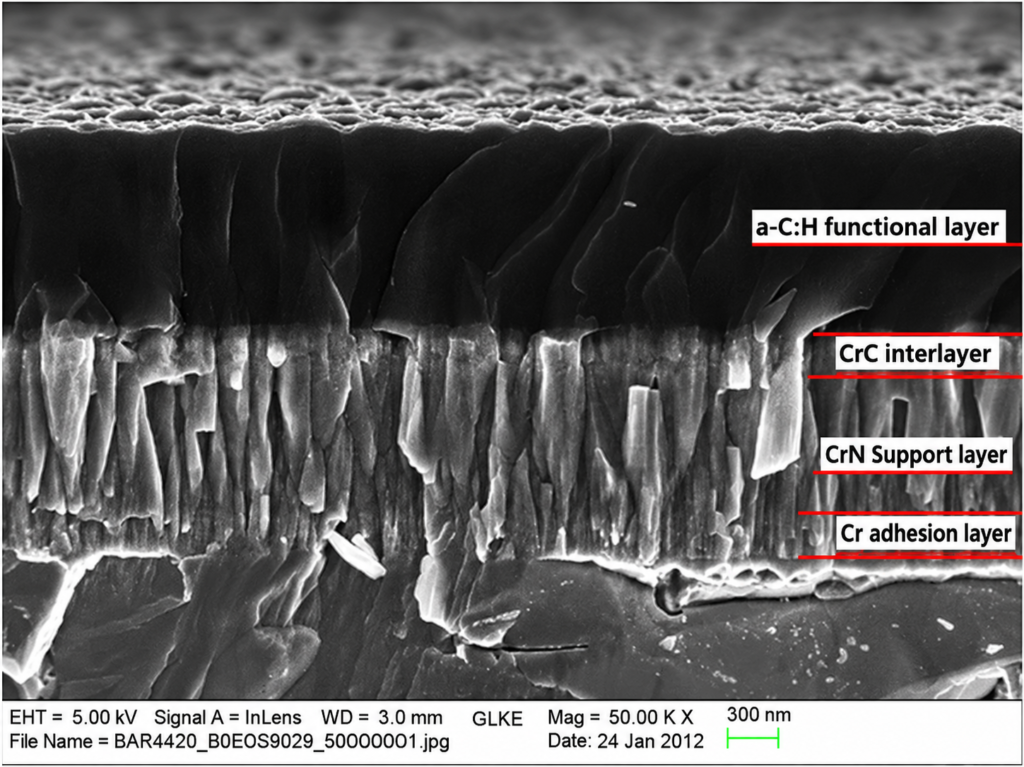
Research on DLC-coated steels has shown that pretreatments such as nitriding and the use of suitable interlayers can improve coating adhesion in specific systems. These measures are not automatically necessary for every steel component.
Tool steels present additional surface-preparation considerations. Carbides within the steel may behave differently from the surrounding matrix during polishing or plasma cleaning, affecting the surface topography on which the coating develops.
Stainless steel requires similar attention to adhesion and surface condition. Where corrosion protection is important, coating defects and the intended exposure environment must also be considered. DLC should not be treated as a guaranteed corrosion barrier.
DLC Coating on Aluminum and Titanium
Aluminum alloys may benefit from wear-resistant surface treatments, particularly where lightweight components experience repeated contact.
Their relatively deformable substrate can, however, limit the performance of a thin, hard coating under high localized loads. Depending on the application, an appropriate supporting layer or different treatment route may be required.
Titanium and titanium alloys can also receive DLC coatings for selected wear-sensitive applications. Their suitability depends on substrate condition, adhesion, surface preparation, and contact loading.
Research into thin hard coatings on titanium has demonstrated that substrate mechanical properties influence coating load-bearing performance.
For both materials, the engineering question is whether the complete coated component can sustain the operating load, not simply whether DLC can be deposited on its surface.
DLC Deposition Methods, Adhesion, and Thermal Limitations
DLC coatings are deposited using processes such as PVD sputtering and plasma-assisted chemical vapor deposition (PACVD/PECVD). The selected process influences coating composition, adhesion, temperature exposure, and surface coverage.
DLC coating vs PVD coating is not a direct comparison. DLC is a coating material family, whereas PVD is a deposition method that can produce certain DLC films. A more meaningful comparison evaluates a specific DLC coating against alternatives such as titanium nitride (TiN) or chromium nitride (CrN).
Adhesion remains a critical limitation. Internal coating stress, poor surface preparation, or substrate deformation can cause cracking and delamination. Suitable interlayers or multilayer structures may improve adhesion and load support, depending on the substrate.
Temperature limits are coating-specific. For example, Oerlikon's BALINIT DLC has a specified deposition temperature below 250°C and maximum service temperature of 300°C. These values do not apply universally to DLC coatings.
Complex geometries, including deep recesses and narrow passages, may experience uneven deposition. Coating coverage and compatibility with the component's heat treatment and dimensional requirements should therefore be verified before production.
From CNC Machining to a Dimensionally Accurate DLC-Coated Part
A successful DLC-coated component requires more than a correctly machined blank. Machining, surface preparation, deposition, and inspection must collectively produce the specified finished geometry and surface condition.
Geometry Creation and Surface Preparation
CNC milling and turning produce critical features such as shafts, bores, grooves, and mating surfaces. However, machining marks, burrs, and unsuitable surface textures can affect DLC coating adhesion and performance.
Depending on functional requirements, contact surfaces may need grinding, honing, or polishing before cleaning and surface activation. Research on DLC-coated tool steel has demonstrated that surface pretreatment and topography influence running-in friction and wear.
DLC is a thin functional coating, not a substitute for proper surface finishing. Substrate preparation must therefore be controlled before deposition to achieve reliable coating performance.
Coating Thickness and Final Dimensional Control
DLC is generally applied as a thin film. Oerlikon describes typical commercial DLC coating thicknesses of approximately 1–5 µm, although the appropriate range depends on the coating system.
Even a thin layer matters when working with precision fits.
Coating buildup on an external shaft increases its finished diameter, while deposition inside a bore reduces its available internal diameter. Both changes must be considered when specifying critical mating components.
Engineers should identify which dimensions apply to the finished coated condition and whether specific regions require masking.
Surface roughness also needs attention. DLC can reproduce aspects of the underlying surface topography, while the deposition process may introduce additional surface features. It should not be assumed to remove machining marks or automatically create a smoother functional surface.
Inspection and Coating Qualification
Dimensional inspection verifies whether the finished component meets drawing requirements. Depending on geometry and tolerance, appropriate measurements may include CMM inspection, bore gauges, micrometers, and surface profilometry.
Coating performance requires additional evaluation.
Relevant methods include:
- Coating thickness measurement.
- Surface texture measurement.
- Hardness characterization.
- Adhesion testing.
- Friction and wear testing under defined conditions.
ISO 20502 describes a scratch-testing method for evaluating coating adhesion within its applicable scope. ASTM G99 establishes laboratory methods for pin-on-disk and ball-on-disk wear and friction testing.
Neither test independently guarantees the service life of a finished component.
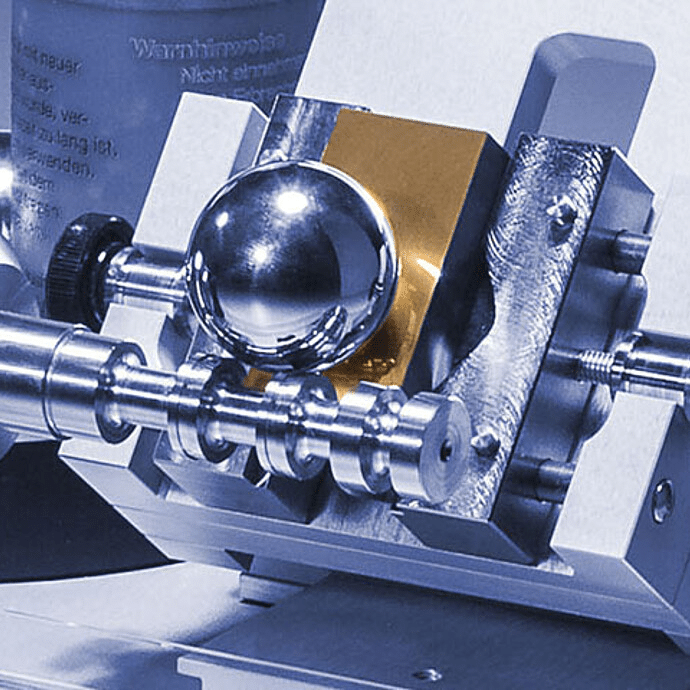
A part may pass dimensional inspection while still requiring coating-specific qualification. Both requirements should be established before production approval.
Industrial Applications Where DLC Is Worth Considering
Hydraulic Pump and Valve Components
DLC coatings can reduce friction and wear on selected sliding surfaces in hydraulic pumps and valves. Research on steel components shows that coating architecture, substrate support, and surface preparation influence performance. Coating selection must also account for contact pressure, lubricant compatibility, and mating surfaces.
Linear Drives and Precision Sliding Mechanisms
In linear drives, DLC coatings can help reduce sliding wear and galling on repeatedly contacting components. Their thin functional layer is useful for precision mechanisms, provided coating thickness, adhesion, and final dimensional fits are controlled.
In both applications, DLC suitability depends on actual operating conditions and verified coating performance.
How to Decide Whether DLC Coating Justifies Its Cost
DLC coating is worth considering when a component requires better friction or wear performance than the uncoated material or an alternative treatment can provide. The decision should depend on operating conditions, substrate properties, and total manufacturing cost—not coating hardness alone.
| Engineering consideration | Potential DLC benefit | Key limitation | What to verify |
|---|---|---|---|
| Repeated sliding contact | Reduced friction and wear | Performance varies with operating conditions | Load, lubrication, and counterface |
| High contact pressure | Improved surface wear resistance | Substrate deformation can cause failure | Substrate hardness and load capacity |
| Precision shafts and bores | Thin protective surface | Coating affects dimensions | Thickness, masking, and tolerances |
| Heat or corrosive exposure | Potential surface protection | Product-specific environmental limits | Temperature and chemical compatibility |
| Complex geometries | Protection of selected surfaces | Uneven coating coverage | Accessibility and inspection |
The total cost includes CNC machining, heat treatment, surface preparation, coating, masking, and inspection. Production quantity and qualification testing also affect economics.
An uncoated component may be sufficient if it already meets performance requirements. Alternative coatings may be more suitable when corrosion or high-temperature resistance is the priority. DLC is justified when testing under representative conditions confirms a meaningful performance benefit.
Before production, engineers should evaluate material grade, operating conditions, coating thickness, adhesion, and final dimensional requirements.
For custom CNC-machined components, BaiChuan Precision Manufacturing can review drawings, material specifications, tolerances, and finishing requirements. Any DLC-specific deposition and qualification needs should be confirmed as part of the manufacturing plan.
References
- Bewilogua & Scheibe (2012). DLC Films: Properties and Applications.
- Andersson et al. (2002). DLC Friction Under Different Conditions.
- Kapsiz et al. (2023). DLC Coatings for Hydraulic Applications.
- Buřil et al. (2026). Surface Pretreatment and DLC Wear Behavior.
- Oerlikon Balzers. DLC Coating Solutions for Linear Drives.