
Small-Batch Titanium Parts: When to Use Metal 3D Printing vs. CNC Machining
For small-batch titanium parts, quantity alone does not determine the right manufacturing process. The useful question is which route can create the required geometry, hold the dimensions that matter, deliver the specified surface condition, and do so without unnecessary post-processing or manufacturing risk.
Metal additive manufacturing is strongest when geometry is difficult to reach with cutting tools. CNC machining is often more suitable when the drawing is controlled by tight fits, bores, threads, datum relationships, sealing surfaces, or other function-critical features. Some designs benefit from both.
Metal 3D Printing vs. CNC Machining for Small-Batch Titanium Parts
Metal 3D printing builds a component layer by layer. CNC machining starts from titanium stock and creates the part through controlled material removal.
Both can suit prototypes and low-volume production. For Small-Batch Titanium Parts, the key variables are geometry, access, tolerance, surface finish, material utilization, and required finishing. Low quantity alone does not make additive manufacturing the lower-cost or lower-risk option.
When Metal 3D Printing Is a Good Choice for Titanium Parts
Metal 3D printing is most valuable when geometry creates the manufacturing challenge. Internal channels, lattice structures, topology-driven shapes, enclosed passages, and features with poor cutting-tool access can be produced without designing the part around conventional tool paths.
It can also consolidate multiple pieces into one geometry and reduce bulk material removal when a machined part would otherwise start from a much larger billet. For Custom Titanium Parts, those benefits must still be weighed against supports, build time, heat treatment where required, inspection, finishing, and possible secondary machining.
Important Limitations of Metal 3D Printing
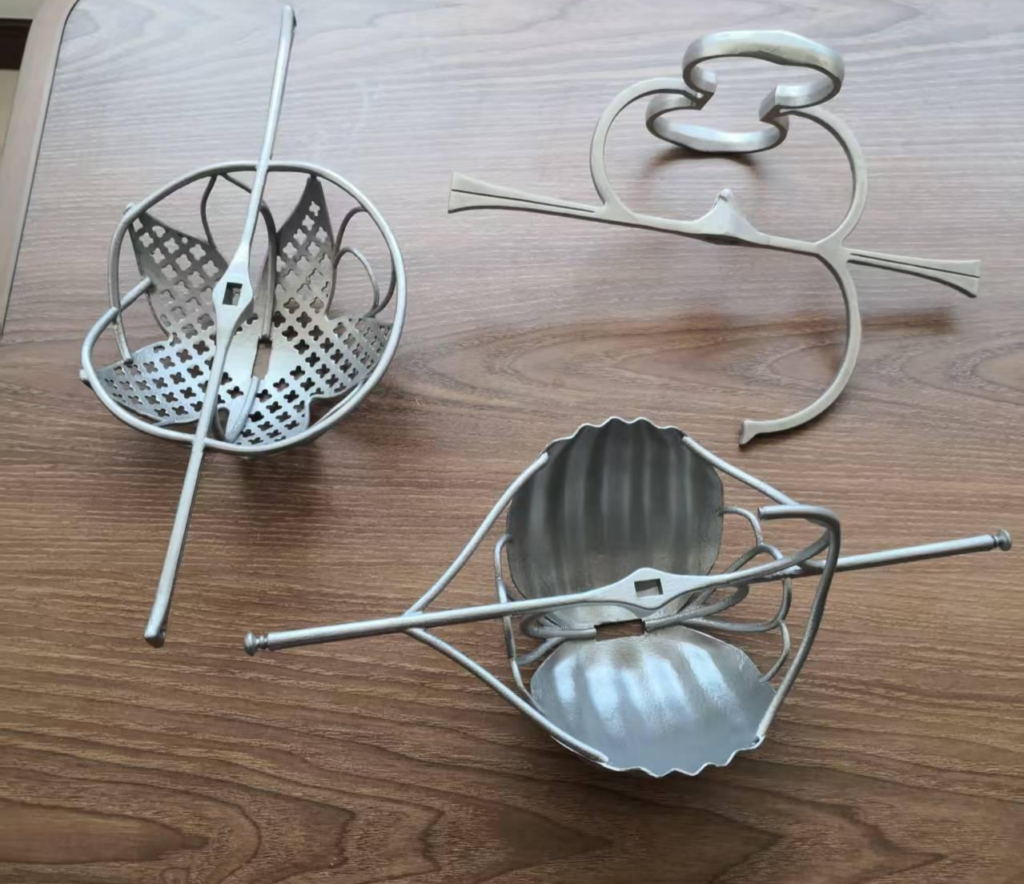
For the process capability supplied for this article, a typical build size is approximately 400 × 400 × 400 mm. Dimensional accuracy is approximately ±0.15 mm for features within 100 mm; above 100 mm, accuracy depends on the specific geometry.
These are not universal metal-AM specifications. Actual capability depends on the machine, process, orientation, geometry, material condition, support strategy, and supplier process control. An established industrial system, the EOS M 400 series, uses a 400 × 400 × 400 mm build envelope.
Build orientation and thermal behavior can affect dimensional accuracy and surface condition. Research on laser powder bed fusion of Ti-6Al-4V shows that down-facing surfaces can be especially susceptible to roughness and dimensional error, while residual stresses can develop from the thermal history of the process.
As-printed titanium surfaces are generally relatively rough, so post-processing may be required. Precision bores, critical holes, threads, mating faces, sealing surfaces, datum surfaces, and high-accuracy interfaces may need CNC finishing. A printed part can therefore achieve its overall shape without yet satisfying every functional requirement on the drawing.
When Titanium CNC Machining Is More Suitable
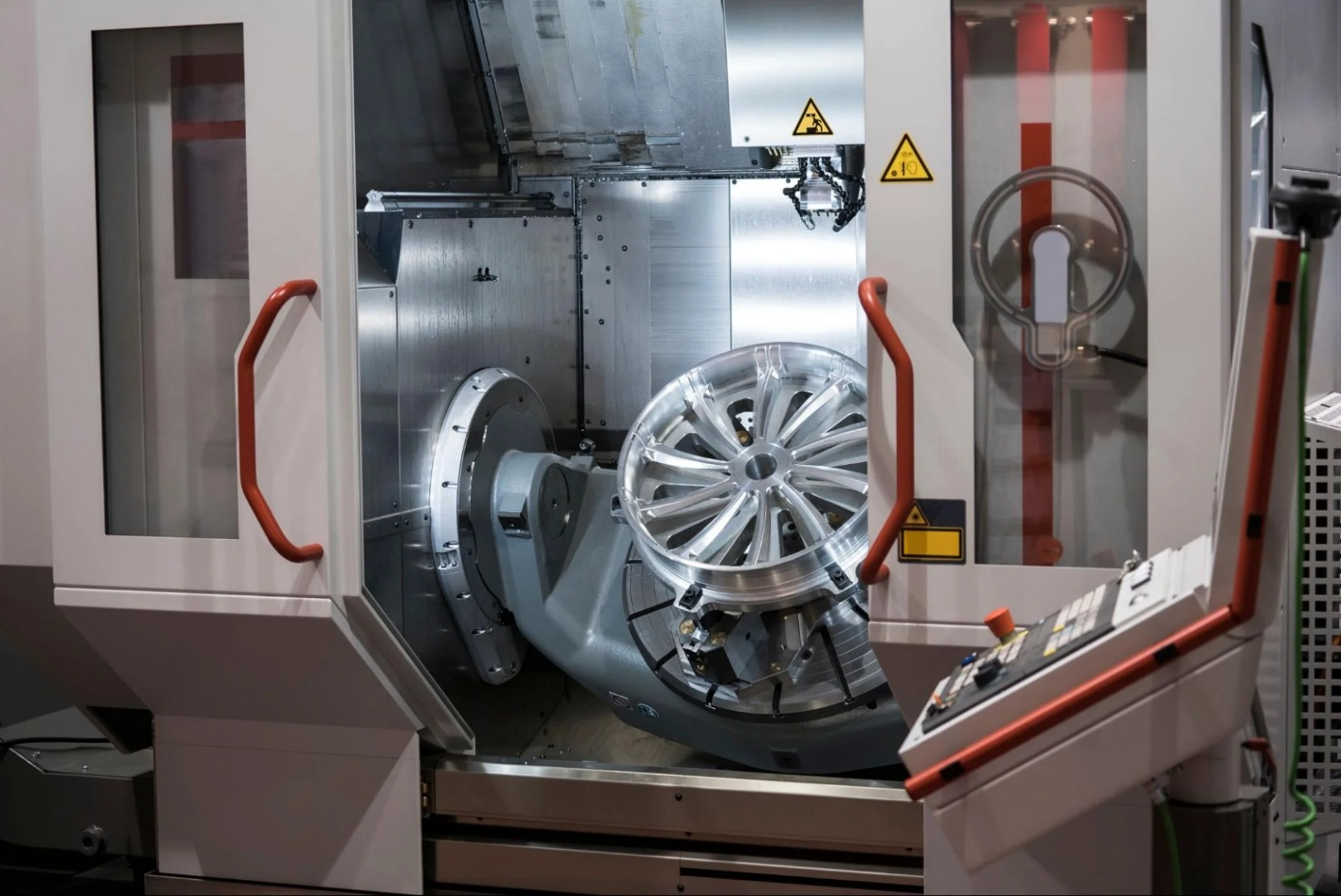
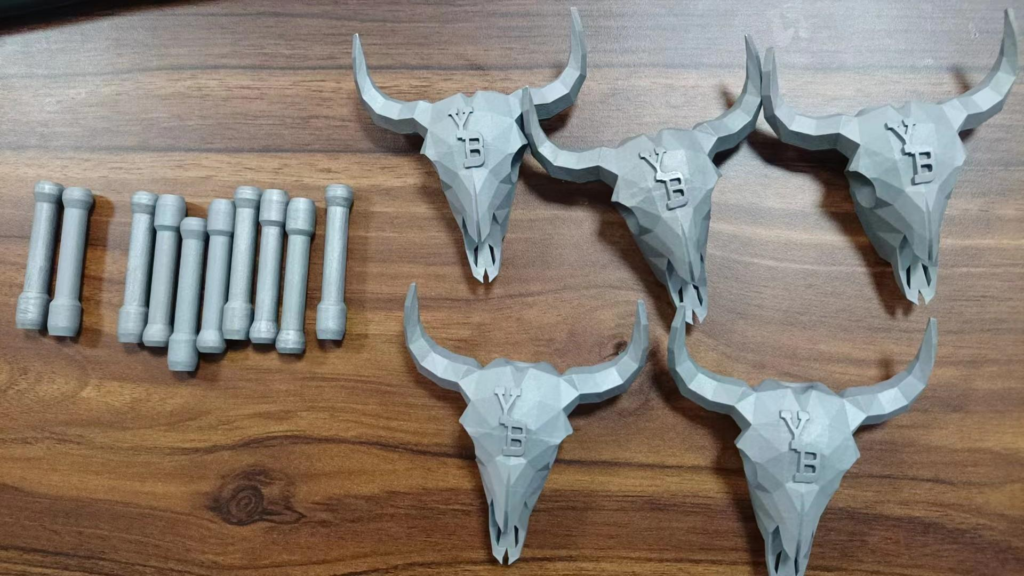
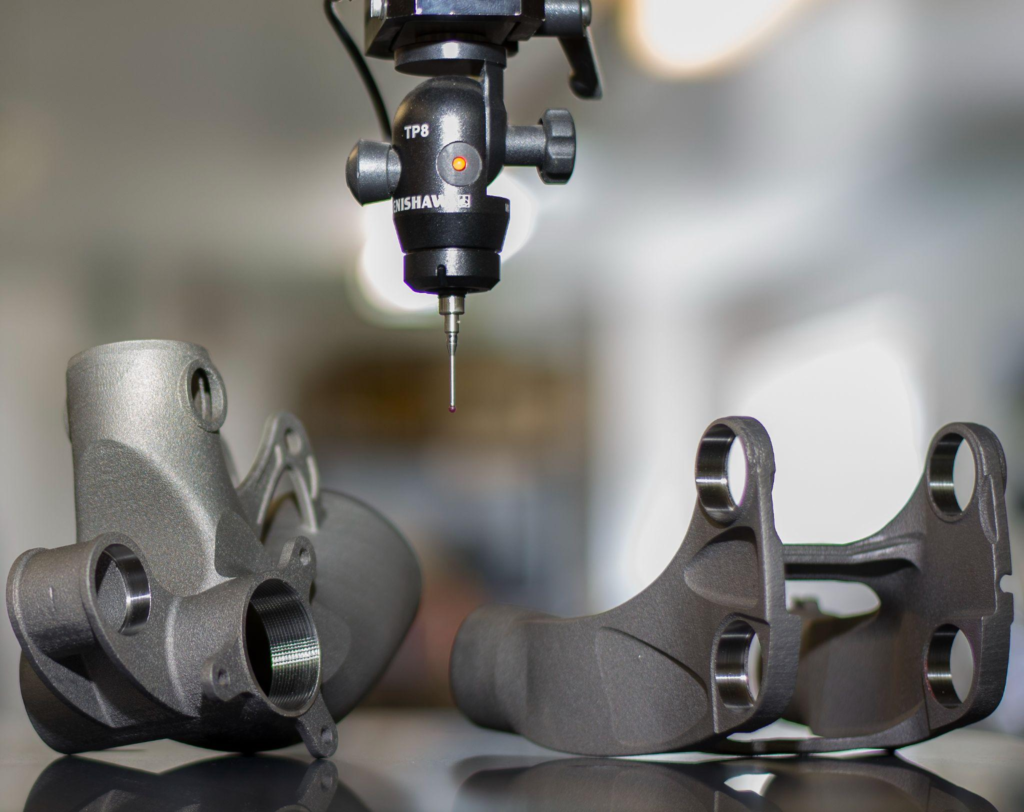
Titanium CNC Machining becomes the more direct choice when function depends on controlled dimensions and surfaces. Accurate bores, threads, sealing faces, contact areas, fitted interfaces, and repeatable relationships between features can be produced and inspected in defined machining setups.
Titanium is difficult to cut because its low thermal conductivity concentrates much of the cutting heat near the tool-workpiece interface, while its chemical reactivity and cutting behavior contribute to tool wear. Stable workholding, suitable tooling, cutting parameters, coolant strategy, and process planning therefore matter.
For CNC Machined Titanium Components, the practical advantage is not simply that “CNC is more precise.” It is the ability to directly establish features that control fit, sealing, alignment, motion, and assembly.
Source: Renishaw / Robot Bike Co.
Tolerance: Which Process Offers Better Dimensional Control?
Metal 3D printing is best treated as a near-net-shape process when tight functional dimensions are involved. Orientation, local geometry, supports, thermal effects, and part size can influence final dimensions; critical features may therefore be left with machining allowance for subsequent finishing.
CNC machining is better suited to dimensions whose size and position must be controlled relative to datums or other features. Bores, fitted diameters, locating faces, and precision mating features can be machined and inspected directly.
A titanium part can be successfully 3D printed but still require CNC machining before it is functionally complete. In a hybrid route, additive manufacturing creates the difficult overall geometry, while machining establishes the surfaces and dimensions that control assembly or performance. Research into digital additive-subtractive hybrid manufacturing demonstrates this principle for parts with critical dimensional requirements.
Surface Finish: Printed vs. CNC Machined Titanium
As-built metal-AM surfaces are affected by layer formation, local geometry, and build orientation. That surface may be acceptable on nonfunctional regions but unsuitable for sealing, sliding, bearing, or precision mating interfaces.
CNC machining provides more direct control over a finished surface because tooling and cutting parameters can be selected around the functional requirement. This does not mean every machined surface is automatically superior; finish still depends on tool condition, geometry, rigidity, parameters, and finishing strategy.
Cost Considerations for Small-Batch Titanium Parts
Cost should be compared across the complete manufacturing route, not only the first process step.
For metal 3D printing, cost can include titanium powder, build time, supports, support removal, heat treatment where applicable, inspection, surface finishing, and secondary CNC machining. Additive manufacturing may reduce material removal for some geometries, but support structures and post-processing can add meaningful cost. Research into laser powder bed fusion cost modeling specifically identifies build, material, support removal, heat treatment, surface finishing, and quality assurance as relevant cost elements.
For CNC machining, cost can include titanium stock, programming, setup, workholding, tooling, tool wear, machining time, material removal, and inspection. Accessible geometry may be efficient to machine even at low quantities, while a highly complex near-net-shape design may favor additive manufacturing.
The economically preferable route depends on geometry, tolerances, surface requirements, post-processing, and the complete process—not simply the number of parts ordered.
Metal 3D Printing vs. CNC Machining: Engineering Comparison
| Factor | Metal 3D Printing | CNC Machining |
|---|---|---|
| Complex geometry | Strong for free-form or consolidated shapes | Depends on tool access |
| Internal channels | Often advantageous | Limited by accessibility |
| Tool accessibility | Can create inaccessible internal features | Cutting tool must reach the feature |
| Tight tolerances | Critical features may need post-machining | Well suited |
| Surface condition | Relatively rough as-built | More directly controllable |
| Material utilization | Near-net shape can reduce bulk removal | More stock may become chips |
| Threads / precision bores | Often finished secondarily | Well suited |
| Functional mating surfaces | Often require finishing | Well suited |
| Very low quantities | Useful where geometry justifies AM | Also practical |
| Repeatable small batches | Depends on process and finishing control | Strong with stable setup and inspection |
| Post-processing | Common for functional surfaces | May still require deburring or finishing |
When a Hybrid Approach Makes More Sense
A hybrid route is useful when one component contains both additive-friendly geometry and machining-critical features:
Metal 3D Printing → Post-Processing → CNC Machining of Critical Features
The additive stage can create internal channels or free-form shapes; CNC machining can then finish bores, threads, datum surfaces, sealing faces, and mating interfaces. Research on machining additively manufactured Ti-6Al-4V and additive-subtractive inspection workflows supports this approach where geometric freedom and dimensional qualification are required in the same component.
Hybrid manufacturing is not automatically economical. Extra process steps must be justified by the geometry and functional requirements.
How to Choose the Right Process for Custom Titanium Parts
Consider metal 3D printing when geometry is the dominant constraint: inaccessible internal features, channels, lattices, topology-driven forms, or meaningful part consolidation.
Consider CNC machining when functional precision dominates: tight dimensions, bores, threads, fits, datum relationships, sealing surfaces, and controlled contact areas. It is particularly suitable when the geometry remains accessible to cutting tools.
Consider a hybrid route when the part needs both complex printed geometry and precision-finished functional features. Review the drawing, titanium grade, inspection requirements, quantity, and finishing plan together before selecting the route.
Conclusion
For small-batch titanium components, metal 3D printing is most useful when geometry is the primary manufacturing constraint. CNC machining is most useful when dimensional control, functional interfaces, and surface condition dominate.
Where both conditions exist, a hybrid route can create the difficult shape additively and machine the final functional features. Before selecting a process, BaiChuan Precision Manufacturing recommends evaluating the drawing, geometry, titanium grade, tolerances, surface-finish requirements, quantity, and inspection requirements as one manufacturing system.
References
Slotwinski, J.A. & Moylan, S.P. — Metals-Based Additive Manufacturing: Metrology Needs and Standardization Efforts. NIST, 2014.
Charles, A. et al. — Down-Facing Surfaces in Laser Powder Bed Fusion of Ti6Al4V: Effect of Dross Formation on Dimensional Accuracy and Surface Texture. Additive Manufacturing, 2021.
Zhang, C. et al. — The State of the Art in Machining Additively Manufactured Titanium Alloy Ti-6Al-4V. Materials, 2023.
Ezugwu, E.O. & Wang, Z.M. — Titanium Alloys and Their Machinability—A Review. Journal of Materials Processing Technology, 1997.
Kelly, C.J. et al. — Automatic Feature-Based Inspection and Qualification for Additively Manufactured Parts with Critical Tolerances. International Journal of Manufacturing Technology and Management, 2024.
EOS GmbH — EOS M 400 System Data Sheet.