
Why Surface Function Matters More Than Appearance When Choosing An Aluminum Finish
Anodizing vs powder coating is not only a visual decision for CNC aluminum parts. It is a surface-engineering decision that affects wear resistance, corrosion behavior, coating thickness, electrical performance, assembly fit, inspection requirements, and long-term product reliability.
Anodizing creates an aluminum oxide layer through an electrochemical process. Powder coating applies a polymer film to the aluminum surface and cures it into a protective layer. Both can protect CNC aluminum parts, but they do not protect them in the same way.
The central engineering question is not “Which finish looks better?” The better question is: what must the surface do during service?
The wrong finish can make a machined aluminum part look acceptable at delivery while creating wear, corrosion, grounding, masking, or assembly problems later.
Which Functional Requirements Should Determine Finish Selection First?
Functional requirements should determine finish selection before color, texture, or cost. Engineers should review wear contact, corrosion exposure, coating thickness, electrical behavior, UV exposure, chemical exposure, masking needs, and inspection requirements before choosing anodizing or powder coating.
A precision aluminum fixture, an electronics enclosure, and an outdoor bracket may all be CNC machined from aluminum, but they may need very different finishes. A wear surface may need hard anodizing. A large exterior panel may need powder coating. A precision bore may need masking regardless of finish type.
When Wear Resistance Makes Anodizing The Better Engineering Choice
Anodizing is often the better engineering choice when wear resistance, surface hardness, dimensional control, or sliding contact matters. Hard anodizing, often specified under military or aerospace-style requirements, creates a harder oxide surface than standard decorative anodizing. [1]
This matters for fixtures, sliding components, aluminum tooling, precision contact surfaces, and parts handled repeatedly in assembly. The oxide layer is integrated with the aluminum surface rather than sitting only as a thick external film.
Powder coating may protect against impact and environmental exposure, but it can chip, wear, or peel under repeated sliding contact. For high-wear CNC aluminum parts, anodizing is usually the stronger functional option.
When Barrier Protection And Color Coverage Favor Powder Coating
Powder coating is often favored when color consistency, thicker barrier protection, decorative appearance, or exterior coverage is the main requirement. It creates a polymer film that can provide strong color options, gloss control, texture control, and thicker surface coverage.
Powder coating is common on aluminum frames, panels, guards, brackets, exterior housings, and visible equipment components. It can cover complex shapes and provide a durable cosmetic surface when pretreatment and adhesion are controlled.
However, powder coating adds more thickness than many anodized finishes. That thickness must be considered around threads, slots, mating faces, and tight assemblies.
| Requirement | Anodizing Is Usually Better When | Powder Coating Is Usually Better When |
| Wear resistance | Sliding or abrasion is important | Wear contact is limited |
| Dimensional control | Precision fits must be protected | Added thickness can be tolerated |
| Appearance | Metallic finish is acceptable | Broad color and texture choices are required |
| Corrosion protection | Sealed oxide layer suits the environment | A thicker barrier coating is preferred |
| Electrical behavior | Insulation or controlled masking is needed | Conductive areas can be masked |
| Impact resistance | Low impact exposure | Exterior impact and handling are expected |
How Surface Structure Changes Long-Term Performance
Surface structure changes long-term performance because anodizing and powder coating protect aluminum through different mechanisms. Anodizing modifies the aluminum surface through oxide formation. Powder coating creates a separate polymer barrier over the surface.
This difference affects thickness, adhesion, repairability, color stability, edge behavior, wear performance, and inspection.
Why Anodized Aluminum Behaves Differently Than Powder-Coated Aluminum
Anodized aluminum behaves differently because the surface is converted into aluminum oxide. The anodized layer grows from the base aluminum and becomes part of the surface system.
This oxide layer can improve corrosion resistance, wear resistance, and electrical insulation when correctly specified and sealed. Aerospace anodizing references, including MIL-A-8625 and NASA process specifications, treat anodizing as a controlled engineering process, not only a decorative finish. [2]
Anodizing can also show color variation based on alloy chemistry, heat lot, machining marks, etching, and surface preparation. This is why cosmetic expectations should be defined before production.
How Powder Coatings Protect Aluminum Through Film Formation
Powder coatings protect aluminum by forming a cured polymer film over the surface. This film works as a barrier against moisture, chemicals, UV exposure, handling damage, and environmental attack.
Powder coating performance depends strongly on surface preparation. Cleaning, pretreatment, conversion coating, powder application, cure temperature, and film thickness all affect adhesion and corrosion resistance.
If pretreatment is weak, powder coating can peel, blister, or allow corrosion creep under the surface. The coating may look acceptable at first inspection, but fail after exposure.
Which Finish Creates More Risk For Precision CNC Components?
The finish that creates more risk depends on the part’s functional surfaces. Anodizing can affect precision dimensions through oxide growth, while powder coating can create more obvious buildup because it adds a thicker external film.
For CNC parts with threaded holes, bearing seats, sliding interfaces, sealing faces, press fits, or grounding surfaces, finish thickness and masking must be decided before production.
How Coating Thickness Affects Threads, Bores, Bearing Seats, And Assembly Features
Coating thickness affects assembly because every finish changes the final surface condition. Anodizing creates oxide growth into and out of the aluminum surface. Powder coating adds a thicker polymer layer on top of the part.
Threads can become tight. Bores can lose clearance. Bearing seats can shift out of tolerance. Sealing faces may no longer contact properly. Electrical contact surfaces may lose conductivity.
A drawing that defines only machined dimensions but ignores post-finish dimensions can create assembly failure. Precision CNC aluminum parts should define whether dimensions apply before or after finishing.
Why Masking Requirements Should Be Defined Before Production Begins
Masking requirements should be defined before production because not every surface should receive a finish. Threads, bearing seats, electrical contact areas, sealing faces, grounding points, tight bores, and datum surfaces may need to remain unfinished or receive controlled coating.
Masking late in the process creates risk. The finishing supplier may not know which features are functional. The machine shop may not leave proper allowances. The quality team may not inspect the correct post-finish conditions.
| Feature | Finish Risk | Recommended Control |
| Threaded holes | Tight assembly or thread damage | Mask or chase after finishing if allowed |
| Bearing seats | Loss of fit | Mask or specify the final dimension after finishing |
| Electrical contacts | Loss of conductivity | Mask grounding surfaces |
| Sealing faces | Leakage risk | Mask or control finish thickness |
| Sliding surfaces | Wear or friction change | Consider hard anodizing |
| Cosmetic panels | Color or gloss variation | Define color, gloss, and texture standards |
How Corrosion Environment Changes The Finish Decision
Corrosion environment changes the finish decision because anodizing and powder coating fail through different mechanisms. Anodizing performance depends on coating type, thickness, sealing quality, alloy, and exposure. Powder coating performance depends on adhesion, film integrity, pretreatment, and damage resistance.
A finish that works indoors may fail outdoors. A finish that works in dry factory conditions may not survive marine-adjacent exposure, chemicals, or UV exposure.
Which Corrosion Conditions Favor Anodizing?
Anodizing is often favored when the part needs controlled oxide protection, corrosion resistance, dimensional stability, and engineering traceability. It is common in aerospace, electronics, precision housings, and components where coating thickness must be managed carefully.
Sealed anodizing can provide useful corrosion protection for many aluminum applications. Hard anodizing may be selected when wear resistance and corrosion resistance are both important. [3]
However, anodizing is not automatically best for every harsh environment. Alloy type, sealing quality, coating thickness, and exposure conditions must be reviewed.
Which Corrosion Conditions Favor Powder Coating?
Powder coating is often favored for outdoor aluminum structures, equipment panels, frames, machine guards, brackets, and parts where thick color coverage and barrier protection matter. Architectural aluminum coating systems often use performance standards such as AAMA 2603, 2604, and 2605 to define exterior durability levels. [7][8]
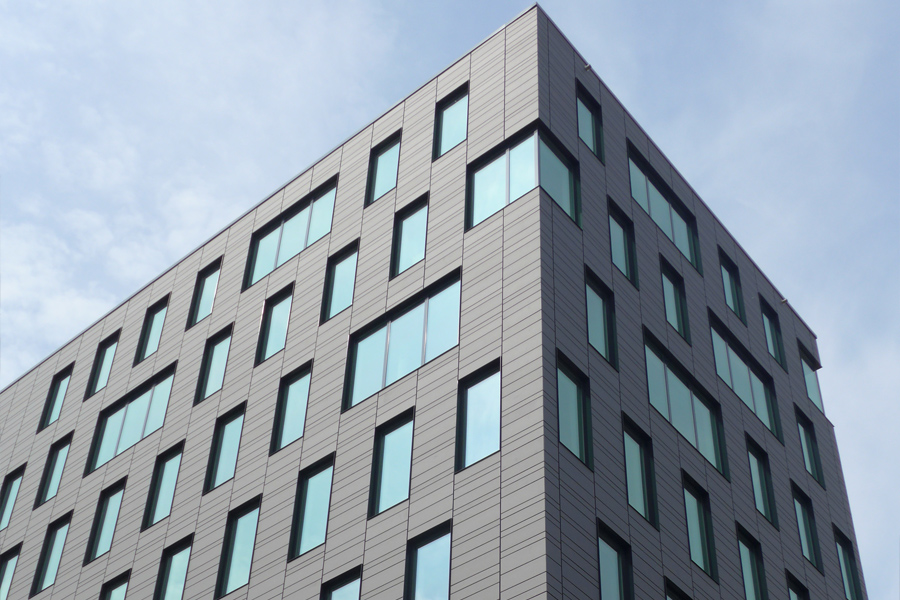
Powder coating can perform well in outdoor environments when pretreatment, film thickness, cure, and adhesion are controlled. It is especially useful when appearance and color retention matter. [5]
The main risk is damage. If powder coating chips or loses adhesion, corrosion can spread under the coating.
Why Corrosion Performance Depends On More Than The Finish Type
Corrosion performance depends on the full finishing system, not only the name of the finish. Anodizing depends on alloy compatibility, surface preparation, coating type, thickness, and sealing. Powder coating depends on cleaning, conversion coating, adhesion, curing, film thickness, and edge coverage. [6]
A poor powder coating process can fail early, and a poorly specified anodized surface can also underperform. The finish type alone does not guarantee corrosion resistance.
This is why engineering drawings should define finish standard, thickness, color, masking, sealing, inspection, and service environment where relevant.
What Manufacturing Factors Influence Finish Quality?
Manufacturing factors that influence finish quality include surface preparation, alloy chemistry, machining marks, burrs, sharp edges, cleaning, pretreatment, racking, curing, sealing, and inspection. Finishing cannot fully hide poor machining or unclear design intent.
A machined part with sharp edges, burrs, inconsistent surface texture, or mixed alloys may show finish variation. A part with hidden contamination may pass visual inspection but fail adhesion or corrosion testing.
Why Surface Preparation Determines Whether The Finish Succeeds Or Fails
Surface preparation determines finish success because both anodizing and powder coating depend on the condition of the aluminum surface. Oils, coolants, oxides, embedded particles, fingerprints, machining marks, and burrs can affect final performance.
For anodizing, surface preparation affects oxide uniformity and appearance. For powder coating, pretreatment strongly affects adhesion and corrosion resistance.
Powder coating studies show that aluminum pretreatment has a major influence on coating adhesion and corrosion stability. This is why cleaning and conversion coating should not be treated as minor steps. [4]
Which Aluminum Alloys Produce The Most Consistent Results?
Aluminum alloy chemistry affects finish consistency. 6061 often produces more predictable anodized results than some high-copper or high-zinc alloys. 7075 can be anodized, but color and corrosion behavior may require closer process control.
Cast aluminum may show more cosmetic variation than wrought aluminum because of porosity and silicon content. Machined surfaces may also anodize differently than extruded, rolled, or blasted surfaces.
For powder coating, alloy choice still matters, but surface cleaning and pretreatment usually control adhesion more strongly than color absorption.
How Wear, Friction, And Mechanical Contact Affect Finish Selection
Wear, friction, and mechanical contact affect finish selection because powder coating and anodizing do not respond the same way under abrasion or sliding contact. A finish used on a visible cover may not be suitable for a sliding fixture or moving aluminum component.
Why Powder Coatings Can Fail On High-Wear Surfaces
Powder coatings can fail on high-wear surfaces because the polymer film can chip, scratch, or wear through under repeated contact. Sliding friction can remove coating at contact points, especially on edges, holes, slots, and clamping areas.
This does not mean powder coating is weak. It means it should be matched to the correct use. Powder coating is often strong for exterior appearance, handling protection, and barrier coverage, but it is not usually the best choice for precision sliding contact.
When Hard Anodizing Becomes A Functional Engineering Requirement
Hard anodizing becomes a functional engineering requirement when the aluminum surface must resist wear, abrasion, or repeated contact. It is common for tooling components, fixtures, moving assemblies, wear plates, and precision contact surfaces.
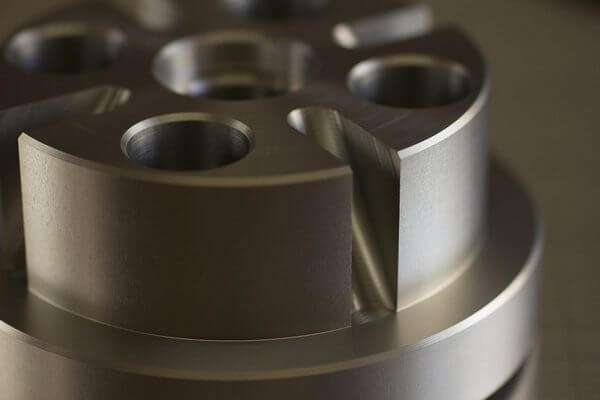
Hard anodized layers are generally thicker and harder than decorative anodized layers. They may also require more attention to dimensional allowance because coating growth can affect tight features.
For CNC aluminum parts with sliding motion, hard anodizing should be considered early in design, not added after machining.
Why Electrical Performance Can Eliminate One Finish Option Immediately
Electrical performance can eliminate one finish option when grounding, shielding, conductivity, or insulation is part of the design. Both anodizing and powder coating can interfere with electrical contact if applied to the wrong areas.
CNC aluminum electronics enclosures, control boxes, heat sinks, RF housings, and sensor mounts often need careful finish planning because electrical and thermal surfaces may be functional.
How Anodizing Affects Electrical Isolation
Anodizing creates an aluminum oxide layer, and aluminum oxide is electrically insulating compared with bare aluminum. This can be useful when controlled insulation is required.
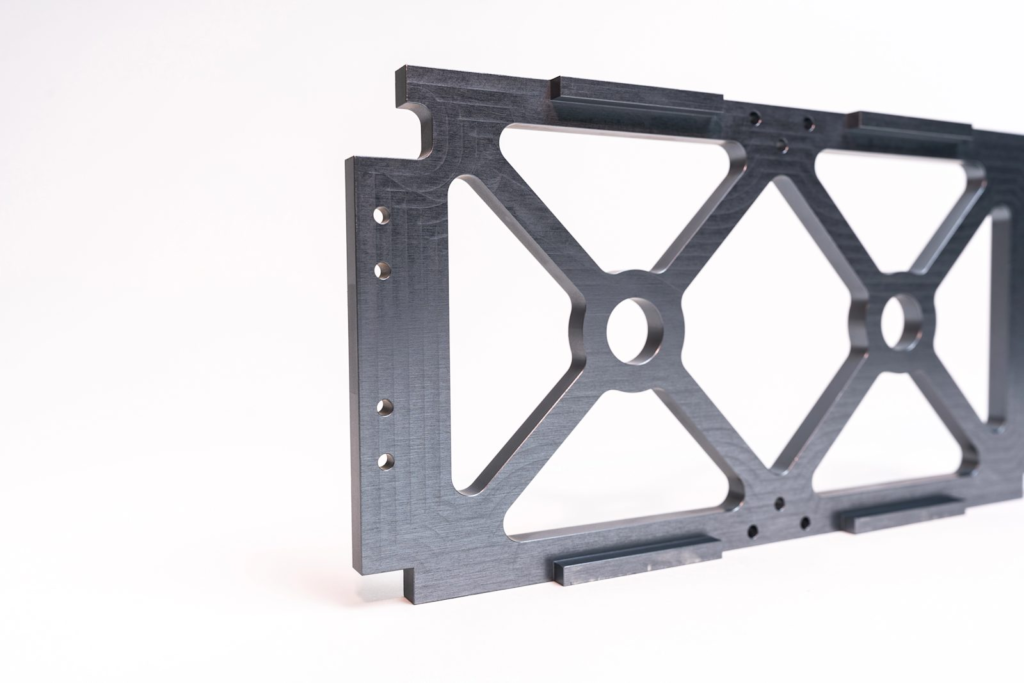
It can also create problems if a part needs grounding or electrical continuity. Grounding points, contact pads, threaded inserts, and mating faces may need masking or post-finish preparation.
The drawing should clearly identify whether anodizing is allowed on electrical contact surfaces.
When Powder Coating Creates Grounding And Contact Problems
Powder coating creates grounding and contact problems when it covers surfaces that must conduct electricity. Because powder coating creates a polymer film, it can block conductivity at mounting holes, grounding bosses, enclosure seams, or fastener contact points.
This is common in electrical enclosures and control housings. A part may look excellent after coating, but fail grounding or shielding requirements during assembly testing.
Grounding locations should be defined in the CAD, drawing, or finishing notes before production.
Which Quality-Control Records Should Be Reviewed Before Approving A Finish?
Quality-control records should be reviewed before approving a finish because visual inspection alone does not prove performance. Engineers should review coating thickness, adhesion, seal quality, corrosion testing, masking verification, color consistency, gloss, and dimensional inspection after finishing.
A finished part should be inspected against the function it must perform, not only against appearance.
Engineering Records To Review
| Engineering Record | Why It Matters |
| Material specification | Confirms alloy and finish compatibility |
| Surface finish requirement | Defines visual and functional expectations |
| Corrosion specification | Identifies environmental exposure |
| Assembly drawing | Shows critical fits, threads, and sealing surfaces |
| Electrical requirement | Identifies grounding and contact areas |
| Masking drawing | Prevents finish on functional surfaces |
Manufacturing Data To Review
| Manufacturing Data | Why It Matters |
| Coating thickness report | Confirms dimensional impact |
| Adhesion testing | Verifies powder coating bond |
| Seal verification | Confirms anodizing corrosion protection |
| Corrosion testing | Validates environmental performance |
| Color and gloss inspection | Confirms cosmetic consistency |
| Post-finish dimensional report | Confirms final fit and assembly readiness |
Industry Examples Where Finish Selection Directly Affects Product Performance
Finish selection affects product performance differently across aerospace, automotive, medical, electronics, and industrial manufacturing. The correct choice depends on the real service condition.
Aerospace Components: Why Anodizing Often Controls Corrosion And Dimensional Stability
Aerospace aluminum components often use anodizing because corrosion protection, coating control, dimensional stability, and specification compliance matter. Structural brackets, precision housings, and flight hardware may require controlled anodic coatings under aerospace or military-style specifications.
NASA process specifications for aluminum anodizing show how aerospace programs control anodizing through material, process, and drawing requirements. These parts usually require traceability and inspection records.
Powder coating may still be used on non-critical aerospace support equipment or exterior panels, but flight hardware often requires more controlled surface engineering.
Automotive Components: Balancing Appearance, Durability, And Production Volume
Automotive aluminum parts may use anodizing or powder coating, depending on function. Exterior trim, wheels, brackets, and visible components often value appearance, color, durability, and impact resistance. Powder coating may be useful for high-volume parts needing consistent color.
Anodizing may be selected for machined aluminum components where wear, dimensional control, or a metallic appearance matters. Automotive production also requires repeatability, so finish consistency across batches is important.
Medical Device Components: Managing Wear, Cleanability, And Precision Features
Medical device equipment may use CNC aluminum housings, instrument components, diagnostic assemblies, and precision fixtures. Finish selection must consider cleanability, burr control, dimensional stability, wear behavior, and compatibility with cleaning agents.
Anodizing may be useful where a controlled surface and precision dimensions matter. Powder coating may be selected for equipment frames, covers, and external panels where color, barrier protection, and handling durability are more important.
Electronics Components: Choosing Between Thermal Performance, Appearance, And Electrical Requirements
Electronics components such as heat sinks, control enclosures, camera housings, CNC aluminum cases, RF housings, and connector plates often require a balance of appearance, thermal behavior, flatness, grounding, and corrosion resistance.
Anodizing is common for CNC aluminum enclosures and heat sinks because it provides a durable surface while maintaining a machined-metal look. Powder coating is often useful for larger enclosures or panels where color consistency and exterior protection matter.
Electrical contact areas and thermal interfaces must be reviewed before either finish is approved.
Industrial Equipment Components: Protecting Wear Surfaces And Machine Structures
Industrial equipment parts include fixtures, machine guards, tooling components, equipment panels, robotic brackets, and aluminum frames. Hard Anodizing may be used for wear surfaces, sliding fixtures, or tooling areas.
Powder coating may be better for machine guards, panels, covers, and exterior structures exposed to handling and shop environments. For industrial parts, the best finish is often decided by whether the surface is functional, cosmetic, protective, or structural.
Decision Framework: Which Finish Fits The Actual Service Requirements?
The correct finish fits the actual service requirements. Engineers should choose anodizing when wear resistance, dimensional control, electrical insulation, or aerospace-style specifications matter. They should choose powder coating when color consistency, thick barrier protection, impact resistance, and exterior appearance matter more.
Choose Anodizing When:
Anodizing is usually the better choice when wear resistance drives performance, dimensional control is critical, electrical insulation is required, or controlled aluminum surface protection is needed.
It is also a strong option when aerospace-style specifications apply, when machined surfaces must retain a metallic appearance, or when coating thickness must be more controlled than a thick polymer layer.
Choose Powder Coating When:
Powder coating is usually the better choice when color consistency is critical, thick barrier protection is needed, exterior appearance dominates, or impact resistance is important.
It is often practical for panels, guards, frames, brackets, covers, and visible aluminum components. It works best when pretreatment and adhesion are well controlled.
Questions Engineers Should Answer Before Finalizing The Finish
Before finalizing the finish, engineers should answer these questions:
| Engineering Question | Why It Matters |
| What is the service environment? | Defines corrosion, UV, chemical, and moisture risk |
| Are critical fits present? | Determines masking and coating allowance |
| Is wear resistance required? | May favor hard anodizing |
| Are electrical contact surfaces involved? | Requires masking or conductivity planning |
| Is color consistency critical? | May favor powder coating |
| What inspection records are required? | Defines quality-control plan |
| Does the finish affect assembly? | Prevents post-finish interference |
Frequently Asked Questions
Is anodizing or powder coating better for CNC aluminum parts?
Anodizing is better when wear resistance, dimensional control, and metallic surface performance matter. Powder coating is better when color coverage, thicker barrier protection, and exterior appearance matter.
Does anodizing affect CNC part dimensions?
Yes. Anodizing changes the aluminum surface through oxide growth. Precision bores, threads, bearing seats, and mating surfaces may need allowance or masking.
Does powder coating affect assembly fit?
Yes. Powder coating adds a polymer layer that can interfere with holes, slots, threads, press fits, and mating surfaces if the thickness is not considered.
Which finish is better for wear resistance?
Hard anodizing is usually better for wear resistance, sliding contact, and abrasion. Powder coating can chip or wear through under repeated mechanical contact.
Which finish gives better color options?
Powder coating usually gives broader and more consistent color, gloss, and texture options. Anodized color can vary based on alloy, surface condition, and process control.
Which finish is better for corrosion resistance?
Both can provide corrosion resistance when properly specified. Anodizing depends on coating type, thickness, alloy, and sealing. Powder coating depends on pretreatment, adhesion, film integrity, and damage resistance.
Should threads and bearing seats be masked before finishing?
Yes, if coating thickness could affect assembly or performance. Threads, bearing seats, sealing faces, grounding points, and precision bores should be reviewed for masking.
What inspection records should buyers request?
Buyers should request coating thickness reports, adhesion results, seal verification for anodizing, corrosion test data when required, color or gloss checks, and post-finish dimensional inspection for critical features.
The Best Finish Is Determined By Surface Function, Not Appearance
The best finish for CNC aluminum parts is determined by surface function, not appearance alone. Anodizing and powder coating solve different engineering problems, and each can fail if selected for the wrong reason.
Wear, corrosion, tolerance, electrical behavior, masking, coating thickness, and inspection requirements should drive the decision. Cosmetic preference should come after service requirements are understood.
The strongest finish choice is the one that protects the part’s real operating surfaces while reducing assembly, inspection, and long-term performance risk.
For BaiChuan Precision Manufacturing, finish selection should be reviewed before machining is complete, not after. That allows engineering teams to protect threads, bores, sealing faces, grounding points, and wear surfaces while choosing the finish system that best matches the part’s service environment.
References
- U.S. Department of Defense. MIL-A-8625F: Anodic Coatings for Aluminum and Aluminum Alloys.
https://www.coastlinemetalfinishing.com/uploads/Mil-A-8625%20Specification.pdf - NASA. Process Specification for the Anodizing of Aluminum Alloys, PRC-5006.
https://www.nasa.gov/wp-content/uploads/2023/03/prc-5006-current.pdf - Martínez-Viademonte, M. P., et al. A Review on Anodizing of Aerospace Aluminum Alloys for Corrosion Protection. Coatings, 2020.
https://www.mdpi.com/2079-6412/10/11/1106 - The Influence of Aluminium Surface Pretreatment on the Corrosion Stability and Adhesion of Powder Polyester Coating.
https://www.researchgate.net/publication/229400511_The_influence_of_aluminium_surface_pretreatment_on_the_corrosion_stability_and_adhesion_of_powder_polyester_coating - Persson, B. Corrosion Protection of Powder Coatings.
https://www.diva-portal.org/smash/get/diva2%3A1128436/FULLTEXT01.pdf - Kunce, I., et al. Accelerated Corrosion Tests in Quality Labels for Powder Coatings. Materials, 2021.
https://pmc.ncbi.nlm.nih.gov/articles/PMC8585214/ - Finishing and Coating. Powder Coatings and AAMA: How to Meet the Specifications.
https://finishingandcoating.com/index.php/powder-coat/1731-powder-coatings-and-aama-how-to-meet-the-specifications - High Performance Coatings. Understanding AAMA 2605 Standards for High-Performance Coatings.
https://www.highperformancecoatings.org/resources/understanding-aama-2605-standards-for-high-performance-coatings