
Drill bits are fundamental tools in manufacturing, used to create accurate holes in a wide range of materials. From soft wood to hardened metals, each material requires a specific type of drill bit to ensure clean results and consistent performance. Selecting the correct drill bit is not just about making a hole. It directly affects precision, surface finish, and overall production quality.
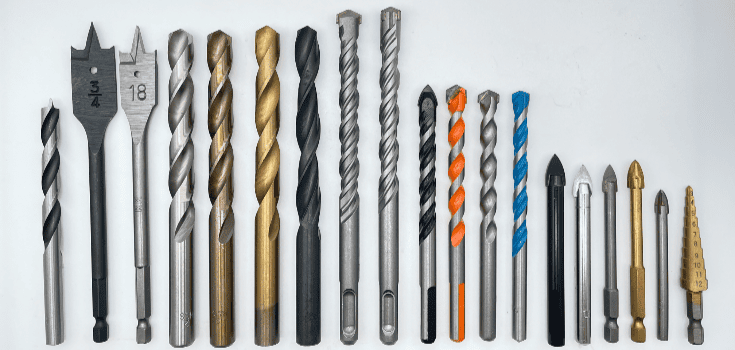
Types Of Drill Bits Used in Part Manufacturing
Because manufacturing processes vary in complexity and material type, drill bits are designed with different shapes, coatings, and materials to meet these demands. Using the right drill bit improves efficiency, reduces tool wear, and minimizes errors during machining. A clear understanding of drill bit types and their uses helps manufacturers achieve better results while maintaining cost and time efficiency.
What Is a Drill Bit?
Before looking at the different types, it helps to understand what a drill bit actually does and why it is designed the way it is. In manufacturing, even a simple drilling operation depends heavily on the tool’s design and function.
A drill bit is a cutting tool used to create round holes in a material. It works by rotating at high speed while applying pressure against the surface. As it rotates, the cutting edges remove material layer by layer, forming a clean and precise hole. Drill bits are commonly used with drilling machines, hand drills, and CNC equipment, depending on the level of precision required.
At its core, a drill bit performs a simple task, but its effectiveness depends on a few key features that work together during operation.
- Cutting edges
These are the sharp edges at the tip of the drill bit. They are responsible for cutting into the material and determining how smoothly the hole is formed. A well-designed cutting edge reduces friction and improves accuracy. For instance, when drilling aluminum sheets, sharp cutting edges help produce a clean finish without tearing the material.
- Rotational motion
Drill bits are designed to rotate at controlled speeds. This rotation allows the cutting edges to continuously engage with the material. The speed must match the material type. Softer materials like wood require higher speeds, while harder metals need slower, controlled rotation to avoid overheating.
- Hole creation process
As the bit rotates and advances into the material, it removes small chips. These chips are pushed out through the flutes, allowing the drill bit to continue cutting without clogging. This process ensures the hole maintains its shape and size throughout the operation.
A common example in manufacturing is the use of a twist drill bit to create holes in aluminum components. It offers a balance of cutting efficiency and chip removal, making it suitable for general-purpose drilling tasks.
Main Parts of a Drill Bit
A drill bit may look simple at first glance, but it is made up of several carefully designed parts. Each part has a specific role in ensuring the bit cuts efficiently, stays stable during operation, and removes material smoothly. Understanding these parts helps in choosing and using drill bits more effectively in manufacturing tasks.
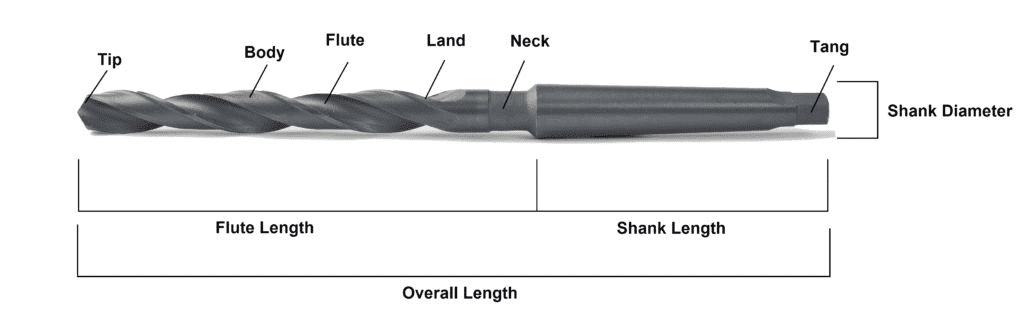
In most industrial applications, performance issues often come down to wear or damage in one of these key areas rather than the entire tool failing.
Body
The body is the main working section of the drill bit. It holds the cutting edges and flutes together and determines the overall strength of the tool. A strong body is important when drilling harder materials like stainless steel, where higher pressure is applied during cutting.
Point
The point is the tip of the drill bit that first makes contact with the material. Its shape influences how easily the bit starts drilling. For example, a sharper point angle helps when working with soft materials like plastic, while a more reinforced point is preferred for metals to avoid early wear.
Shank
The shank is the part that fits into the drill machine. It ensures the bit is held securely during rotation. Different machines require different shank types. In manufacturing setups, a poorly matched shank can lead to slipping or reduced drilling accuracy.
Flutes
Flutes are the spiral grooves along the body of the bit. Their main function is to remove chips from the hole while drilling. This prevents clogging and reduces heat buildup. For instance, when drilling wood, flutes help clear sawdust quickly, keeping the cutting process smooth.
Web
The web is the central core of the drill bit that runs between the flutes. It provides structural support and strength. A thicker web increases durability but may require more force to drill, especially in harder materials.
Each of these parts works together during drilling. Even a small imbalance in design or wear in one section can affect the final hole quality, especially in precision manufacturing environments.
Types of Drill Bits by Coating
Coatings play an important role in improving the performance of drill bits. They help reduce friction, control heat buildup, and extend tool life during continuous machining. In manufacturing, the right coating can make a noticeable difference in both efficiency and surface quality, especially when working with metals.
Different coatings are selected based on the material being drilled and the level of wear resistance required.
Titanium Nitride (TiN)
TiN coating is known for its golden color and good balance of hardness and heat resistance. It reduces friction during drilling, which helps the tool last longer.
For example, TiN-coated drill bits are often used for drilling aluminum parts in automotive manufacturing, where smooth cutting and reduced wear are important.
Titanium Carbonitride (TiCN)
This coating is harder than TiN and provides better resistance against abrasive materials. It performs well in high-speed operations where tool wear is a concern.
In industrial machining, TiCN-coated bits are commonly used for drilling hardened steel components used in machinery parts.
Titanium Aluminum Nitride (TiAlN)
TiAlN is designed for high-temperature environments. It forms a protective layer that remains stable even under intense heat.
A typical use case is stainless steel drilling in aerospace components, where heat generation during machining is high, and tool stability is critical.
Black Oxide
Black oxide coating offers basic corrosion resistance and improves chip flow slightly. It is more cost-effective compared to other coatings.
It is often used in general workshop applications such as drilling wood, plastic, and light metals, where extreme durability is not required.
Diamond-Coated
Diamond coatings provide extremely high hardness and wear resistance. They are suitable for non-metallic, abrasive materials.
For example, in electronics manufacturing, diamond-coated bits are used for drilling glass or ceramic parts where precision is essential, and cracking must be avoided.
Each coating type supports different manufacturing needs. Choosing the right one depends on material type, operating speed, and expected tool lifespan.
Types of Drill Bits by Application
In manufacturing, drill bits are often selected based on the specific material or task rather than a general purpose. Each application demands different cutting behavior, strength, and chip removal capability. This is why drill bits are categorized by use, helping operators achieve better accuracy and longer tool life.
Understanding these categories also reduces tool damage and improves consistency in production work.
General-purpose drill bits
These are designed for everyday drilling tasks across light materials. They offer flexibility but are not specialized for extreme conditions.
Twist drill bits are a common example. They are widely used for wood, plastic, and thin metal sheets. Step drill bits are also used in sheet metal work, where different hole sizes are needed without changing tools. In small fabrication shops, these are often the first choice for basic operations.
Drill bits for metal
Metal drilling requires stronger materials and better heat resistance due to friction during cutting.
Cobalt drill bits are frequently used in stainless steel fabrication because they maintain hardness at high temperatures. Center drills are used to create accurate starting points before deeper drilling. Indexable drill bits are common in CNC machining, where quick replacement of cutting edges improves productivity.
Drill bits for wood
Wood is softer, but it requires clean entry and smooth chip removal to avoid splintering.
Brad point bits are used in furniture making because they create precise holes with minimal tearing. Spade bits are chosen when speed matters more than finish quality, such as rough construction work. Auger bits are used for deeper holes in timber, especially in structural wood applications.
Drill bits for other materials
Some materials require highly specialized cutting tools due to their hardness or brittleness.
Masonry bits are used for concrete and brick surfaces in construction work. Glass drilling relies on diamond-coated bits to avoid cracking during penetration. In manufacturing plants working with mixed materials, these specialized bits help maintain quality across different production lines.
Each application-based drill bit is designed to match the behavior of the material being cut. Using the correct type not only improves precision but also reduces tool failure during repeated industrial use.
Drill Bit Shank Types
The shank of a drill bit is the part that connects directly to the drilling machine, and it plays a major role in stability during operation. A proper fit ensures that the bit rotates smoothly without slipping, especially when working under load. In manufacturing environments, selecting the correct shank type is important for both safety and precision.
Different machines are designed to support specific shank formats, which affects compatibility and performance.
- Hex shank
Hex shanks have a six-sided shape that provides a strong grip inside the drill chuck. This reduces slipping during high-torque operations.
They are commonly used in hand drills for assembly line work, where quick bit changes are needed. For example, in furniture production, hex shank bits are often used for fastening and light drilling tasks.
- Round shank
Round shanks are smooth and cylindrical, designed to fit into standard drill chucks. They are widely used in general machining applications.
In workshop settings, round shank bits are often used for drilling metal sheets where moderate torque is applied, and precision is more important than speed changes.
- SDS shank
SDS (Slotted Drive System) shanks are designed for hammer drilling systems. They lock into place more securely than standard shanks and allow efficient power transfer.
These are typically used in construction environments for drilling into concrete or brick. For instance, when installing anchors in reinforced walls, SDS shank bits provide better control and stability.
Each shank type supports a different level of force and machine compatibility. Choosing the right one ensures smoother operation and reduces wear on both the tool and the machine.
Drill Bit Angles and Geometry
The geometry of a drill bit has a direct impact on how efficiently it cuts into a material. Even small changes in angle or tip design can affect heat generation, chip removal, and surface finish. In manufacturing, selecting the correct geometry helps maintain consistency, especially in high-volume production.
Two of the most important factors in drill bit geometry are the point angle and the cutting edge design. These determine how the tool behaves when it first contacts the material and how smoothly it continues cutting.
- Point angle (cutting tip angle)
The point angle refers to the angle formed at the tip of the drill bit. A smaller angle allows faster penetration, while a larger angle improves stability in harder materials.
For example, a 118° point angle is commonly used for softer materials like plastic and mild steel because it starts cutting easily. In contrast, a 135° angle is preferred for harder metals since it distributes pressure more evenly and reduces wear.
- Cutting-edge design
The shape and sharpness of the cutting edges influence how cleanly the material is removed. A well-designed edge reduces resistance and helps maintain accuracy during drilling.
In precision manufacturing, such as automotive component production, optimized cutting edges are used to ensure consistent hole quality across large batches.
Drill bit geometry is not chosen randomly. It is matched carefully with material type and machining conditions to improve tool life and maintain stable performance throughout production.
Materials Used to Make Drill Bits
The material used in a drill bit has a major impact on its strength, durability, and cutting performance. In manufacturing, selecting the right material is just as important as choosing the correct shape or coating. A mismatch between tool material and workpiece can lead to fast wear, poor accuracy, or even tool failure during operation.
Different materials are engineered to handle different levels of heat, pressure, and hardness.
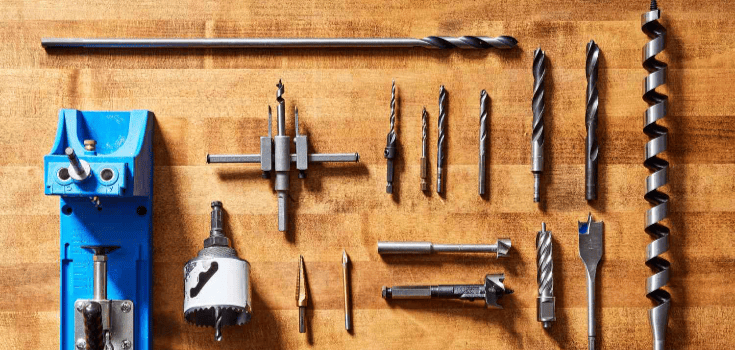
Types Of Drill Bits Used in Part Manufacturing
High-speed steel (HSS)
HSS is one of the most commonly used materials because it balances toughness and affordability. It performs well in general drilling tasks and can handle moderate heat without losing hardness.
In practice, HSS bits are often used in maintenance workshops for drilling mild steel, plastic parts, and wood components.
Cobalt steel
Cobalt drill bits contain added cobalt, which improves heat resistance and hardness. This makes them suitable for tougher metals that generate higher friction during cutting.
For example, in industrial metal fabrication, cobalt bits are frequently used to drill stainless steel parts where standard HSS tools may wear out quickly.
Carbide
Carbide is much harder than both HSS and cobalt, making it ideal for high-precision and high-speed machining. It holds its edge for longer periods, even under demanding conditions.
In CNC machining centers, carbide bits are commonly used for producing automotive and aerospace components where accuracy and consistency are critical.
Diamond-coated materials
Diamond is the hardest known coating used on drill bits. It is mainly applied to handle extremely abrasive or brittle materials.
In electronics manufacturing, diamond-coated bits are used for drilling glass panels and ceramic substrates where precision cuts are required without cracking the surface.
Each material brings a different balance of strength, heat resistance, and cost. In real manufacturing environments, the selection is often based on both the material being drilled and the expected production volume.
How to Choose the Right Drill Bit
Choosing the right drill bit is one of the most important decisions in any machining or manufacturing task. The correct selection improves accuracy, reduces tool wear, and helps maintain consistent production quality. On the other hand, using the wrong bit can lead to poor finishes, frequent tool replacement, and unnecessary downtime.
In practice, selection is not based on a single factor. It usually involves matching the material, coating, geometry, and drilling conditions together.
Match the drill bit to the material
Different materials respond differently to cutting forces, so the bit must be suitable for the workpiece.
For example, HSS or coated bits work well for aluminum, while cobalt or carbide bits are better suited for stainless steel. In woodworking shops, brad point bits are preferred because they prevent splintering and give clean entry points.
Consider coating and heat resistance
Coatings help reduce friction and extend tool life, especially in continuous production environments.
For instance, TiN-coated bits are commonly used in metal fabrication units where repeated drilling generates heat. In contrast, black oxide coatings are often chosen for lighter workshop tasks where cost efficiency matters more than extreme durability.
Select the correct size and geometry
The diameter and point angle of the drill bit affect both precision and cutting performance.
A 118° point angle is often used for softer materials because it allows quicker entry, while a 135° angle is better for harder metals where stability is important. In automotive component manufacturing, maintaining consistent hole size is critical for assembly accuracy, so geometry selection becomes a key factor.
Check machine compatibility
Even a high-quality drill bit will not perform well if it does not match the machine setup.
For example, SDS shank bits are used with hammer drills for concrete work, while round or hex shanks are more common in standard drilling machines used in fabrication workshops.
Selecting the right combination of these factors ensures smoother operation and better output quality across different manufacturing tasks.
Conclusion
Drill bits may seem like simple tools, but they play a critical role in manufacturing accuracy and efficiency. Each type is designed with a specific purpose, whether it is for cutting metals, shaping wood, or drilling through hard materials like concrete and glass. Understanding their structure, coatings, and materials helps ensure better performance and longer tool life in real production environments.
In practice, the right drill bit choice can improve product quality while also reducing machining costs and tool failure. When operators match the bit correctly with the material and application, drilling becomes more consistent and controlled. This makes drill bits not just cutting tools, but an important part of achieving precision in modern manufacturing.