
CNC machining is a manufacturing process where computer-controlled machines remove material with a high level of accuracy to produce finished parts. It plays a critical role in the production of small, high-precision components that must meet exact dimensional and functional requirements. From medical devices to electronics and aerospace systems, CNC machining enables manufacturers to create repeatable, reliable parts at scales where even minor variation can lead to failure.
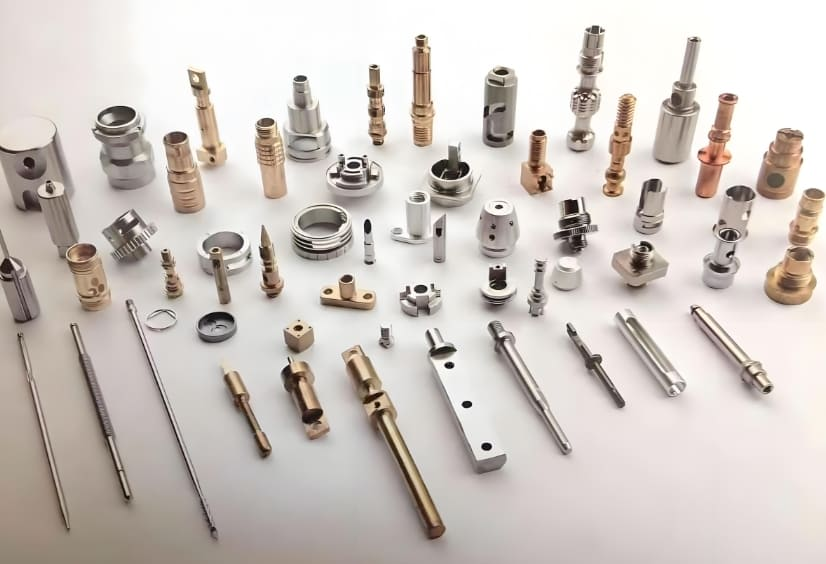
Machining small parts is inherently more demanding than producing larger components. As part size decreases, tolerances become tighter, tooling becomes more delicate, and process stability becomes harder to maintain. Heat buildup, vibration, and material behavior have a greater impact at small scales, making strict process control essential. Achieving consistent quality in small-part CNC machining requires specialized equipment, careful planning, and a deep understanding of both materials and machining dynamics.
What Makes CNC Machining for Small Parts Unique
CNC machining for small parts differs significantly from standard machining because scale directly affects accuracy, stability, and repeatability. When features shrink to millimeter or sub-millimeter sizes, even minor variations in tooling, material behavior, or machine performance can result in dimensional errors. Manufacturers must account for factors that are less critical in larger parts but become dominant at smaller scales.
Size-related challenges in small-part machining
As part size decreases, physical and mechanical constraints become more pronounced. The most common challenges include:
- Tight tolerances
Small CNC parts often require tolerances within a few microns. A deviation that would be acceptable on a larger component may cause misalignment or functional failure in a miniature assembly, such as a medical connector or precision sensor housing.
- Part stability and fixturing
Small components have a limited surface area for clamping. Excessive clamping force can deform the part, while insufficient force can cause movement during machining. Specialized fixtures, vacuum workholding, or custom soft jaws are often required to maintain stability without distortion.
- Heat generation and thermal effects
Heat buildup affects small parts more quickly due to their lower mass. Even slight temperature changes can lead to material expansion that alters final dimensions. For example, thin-walled aluminum components used in electronics enclosures are particularly sensitive to thermal variation during high-speed machining.
Precision requirements at micro and sub-millimeter levels

Precision Machining of Small Parts
Small-part CNC machining frequently involves features such as micro-holes, thin slots, and fine threads. At this scale:
- Tool runout, spindle accuracy, and machine vibration directly influence part quality
- Tool wear occurs faster and is harder to detect visually
- Surface finish becomes critical, especially for moving or mating components
In applications like watch components or microfluidic devices, a surface defect or burr that is barely visible can interfere with function. This is why precision machining for small parts often relies on high-speed spindles, ultra-fine cutting tools, and controlled cutting parameters.
Differences between small-part machining and standard CNC work
Compared to standard CNC machining, small-part production requires:
- Higher spindle speeds and lower cutting forces
- More frequent tool changes and inspection
- Greater emphasis on process consistency rather than raw material removal rates
While a standard machined bracket may tolerate minor variation, a small medical implant or aerospace fastener must meet exact specifications across every batch. This shifts the focus from speed to control and repeatability.
Industries that depend on small CNC-machined components
Several industries rely heavily on precision CNC machining for small parts, including:
- Medical and dental manufacturing, where components such as surgical tools and implant parts demand tight tolerances and clean finishes
- Electronics and semiconductor equipment, which use compact housings, connectors, and heat sinks
- Aerospace and defense, where small fasteners and precision fittings must perform reliably under extreme conditions
- Automotive and EV systems, particularly in sensors, fuel systems, and electronic control units
In these sectors, small CNC components are not secondary parts. They are often critical to safety, performance, and regulatory compliance.
CNC Machining Processes Used for Small Parts
Selecting the right machining process is essential when producing small, high-precision components. Each process offers distinct advantages depending on part geometry, material, and production volume. In small-part manufacturing, the goal is not only dimensional accuracy but also process stability and repeatability across multiple cycles.
CNC milling for compact and detailed components
CNC milling is widely used for small parts with complex shapes, pockets, and fine features. Advanced milling machines equipped with high-speed spindles allow manufacturers to produce intricate geometries while maintaining tight tolerances.
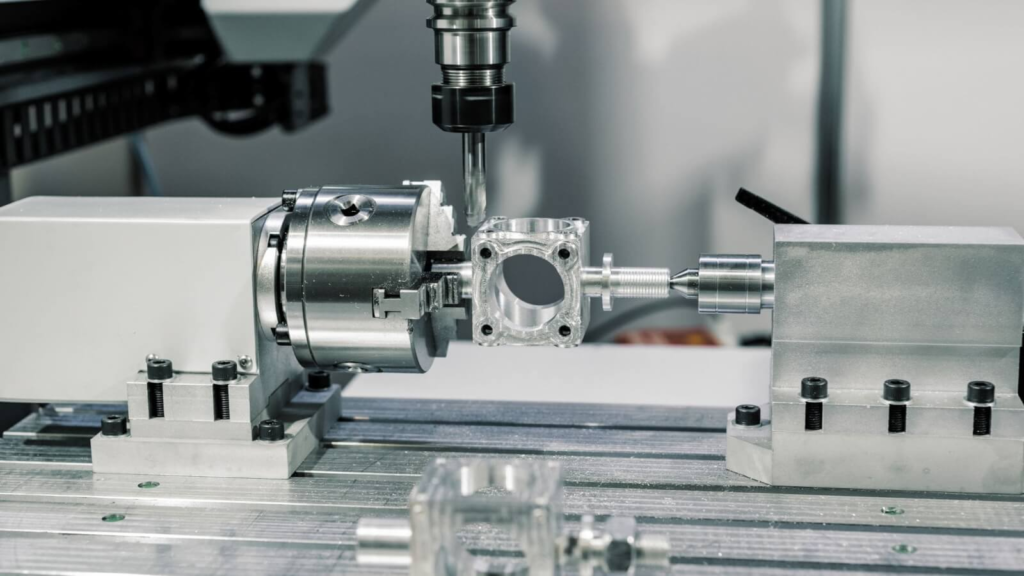
Key advantages of CNC milling for small parts include:
- Flexibility in geometry
Milling supports a wide range of features such as slots, micro-holes, and thin walls. This makes it suitable for electronic enclosures, miniature brackets, and medical device components.
- Precision surface control
With proper tooling and cutting strategies, milling can achieve smooth surface finishes even on small features that require consistent contact or sealing surfaces.
- Compatibility with multiple materials
CNC milling performs well on both metals and engineering plastics, which is important for prototyping and low-volume production.
CNC turning for small cylindrical parts
CNC turning is ideal for producing small, round, or rotationally symmetric components. This process is commonly used for pins, shafts, bushings, and threaded fasteners.
In small-part turning:
- Parts are machined with consistent concentricity and roundness
- Tight diameter tolerances can be maintained over long production runs
- Automated bar feeding enables the efficient production of small components
For example, precision brass fittings used in fluid control systems are often produced through CNC turning due to their dimensional consistency and smooth surface finish.
Swiss machining for high-precision, high-volume parts
Swiss machining is specifically designed for small, slender, and high-precision components. Unlike conventional lathes, Swiss machines support the material close to the cutting point, reducing deflection and vibration.
This process is especially effective when:
- Parts have long length-to-diameter ratios
- Multiple features must be machined in a single setup
- Large production volumes require consistent accuracy
Swiss machining is commonly used in medical implants, electronic connectors, and aerospace fasteners, where repeatability is critical.
Multi-axis machining for complex geometries
Multi-axis CNC machines expand the capabilities of small-part machining by allowing tools to approach the part from multiple angles without repositioning.
Benefits of multi-axis machining include:
- Reduced setup changes, which lowers cumulative error
- Improved accuracy for complex contours and intersecting features
- Shorter overall production time for intricate parts
For example, small aerospace components with angled holes or compound surfaces often require five-axis machining to meet strict geometric tolerances.
Together, these machining processes form the foundation of precision CNC manufacturing for small parts. Choosing the appropriate method ensures both functional performance and production efficiency.
Materials Commonly Used for Small CNC Parts
Material selection plays a central role in small-part CNC machining because material behavior directly affects accuracy, surface quality, and production efficiency. At small scales, even minor material inconsistencies can influence tool wear, dimensional stability, and final part performance. Choosing the right material requires balancing mechanical properties, machinability, and application requirements.
Metals used in small CNC-machined parts
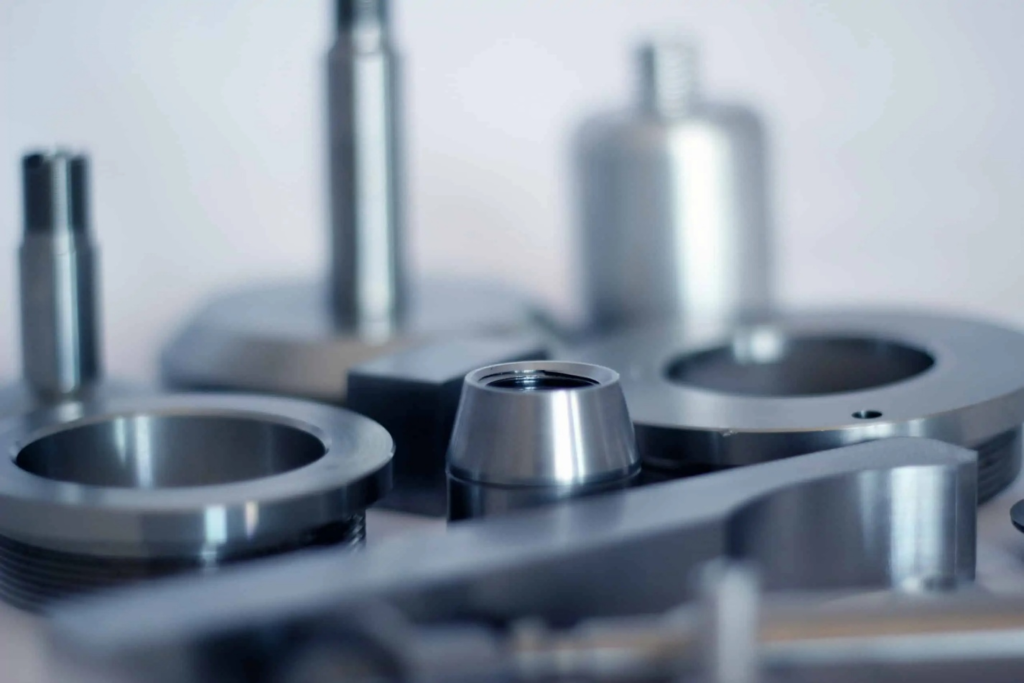
Metals are widely used for small CNC components that require strength, durability, and thermal stability. Common choices include:
- Aluminum
Aluminum is frequently used for small electronic housings, brackets, and structural components. It machines easily, supports tight tolerances, and dissipates heat effectively, which helps reduce thermal distortion during machining.
- Stainless steel
Stainless steel is selected for parts that require corrosion resistance and mechanical strength. It is commonly used in medical instruments and food processing components. While harder to machine than aluminum, controlled cutting parameters help maintain accuracy in small features.
- Brass
Brass offers excellent machinability and produces clean surface finishes with minimal tool wear. It is often used for small fittings, connectors, and precision valves in fluid and electrical systems.
- Titanium
Titanium is valued for its high strength-to-weight ratio and biocompatibility. It is frequently used in aerospace and medical applications. However, its low thermal conductivity requires careful heat management to prevent tool degradation and dimensional drift.
Engineering plastics for small precision components
Engineering plastics are increasingly used for small CNC parts that require electrical insulation, chemical resistance, or lightweight performance.
Common plastic materials include:
- PEEK
PEEK is used in medical and aerospace applications due to its high temperature resistance and mechanical strength. It supports tight tolerances but requires sharp tooling to avoid surface tearing.
- ABS
ABS is often used for prototypes and low-load components. It machines easily and provides dimensional consistency for non-structural parts.
- Nylon
Nylon offers good wear resistance and flexibility. It is commonly used in small gears, bushings, and sliding components, though moisture absorption must be considered during machining and storage.
- Delrin
Delrin provides excellent dimensional stability and low friction, making it suitable for precision mechanical parts such as spacers and bearings.
Material impact on tolerances and surface finish
Material properties directly influence achievable tolerances and surface quality. Softer materials may allow faster machining but can deform under cutting forces, while harder materials offer stability at the cost of increased tool wear. For example, maintaining micron-level tolerances in stainless steel requires more conservative feeds and frequent tool inspection compared to aluminum.
Surface finish is equally material-dependent. Brass and Delrin typically produce smooth finishes with minimal post-processing, while titanium may require secondary finishing to meet cosmetic or functional requirements.
Matching materials to functional and regulatory requirements
Beyond machinability, material selection must align with end-use conditions and regulatory standards. Medical parts must meet biocompatibility and sterilization requirements, while aerospace components must comply with strength and traceability standards. Selecting a material that satisfies both performance and compliance reduces rework and approval delays.
With the right material choice, manufacturers can improve machining consistency, extend tool life, and ensure reliable part performance.
Precision, Tolerances, and Quality Control
Precision and quality control define the success of small-part CNC machining. As part dimensions shrink, acceptable variation narrows, and process errors become more costly. Maintaining consistent quality requires a combination of precise machining practices, reliable inspection methods, and disciplined process control throughout production.
Standard tolerance ranges for small CNC parts
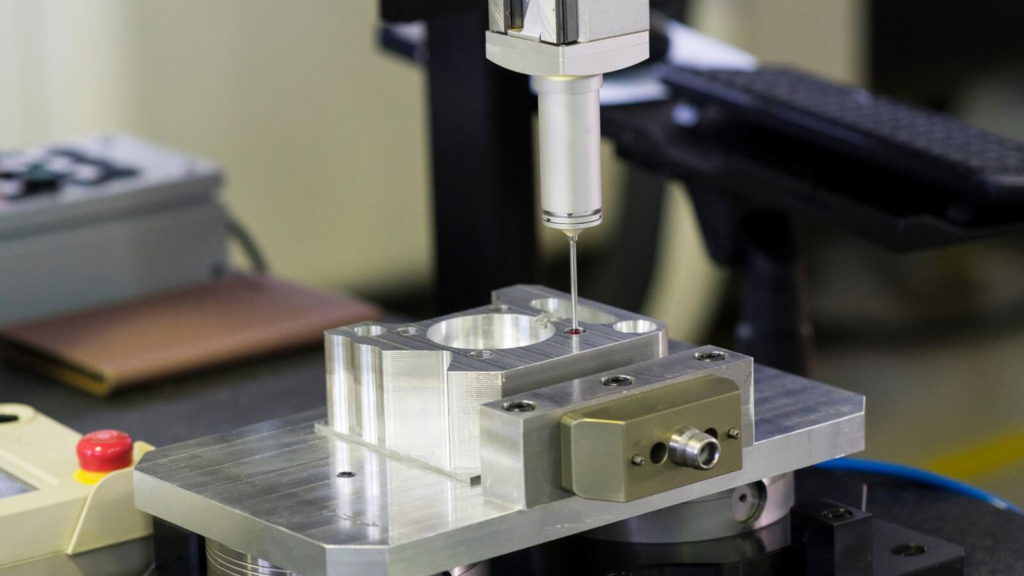
Small CNC-machined components typically require tighter tolerances than larger parts. While exact requirements depend on application, common tolerance ranges include:
- General precision parts
Tolerances often fall within ±0.01 mm, which is suitable for many mechanical and electronic components.
- High-precision applications
Medical, aerospace, and optical parts may require tolerances as tight as ±0.002 mm, particularly for mating features and critical dimensions.
At these levels, machine condition, tool quality, and environmental stability directly influence results. For example, producing miniature stainless steel shafts for medical devices requires strict control over spindle runout and temperature variation.
Role of tooling, fixturing, and machine calibration
Accurate machining of small parts depends heavily on the supporting systems around the machine.
- Tooling selection and maintenance
Micro-tools and small-diameter cutters are more sensitive to wear and deflection. Regular tool inspection and replacement help prevent dimensional drift and surface defects.
- Fixturing and workholding
Proper fixturing ensures part stability without deformation. Custom fixtures and soft jaws are commonly used to support small parts during multi-step machining.
- Machine calibration
Routine calibration of axes, spindles, and probing systems ensures positional accuracy. Even slight misalignment can cause cumulative errors in small components with multiple features.
Inspection and measurement methods
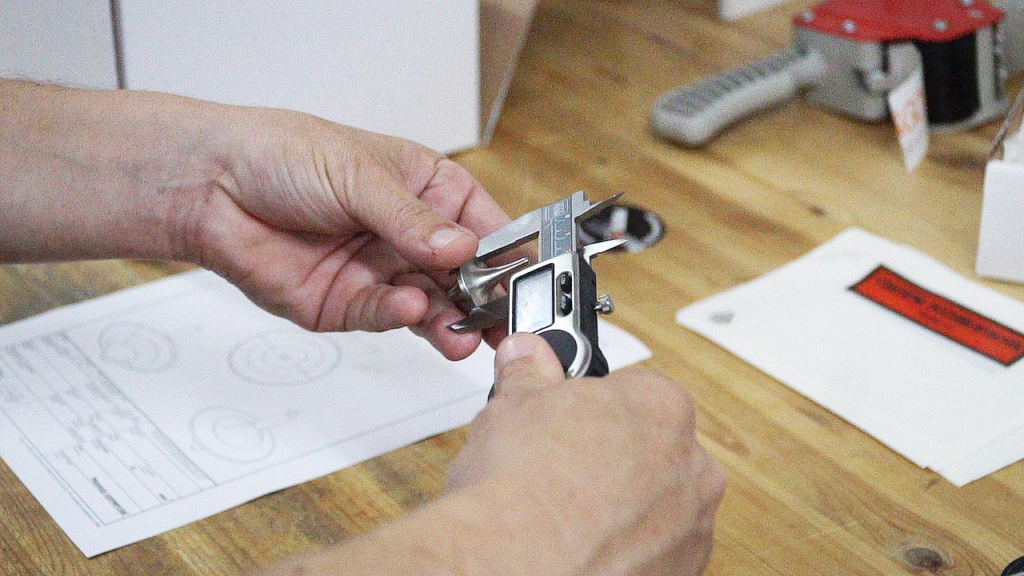
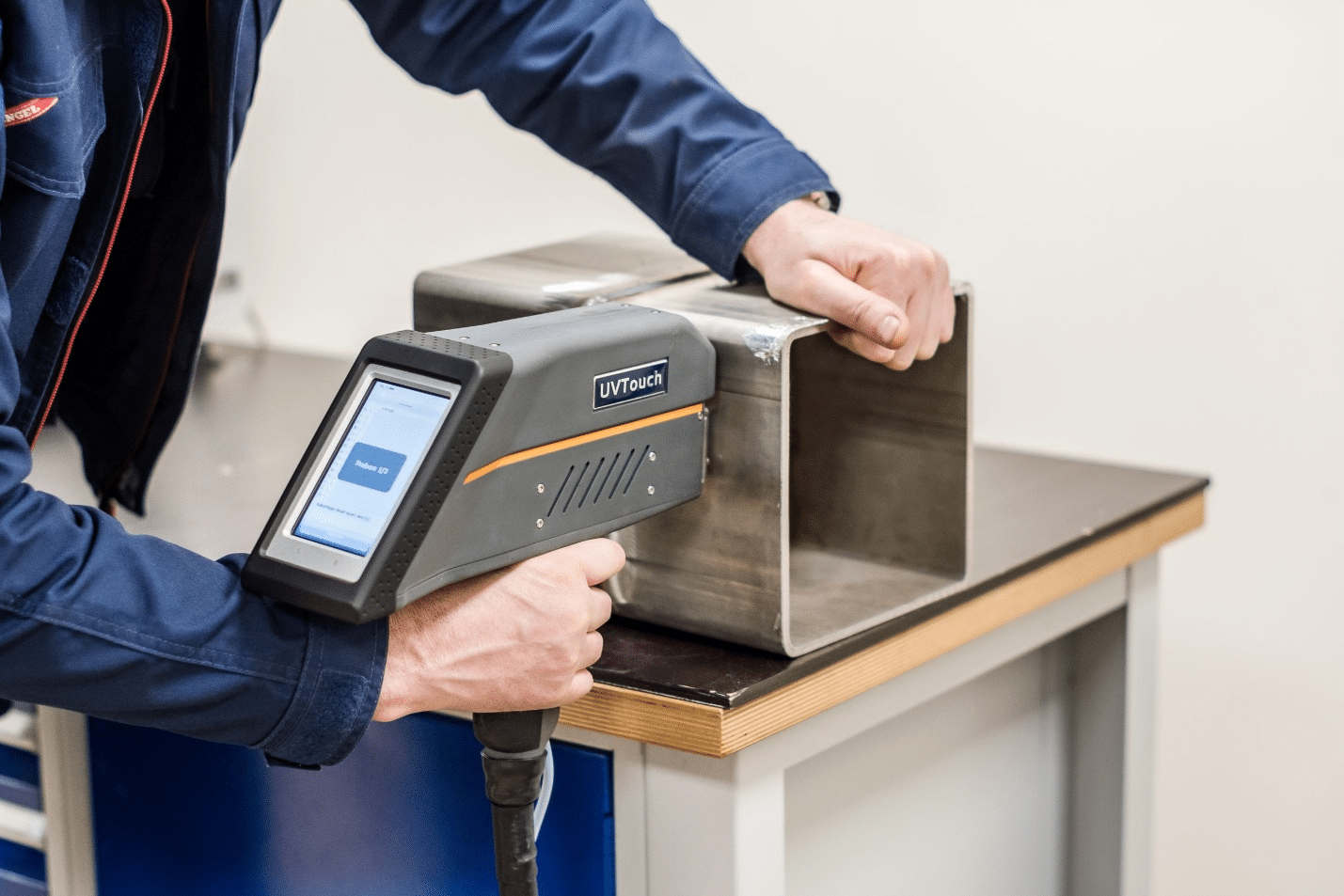
Inspection equipment in the CNC machining process
Measurement plays a critical role in validating small-part quality. Conventional tools may not provide sufficient accuracy at small scales, so manufacturers often rely on:
- Coordinate measuring machines for dimensional verification
- Optical comparators for profile and feature inspection
- Laser and vision-based systems for non-contact measurement
For example, optical inspection is frequently used to verify micro-holes and fine contours in electronic connectors without damaging the part.
Preventing defects and ensuring consistent quality
Quality control in small-part CNC machining focuses on prevention rather than correction. Common strategies include:
- Establishing stable cutting parameters and documented process plans
- Monitoring tool wear and machine performance in real time
- Using statistical process control to identify variation trends early
By addressing variation at the process level, manufacturers reduce scrap rates and ensure consistent output across production runs.
With precision and quality systems in place, small CNC parts can meet demanding performance and compliance requirements. The next step is understanding how design and cost considerations influence production outcomes.
Design and Cost Considerations for Small CNC-Machined Parts
Design decisions strongly influence both the quality and cost of small CNC-machined parts. At small scales, minor design details can significantly affect machinability, cycle time, and scrap rates. Thoughtful design and realistic cost planning help manufacturers achieve precision without unnecessary expense.
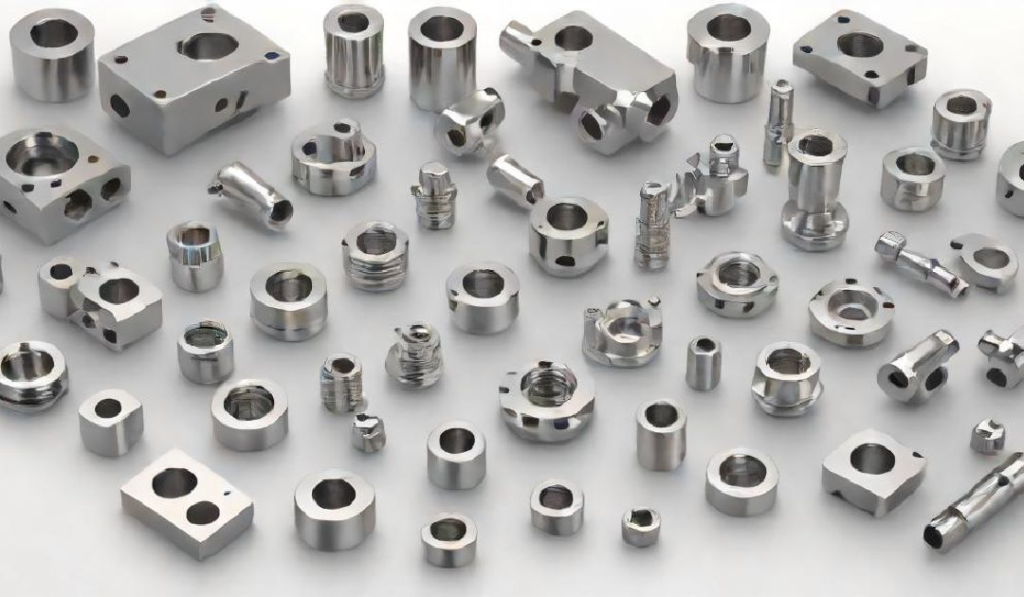
Precision CNC Machining Small Parts for Medical Devices
Design guidelines to improve accuracy and manufacturability
Designing for small-part CNC machining requires an understanding of tool limitations and material behavior.
Key guidelines include:
- Avoiding unnecessarily thin walls
Thin walls are prone to vibration and deformation during machining. Increasing wall thickness slightly can improve stability without affecting function, especially in aluminum and plastic parts.
- Using standard hole sizes and radii
Standard dimensions reduce the need for custom tooling and lower machining time. For example, using standard drill sizes for micro-holes improves consistency and reduces tool wear.
- Simplifying feature geometry
Complex features increase setup time and introduce additional sources of error. Whenever possible, features should be designed to allow access from fewer tool orientations.
- Allowing realistic tolerances
Overly tight tolerances increase cost without improving performance. Defining critical and non-critical dimensions helps balance accuracy and efficiency.
Cost drivers in small-part CNC machining
Several factors directly influence the cost of producing small CNC components:
- Material selection
Harder or exotic materials, such as titanium, increase tooling costs and machining time compared to aluminum or brass.
- Tolerance requirements
Tighter tolerances require slower cutting speeds, more inspections, and higher scrap risk.
- Set up and tooling complexity
Custom fixtures, micro-tools, and multi-axis machining add to upfront costs, particularly in low-volume production.
- Production volume
Small batch sizes often have higher per-part costs due to setup and programming time.
Prototyping, low-volume, and scaled production strategies
Production strategy should align with project goals and demand.
- Prototyping
CNC machining is well-suited for functional prototypes that require accurate geometry and material validation. Rapid prototyping allows design issues to be identified before full production.
- Low-volume production
Short runs are common in medical and aerospace applications. Process consistency and documentation are critical to maintaining quality across small batches.
- Scaled production
As volumes increase, processes such as Swiss machining or automation can reduce unit costs while maintaining precision.
Lead time planning and production efficiency
Lead time is influenced by design readiness, material availability, and process complexity. Early collaboration between designers and manufacturers helps identify potential issues before machining begins. For example, adjusting a part design to reduce setup changes can shorten lead times and improve delivery reliability.
By aligning design choices with manufacturing capabilities, companies can produce small CNC parts that meet performance requirements while controlling cost and schedule.
Conclusion
Precision CNC machining for small parts demands a high level of control across every stage of production. As part sizes decrease, tolerances tighten, and process variation becomes less forgiving. Achieving reliable results requires careful selection of machining processes, stable equipment, appropriate tooling, and disciplined quality control practices.
The right combination of machining method, material choice, and part design directly influences accuracy, surface quality, and overall cost. When these factors are aligned, manufacturers can reduce rework, shorten lead times, and maintain consistent performance across production runs. As industries such as medical, electronics, aerospace, and advanced manufacturing continue to push toward smaller and more complex components, the demand for dependable small-part CNC machining will only continue to grow.