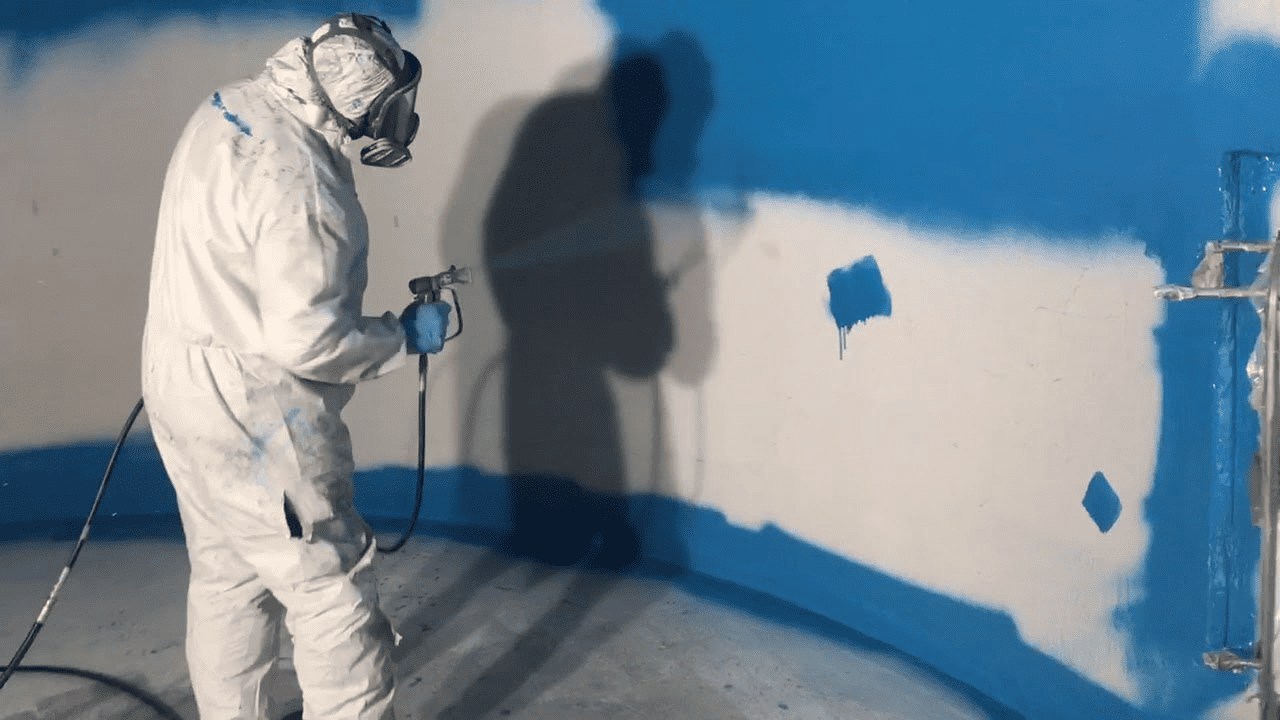

CNC machining allows manufacturers to produce plastic parts with precise dimensions and complex geometries. Despite this accuracy, the surfaces of machined parts often show tool marks and a slightly dull finish. These imperfections are particularly noticeable on transparent plastics such as acrylic and polycarbonate, where surface clarity is critical for both function and aesthetics.
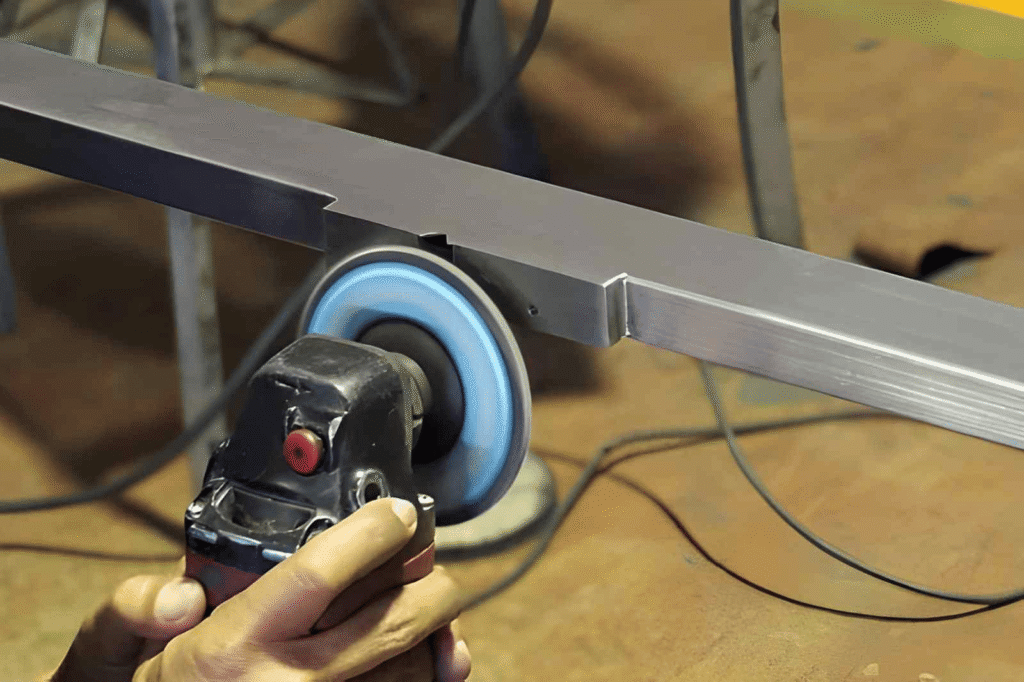
Solvent vapor finishing offers an effective solution to these surface issues. By exposing the plastic to carefully controlled solvent vapors, the outer polymer layer softens and flows slightly. This process smooths microscopic machining marks and enhances gloss and transparency without significantly altering the part’s dimensions. It is widely used in industries where visual quality and surface smoothness are essential.
What Is Solvent Vapor Finishing?
Solvent vapor finishing is a chemical method used to improve the surface quality of thermoplastic parts after CNC machining. Unlike mechanical polishing or abrasive techniques, this process relies on solvent vapors to gently soften the outer layer of the plastic. The softened surface then flows slightly, filling in microscopic machining marks and producing a clearer, glossier finish. This method is especially valuable for transparent plastics where visual quality is critical.
Key Characteristics
- Uses solvent vapor instead of mechanical abrasion
The process avoids sanding or buffing, reducing the risk of uneven surfaces or dimensional changes.
- Smooths microscopic machining marks
Fine tool lines and minor scratches from CNC milling or turning are minimized, leaving a polished appearance.
- Works best with transparent plastics
Materials such as acrylic and polycarbonate respond well, achieving optical clarity suitable for display panels or protective covers.
- Polishes complex geometries and internal features
Unlike mechanical methods, vapor can reach small grooves, cavities, and intricate shapes that are difficult to polish manually.
Example in Practice
A CNC-machined acrylic display panel often appears slightly cloudy after cutting. When processed through solvent vapor finishing, the panel becomes visibly clearer and shinier, enhancing both the appearance and perceived quality of the final product. Similarly, polycarbonate covers for machinery can be treated to remove haze and achieve a smooth, professional finish without altering their dimensions.
How the Vapor Finishing Process Works
The solvent vapor finishing process transforms the surface of CNC-machined plastics by carefully applying solvent vapors. The process is precise and controlled to enhance gloss and clarity without affecting the part’s dimensions. It relies on three main stages that work together to smooth the surface and produce a polished finish.
Step 1: Vapor Condensation
- The plastic part is placed in a vapor chamber where solvent vapors are introduced.
- Vapors condense on the surface, softening the outer polymer layer.
- This initial softening prepares the surface to flow slightly, filling in microscopic irregularities.
Example: Acrylic signage components are placed in a chamber, and the vapor layer quickly wets the surface, making it ready for smoothing.
Step 2: Surface Reflow
- Once softened, the polymer surface begins to flow at a microscopic level.
- Peaks, scratches, and tool marks created during machining gradually level out.
- Complex shapes and internal features also benefit, as the vapor can reach areas difficult to polish mechanically.
Example: Polycarbonate protective covers for laboratory equipment often display minor machining haze. After vapor exposure, the surface becomes even, removing visible tool marks and improving transparency.
Step 3: Evaporation and Hardening
- After the desired exposure, the solvent naturally evaporates.
- The plastic surface solidifies, retaining a smooth and glossy finish.
- Proper timing ensures that the surface is polished without rounding edges or altering dimensions.
Example: LED light guides made from acrylic are treated with solvent vapor, then allowed to dry. The result is a highly transparent component with a consistent finish, ready for assembly.
Plastics Suitable for Vapor Finishing
Not all thermoplastics respond equally to solvent vapor finishing. The process works best on materials that soften slightly when exposed to solvent without losing structural integrity. Understanding which plastics are compatible ensures a consistent and high-quality finish.
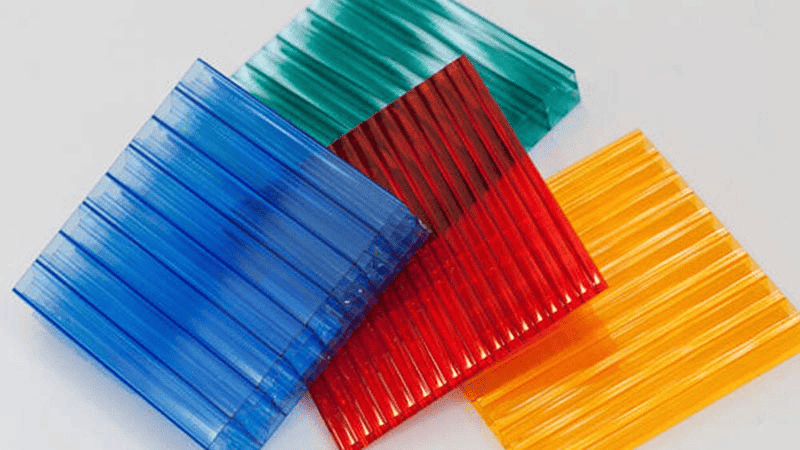
Acrylic (PMMA)
- Excellent optical clarity
Acrylic responds well to solvent vapor, producing transparent, glossy surfaces that highlight the material’s clarity.
- Removes machining marks effectively
Tool lines from CNC milling or turning are smoothed out, giving the part a polished appearance.
Example: Acrylic lenses for optical instruments, LED light guides, and display cases are often vapor polished to enhance transparency and visual appeal.
Polycarbonate (PC)
- Improves gloss and transparency
Polycarbonate surfaces gain a clear, smooth finish when carefully treated with solvent vapor.
- Requires precise solvent control
Overexposure can soften the part too much, so careful monitoring of time and solvent concentration is essential.
Example: Protective shields for laboratory equipment and machine covers are finished with vapor polishing to eliminate machining haze and maintain durability.
ABS
- Enhances cosmetic appearance
While ABS does not achieve the same optical clarity as acrylic or polycarbonate, vapor finishing improves surface smoothness and sheen.
Example: Prototype housings, consumer electronics enclosures, and decorative panels benefit from this treatment for a more refined look.
PETG
- Moderate surface improvement
PETG shows some enhancement in gloss and smoothness, but less dramatic than acrylic or polycarbonate.
Example: Transparent packaging components and display containers are vapor polished to create a cleaner, more attractive surface.
Plastics With Limited Compatibility
While solvent vapor finishing works well on many transparent and semi-transparent thermoplastics, some materials resist solvent interaction or react unpredictably. Using vapor finishing on these plastics can result in little improvement or potential surface damage. Understanding these limitations helps in selecting the right finishing approach.
Nylon
- High chemical resistance
Nylon does not soften easily when exposed to common solvent vapors, making it difficult to polish effectively.
- Best suited for mechanical use
Its strength and durability make it ideal for functional components rather than cosmetic finishes.
Example: Nylon gears and bushings maintain their mechanical integrity without surface enhancement through vapor polishing.
PEEK (Polyether Ether Ketone)
- Extremely solvent-resistant
PEEK’s chemical structure prevents reflow of the surface, so vapor finishing provides little to no cosmetic improvement.
- Used in high-performance applications
Parts are chosen for thermal and mechanical properties rather than appearance.
Example: Aerospace components and industrial parts made from PEEK retain their dimensional stability without polished surfaces.
Fiber-Reinforced Plastics
- Fibers prevent uniform surface flow
Embedded fibers obstruct the reflow of the polymer, resulting in uneven finishes.
- Focus on structural integrity
These plastics are valued for strength, so cosmetic polishing is rarely required.
Example: Structural panels in automotive or industrial applications often use fiber-reinforced plastics where surface aesthetics are secondary to performance.
Step-by-Step Vapor Finishing Procedure
Solvent vapor finishing requires a controlled process to achieve consistent results. Following a structured procedure ensures that the plastic surface is polished without compromising dimensions or structural integrity.
1. Surface Preparation
- Clean the part thoroughly
Remove chips, dust, oil, and other contaminants that could interfere with the vapor process.
- Inspect for defects
Identify any scratches or irregularities that may need attention before finishing.
Example: Acrylic signage components are first wiped and rinsed to remove dust and machining residue to ensure a uniform finish.
2. Vapor Exposure
- Place the part in a controlled chamber
Solvent vapors are introduced under monitored conditions.
- Monitor solvent concentration
Correct levels prevent over-softening and maintain dimensional accuracy.
Example: Polycarbonate protective covers are exposed to vapor in a chamber designed to maintain consistent solvent saturation and temperature.
3. Surface Smoothing
- Allow the polymer surface to soften and flow
Microscopic scratches and machining marks gradually disappear.
- Check complex areas
Ensure internal cavities or grooves receive sufficient vapor for even smoothing.
Example: LED light guides have small internal channels that benefit from even vapor exposure to remove tool marks.
4. Drying and Stabilization
- Evaporate the solvent completely
Controlled drying prevents warping or surface distortion.
- Inspect the finished surface.
Confirm that the part has achieved the desired gloss and clarity.
Example: Finished acrylic display panels are dried in a ventilated area, producing a smooth, transparent surface ready for assembly or packaging.
Key Equipment and Process Parameters
Achieving a high-quality solvent vapor finish requires precise equipment and careful control of process parameters. Each factor influences the surface smoothness, gloss, and dimensional stability of CNC-machined plastic parts.
Vapor Chamber
- Controlled environment for solvent exposure
The chamber ensures even distribution of vapors around all surfaces of the part.
- Prevents direct contact with concentrated liquid solvent
This reduces the risk of over-softening or surface distortion.
Temperature Control
- Regulates solvent evaporation and condensation
Stable temperature prevents rapid softening or uneven flow.
- Maintains dimensional integrity
Excessive heat can deform thin or complex components.
Exposure Time
- Determines the degree of surface smoothing
Short exposure enhances gloss without changing dimensions, while longer exposure can over-soften edges.
- Material-specific adjustments
Different plastics require tailored exposure times for optimal results.
Ventilation Systems
- Removes excess vapors and fumes
Proper airflow protects operators and maintains safe working conditions.
- Supports consistent finishing
Ventilation prevents uneven vapor concentration in the chamber.
Comparison With Other Plastic Finishing Methods
Solvent vapor finishing is one of several techniques used to improve the appearance of CNC-machined plastics. Comparing it with alternative methods highlights its strengths and the types of parts for which it is best suited.
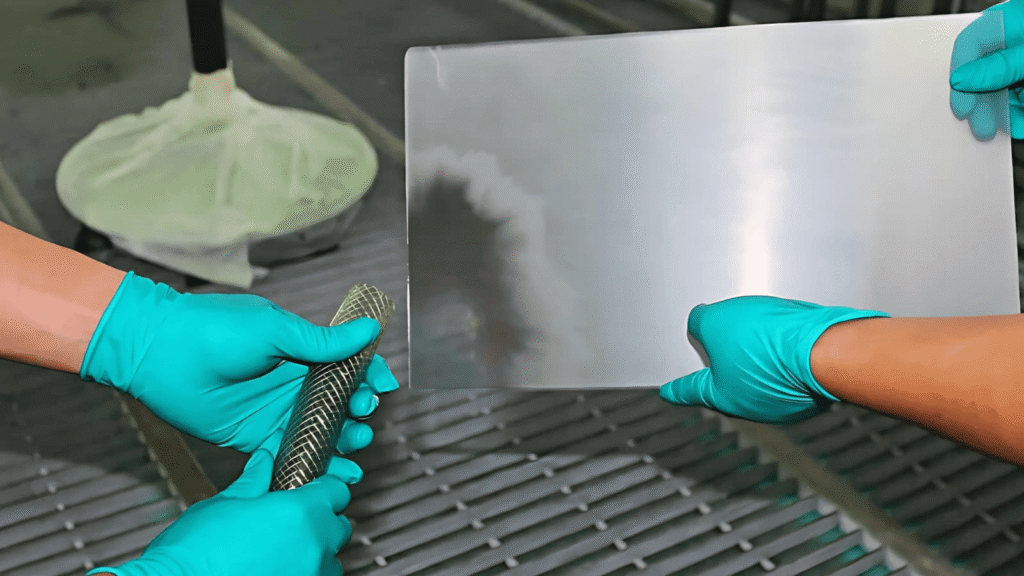
Vapor Polishing for Smooth, Glossy Surfaces
Vapor Finishing
- Surface interaction: Softens the outer polymer layer chemically without removing material.
- Dimensional impact: Minimal, preserving precise part measurements.
- Ideal applications: Transparent or optical plastic parts where clarity and gloss are critical.
Example: Acrylic display panels and polycarbonate machine covers are treated with vapor finishing to achieve smooth, clear surfaces without changing dimensions.
Mechanical Buffing
- Surface interaction: Uses abrasive materials to remove scratches and smooth the surface.
- Dimensional impact: Moderate, as some material is removed.
- Ideal applications: Automotive plastic panels and larger parts where slight dimensional changes are acceptable.
Example: ABS dashboard components are mechanically buffed to reduce machining marks and achieve a uniform surface finish.
Manual Polishing
- Surface interaction: Abrasive hand-finishing relies on skill and technique.
- Dimensional impact: Depends on operator expertise; uneven removal may occur.
- Ideal applications: Small prototypes or decorative parts requiring careful attention.
Example: Custom prototype housings for electronics are hand-polished to refine surface appearance in limited production runs.
Flame Polishing
- Surface interaction: Heat melts the surface edges to smooth them.
- Dimensional impact: Can warp thin or delicate parts if not carefully controlled.
- Ideal applications: Acrylic sheet edges or simple geometric surfaces.
Example: Acrylic signage edges are flame-polished to produce a glossy, clear finish along cut borders.
Vapor finishing stands out for its ability to uniformly polish complex geometries and transparent plastics without significant dimensional changes, making it especially valuable for parts where appearance and optical clarity are priorities.
Advantages of Vapor Finishing
Solvent vapor finishing provides several benefits over other finishing methods, particularly for transparent or precision plastic parts. Its controlled chemical approach ensures consistent results and can improve both appearance and production efficiency.
Improved Surface Quality
- Removes microscopic machining marks
Tool lines and minor scratches from CNC machining are smoothed out, leaving a polished surface.
- Enhances gloss and transparency
Transparent plastics regain clarity, making them suitable for optical and display applications.
Consistent Results
- Uniform finish across complex shapes
Vapor can reach grooves, internal cavities, and intricate geometries that are difficult to polish mechanically.
- Reduces variation between parts
Batch processing ensures that all components achieve the same high-quality finish.
Production Efficiency
- Multiple parts can be processed simultaneously
Large batches of small or medium-sized parts can be finished in one vapor chamber cycle.
- Minimal manual labor required
Reduces the time and effort needed compared with hand polishing or mechanical buffing.
By combining surface enhancement, reliability, and efficiency, vapor finishing is particularly advantageous for industrial applications where appearance, optical clarity, and production consistency are critical.
Challenges and Potential Risks
While solvent vapor finishing delivers high-quality surfaces, it requires careful control to avoid unwanted effects. Understanding the potential risks ensures safer handling and reliable results.
Overexposure
- Surface distortion or rounded edges
Excessive vapor exposure can soften the plastic too much, causing edges to lose sharpness.
- Dimensional changes
Thin or delicate parts may warp if the process is not closely monitored.
Stress Cracking
- Occurs in parts with internal machining stresses
Solvent exposure can highlight or exacerbate micro-cracks created during CNC machining.
- Prevention through careful handling
Identifying stressed areas and adjusting exposure helps avoid cracking.
Chemical Safety
- Solvents require proper ventilation
Vapors can be hazardous to operators if inhaled or allowed to accumulate.
- Use of personal protective equipment
Gloves, goggles, and appropriate clothing reduce contact risk.
- Proper storage and handling
Correct containment prevents spills and fire hazards.
Awareness of these challenges and careful control of process parameters are essential to achieve the benefits of vapor finishing without compromising safety or part quality.
Best Practices for Reliable Results
Following best practices in solvent vapor finishing ensures consistent quality, prevents part damage, and maintains safety. Careful planning and process control are essential for achieving the desired surface finish.
Calibrate Exposure Time
- Adjust for each material type
Different plastics soften at different rates, so exposure times should be optimized for each material.
- Prevent over-softening
Controlled timing avoids rounding edges or warping delicate components.
Example: Acrylic panels require slightly longer exposure than ABS prototypes to achieve full optical clarity without deformation.
Use Proper Fixtures
- Support thin or complex parts
Fixtures prevent warping and maintain alignment during vapor exposure.
- Avoid contact marks
Properly designed supports minimize surface blemishes.
Example: LED light guides are held in custom fixtures that secure internal channels while leaving exterior surfaces exposed to the vapor.
Conduct Sample Tests
- Test before large production runs
Small batches allow verification of solvent concentration, temperature, and exposure time.
- Identify potential issues
Helps detect cracking, over-softening, or uneven surface flow before scaling up.
Example: Polycarbonate protective covers are first tested in a pilot chamber cycle to ensure a uniform glossy finish across multiple units.
Maintain Chamber Ventilation
- Ensure safe operation
Proper ventilation removes excess solvent vapors and reduces health risks.
- Consistent finishing conditions
Stable airflow prevents uneven vapor distribution that could affect surface quality.
Example: Industrial vapor finishing setups use exhaust systems and controlled airflow to maintain consistent conditions for multiple parts during batch processing.
By following these best practices, manufacturers can maximize the benefits of vapor finishing while minimizing risks and achieving uniform, high-quality surfaces on CNC-machined plastics.
When to Use Vapor Finishing in CNC Plastic Manufacturing
Solvent vapor finishing is most effective for specific applications where surface quality and visual clarity are critical. Understanding when to apply this process helps manufacturers optimize production and part performance.
Ideal Applications
- Optical clarity requirements
Transparent plastics such as acrylic and polycarbonate benefit most when clarity is essential for function or appearance.
- Smooth cosmetic surfaces
Parts that are visible to customers or require a professional appearance gain a polished, consistent finish.
- Minimal dimensional change
Components that must retain precise measurements benefit from a chemical smoothing process rather than mechanical polishing.
When to Avoid Vapor Finishing
- Highly chemical-resistant plastics
Materials like PEEK, nylon, or fiber-reinforced plastics do not respond effectively to solvent vapor.
- Parts with high internal stress
Components prone to stress cracking may require alternative finishing methods to avoid damage.
By targeting applications where optical clarity, surface smoothness, and dimensional stability are essential, solvent vapor finishing can deliver consistent, high-quality results in CNC plastic manufacturing.
Conclusion
Solvent vapor finishing is a reliable method for improving the surface quality of CNC-machined plastics. Carefully softening the outer polymer layer removes machining marks, enhances gloss, and restores clarity, particularly in transparent materials such as acrylic and polycarbonate. The process maintains dimensional accuracy, making it suitable for precision components where both appearance and function are important.
Consistent results depend on selecting compatible materials and controlling key process parameters such as exposure time, temperature, and ventilation. When applied correctly, solvent vapor finishing supports a wide range of industrial applications, from optical components to consumer product housings. Its ability to deliver smooth, uniform surfaces makes it a valuable finishing technique in modern plastic manufacturing.