
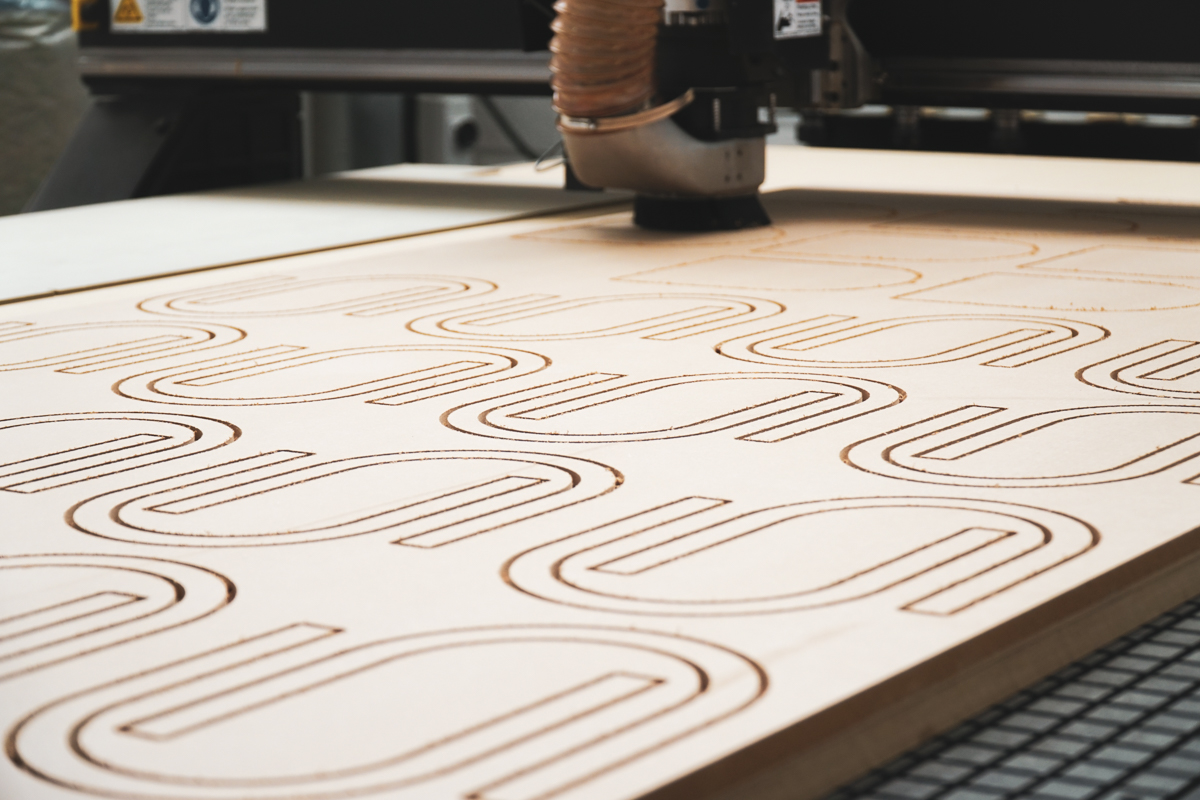
CNC routing is a computer-controlled machining process used to cut, shape, and engrave a wide range of materials with high accuracy. By following precise digital instructions, a CNC router transforms design files into finished parts with consistent dimensions and clean edges. It is widely used for producing both simple and complex components that would be difficult or time-consuming to make by hand.
In modern manufacturing, CNC routing plays a critical role because it combines speed, repeatability, and flexibility. Industries such as furniture manufacturing, signage, automotive, aerospace, and product prototyping rely on CNC routers to meet tight tolerances and production timelines. Its ability to handle different materials and adapt quickly to design changes makes it a practical solution for today’s fast-moving production environments.
What Is CNC Routing?
CNC routing refers to a machining process in which a computer-controlled router cuts, shapes, or engraves materials based on digital design instructions. Instead of relying on manual guidance, the machine follows programmed coordinates, allowing it to produce parts with predictable accuracy and repeatable results. This approach is widely used when consistency and precision are required across multiple pieces.
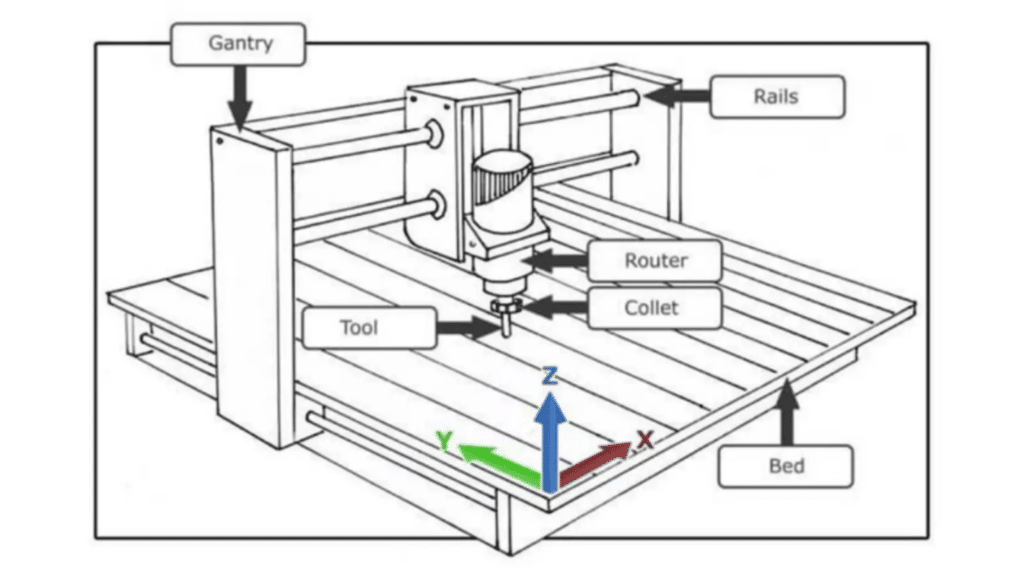
At its core, CNC routing combines software-driven control with mechanical cutting action. The result is a system that can handle detailed designs, tight tolerances, and complex geometries with minimal variation from one part to the next.
Meaning of CNC (Computer Numerical Control)
CNC stands for Computer Numerical Control, which describes how machines operate using coded instructions rather than manual operation. These instructions are typically generated from design files and converted into numerical data that the machine can interpret.
In practical terms, CNC control allows a router to move along the X, Y, and Z axes with measured precision. For example, when cutting cabinet panels, the machine knows the exact depth, path, and speed required for each cut, ensuring that every panel matches the design specifications.
What a CNC Router Does
A CNC router removes material from a workpiece using rotating cutting tools. The router follows a programmed path to create shapes, slots, holes, contours, and engraved features.
CNC routers are often used for tasks such as:
- Cutting plywood sheets into furniture components with identical dimensions
- Engraving logos or lettering into plastic or wood panels
- Machining aluminum plates for brackets or enclosures
Because the process is automated, the same file can be reused to produce hundreds or thousands of identical parts without changes in quality.
How CNC Routing Differs from Manual Routing
Manual routing depends heavily on the operator’s skill, hand control, and consistency. Even experienced craftsmen may see small variations between parts, especially during longer production runs.
CNC routing replaces manual control with programmed motion. Once the design and toolpath are set, the machine performs each cut the same way every time. This difference becomes especially important in applications such as signage or modular furniture, where parts must align precisely during assembly.
Typical Materials Used in CNC Routing
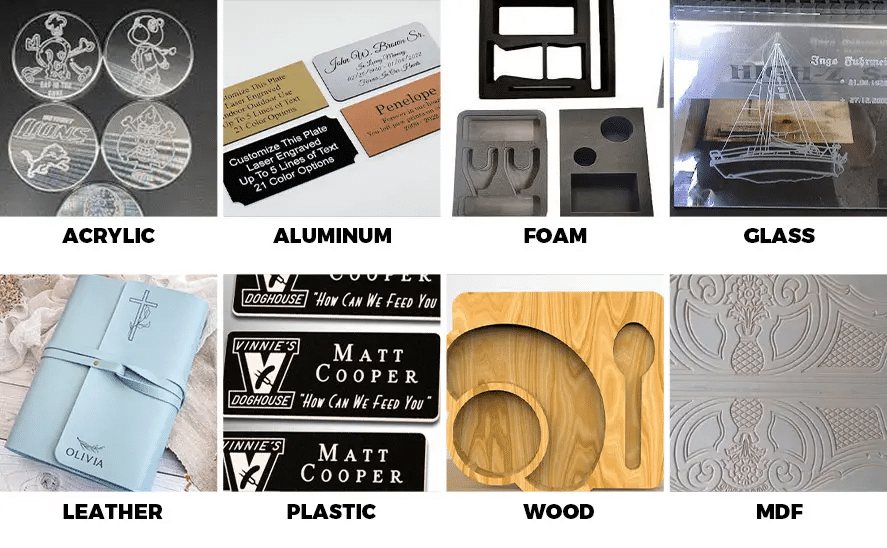
CNC routers are designed to work with a wide range of materials, which makes them versatile across industries.
What Materials Can CNC Routers Engrave
Commonly routed materials include:
- Wood and wood-based panels, such as MDF, plywood, and hardwood, are often used in furniture and cabinetry
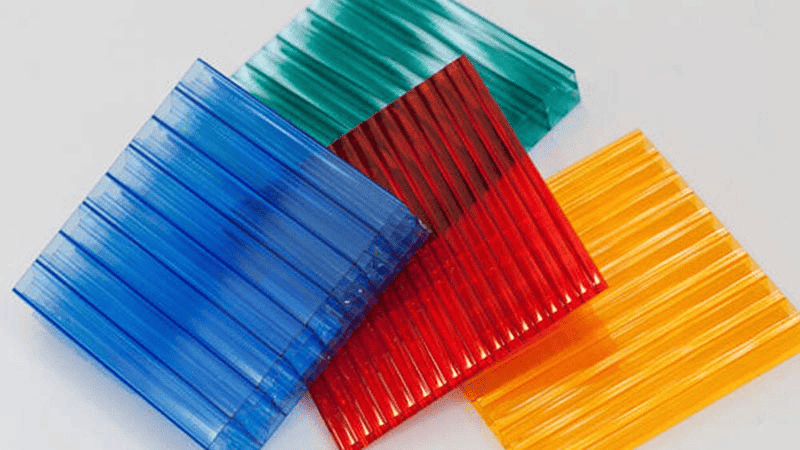
- Plastics, including acrylic, PVC, and polycarbonate, are frequently used for signs, displays, and enclosures
- Aluminum, particularly thin sheets or plates, is used in light structural or decorative components
- Composite materials, such as fiberglass panels or laminated boards, are used in specialized industrial applications
For example, a sign manufacturer may use the same CNC router to cut aluminum letters one day and engrave acrylic panels the next, simply by changing tools and adjusting settings.
How the CNC Routing Process Works
The CNC routing process follows a structured workflow that turns a digital concept into a finished physical part. Each stage builds on the previous one, and accuracy at every step directly affects the final result. While the machine performs the cutting, the quality of the output depends heavily on proper planning, setup, and control.
From design preparation to final inspection, CNC routing is a controlled sequence rather than a single action. Understanding this process helps explain why CNC routers are trusted for both one-off prototypes and large production runs.
Design Stage Using CAD Files
The process begins with a digital design created in CAD software. This file defines the exact shape, dimensions, and features of the part. Designers specify details such as hole diameters, edge profiles, and engraving depth at this stage.
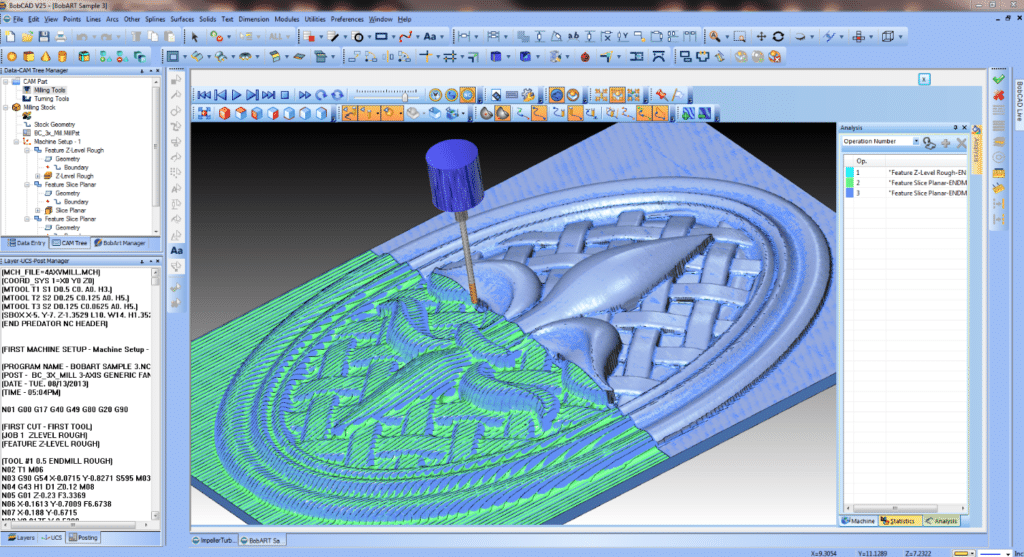
Artistic CAD-CAM Software Features for CNC Routing
For example, a furniture manufacturer designing a cabinet door will define panel size, hinge hole placement, and decorative cutouts directly in the CAD model. Any mistake here will be repeated in every produced part, which makes careful design review essential.
Toolpath Creation with CAM Software
Once the design is finalized, it is imported into CAM software. This is where the cutting strategy is planned. The software determines how the tool will move across the material, including cutting order, depth per pass, feed rate, and spindle speed.
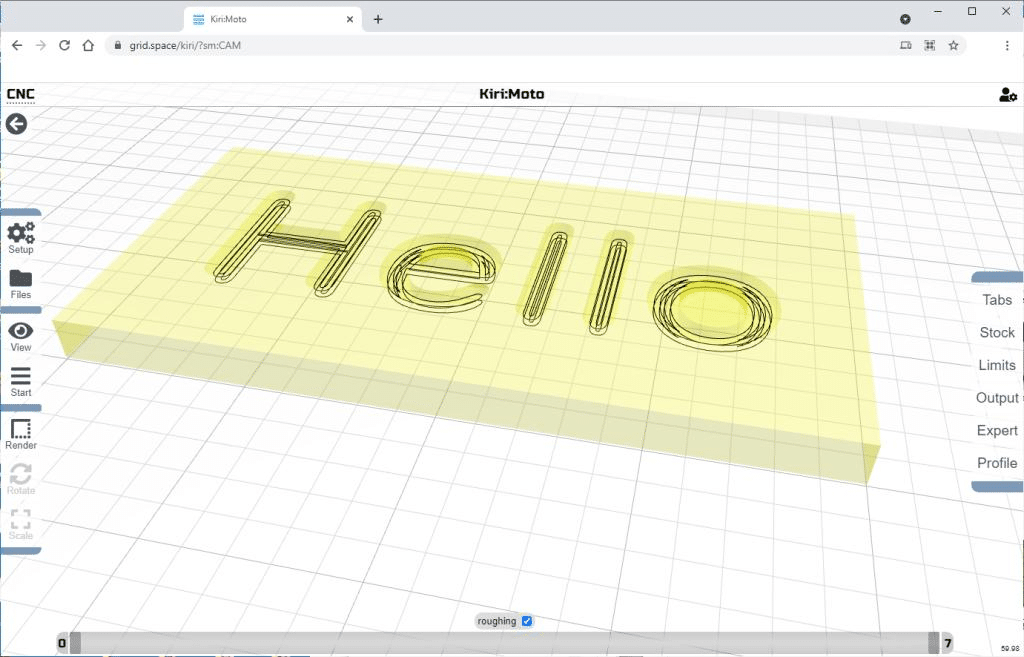
During this stage, decisions are made that affect both quality and efficiency:
- Selecting the right cutting tool for the material, such as an upcut bit for wood or a single-flute bit for plastic
- Defining cutting paths that reduce tool stress and prevent material tear-out
- Planning multiple passes for thicker materials to maintain edge quality
For instance, when routing aluminum panels, the toolpath often uses shallow passes and controlled speeds to prevent overheating and tool damage.
Machine Setup and Calibration
Before cutting begins, the CNC router must be properly prepared. The material is secured to the machine bed using clamps, vacuum tables, or fixtures to prevent movement during operation.
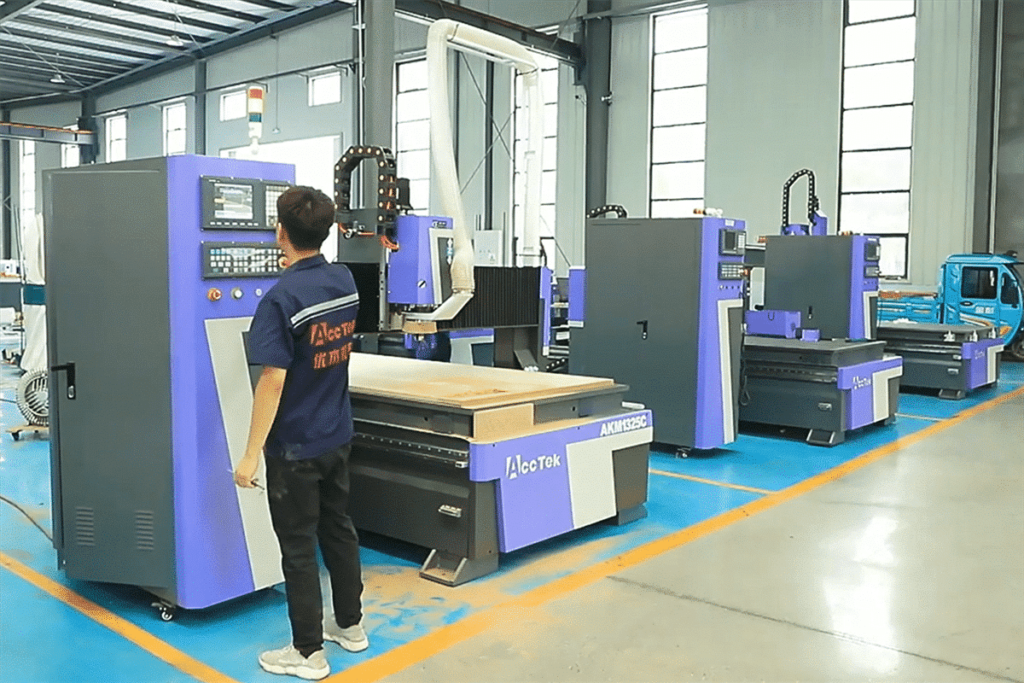
Calibrate a CNC Router for Optimal Performance
Calibration ensures that the machine knows exactly where the material is located. This involves setting the zero point for the X, Y, and Z axes and verifying tool length. Even small errors at this stage can result in incorrect dimensions or incomplete cuts.
In production environments, operators often run a short test cut on scrap material to confirm that the setup matches the digital file.
Cutting, Shaping, and Finishing
With the setup complete, the CNC router executes the programmed toolpath. The spindle rotates the cutting tool while the machine moves along precise paths to remove material.
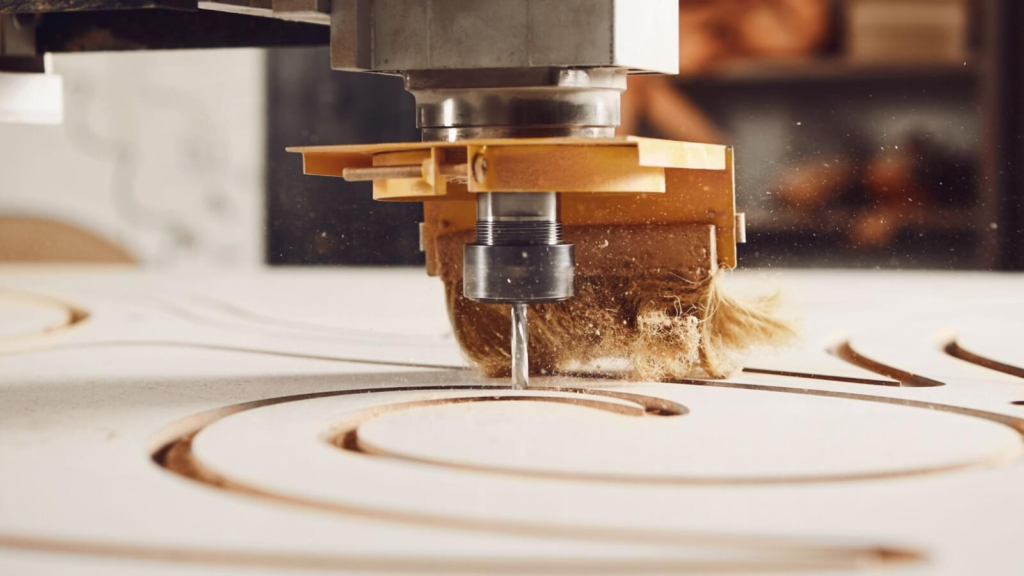
CNC router executes the programmed toolpath
The cutting phase may involve:
- Roughing passes that remove bulk material quickly
- Finishing passes that refine edges and surface quality
- Engraving or profiling operations for detailed features
For example, when producing signage, the router may first cut the overall shape of a panel, then switch tools to engrave lettering with finer detail.
Quality Checks and Accuracy Control
After machining, finished parts are inspected to verify dimensional accuracy and surface finish. Measurements are often taken using calipers or gauges to confirm that tolerances are met.
In repeat production, quality checks help ensure consistency across batches. If deviations are detected, adjustments may be made to toolpaths, cutting speeds, or machine calibration. This feedback loop is one of the reasons CNC routing maintains reliable results even over long production cycles.
Main Components of a CNC Router
A CNC router is built from several integrated components that work together to deliver precise and repeatable cutting results. Each part has a specific role, and performance depends on how well these components are selected, configured, and maintained. Understanding the main elements of a CNC router also helps explain why machines vary widely in capability and cost.
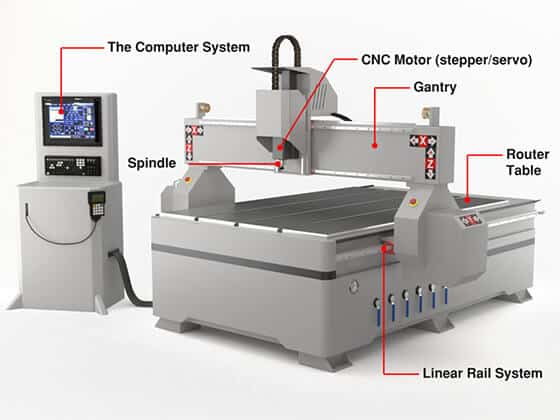
While designs differ between desktop and industrial models, the core components remain largely the same across most CNC routing systems.
Controller and Software
The controller acts as the brain of the CNC router. It interprets the programmed instructions and converts them into movement, speed, and tool control signals. This component communicates directly with the motors and spindle to ensure the machine follows the intended toolpath.
The software interface allows operators to load files, monitor progress, and adjust parameters during operation. In a production setting, this control system enables quick switching between jobs, such as moving from cutting wooden panels to machining plastic sheets with minimal downtime.
Spindle and Cutting Tools
The spindle is the rotating unit that holds and drives the cutting tool. Its speed and power determine how efficiently material can be removed and how clean the cut edges will be.
Cutting tools vary based on the task and material:
- Straight and spiral bits are commonly used for wood and composite panels
- Single-flute or polished bits are preferred for plastics to reduce melting
- Specialized end mills are used for aluminum and other soft metals
For example, engraving fine text on acrylic requires a different tool and spindle speed than cutting thick MDF for cabinetry.
Machine Bed and Gantry
The machine bed supports the workpiece and keeps it stable during cutting. Flatness and rigidity are essential here, especially when working with large sheets. Many CNC routers use vacuum tables to hold materials evenly across the surface.
The gantry is the moving structure that carries the spindle across the bed. A rigid gantry design reduces vibration and improves accuracy, which becomes increasingly important when machining detailed parts or harder materials.
Drive Systems and Motion Components
Drive systems control how the machine moves along each axis. These systems typically rely on stepper motors or servo motors combined with linear rails, ball screws, or rack-and-pinion mechanisms.
High-quality motion components allow smooth, precise movement even at higher speeds. In industries like aerospace prototyping, this precision helps maintain tight tolerances across complex part geometries.
Dust Collection and Safety Features
CNC routing generates dust, chips, and debris that must be managed to protect both the machine and the operator. Dust collection systems remove waste material from the cutting area, improving visibility and reducing cleanup time.
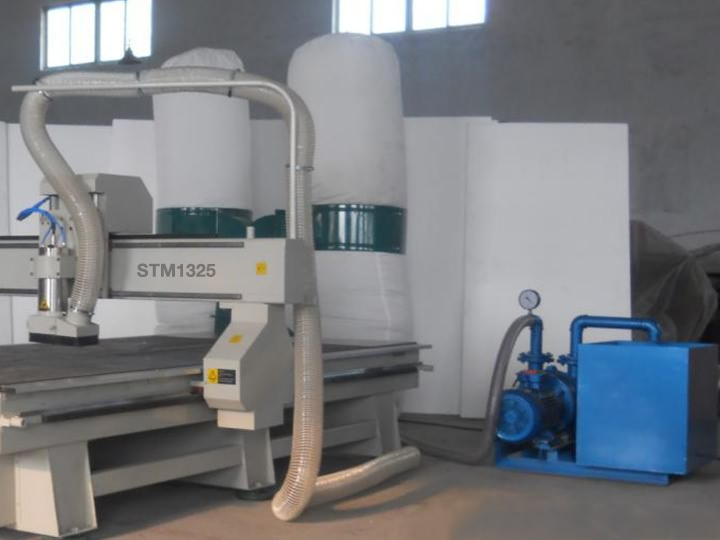
Dust Collection System for CNC Wood Router
Safety features support reliable operation:
- Emergency stop buttons for immediate shutdown
- Protective enclosures to contain debris
- Sensors that detect tool or system faults
In a busy workshop, these features help maintain a clean environment and reduce the risk of accidents or machine damage.
Applications of CNC Routing
CNC routing is used across a wide range of industries because it adapts well to different materials, production volumes, and design requirements. Whether the goal is mass production or custom work, CNC routers provide a practical balance between precision and efficiency. Their versatility makes them valuable in both industrial manufacturing and smaller workshops.
The following applications show how CNC routing supports different production needs without sacrificing quality or consistency.
Furniture and Cabinetry
In furniture and cabinetry manufacturing, CNC routers are used to cut panels, drill holes, and create joinery with consistent accuracy. This ensures that parts fit together properly during assembly, even when producing large quantities.
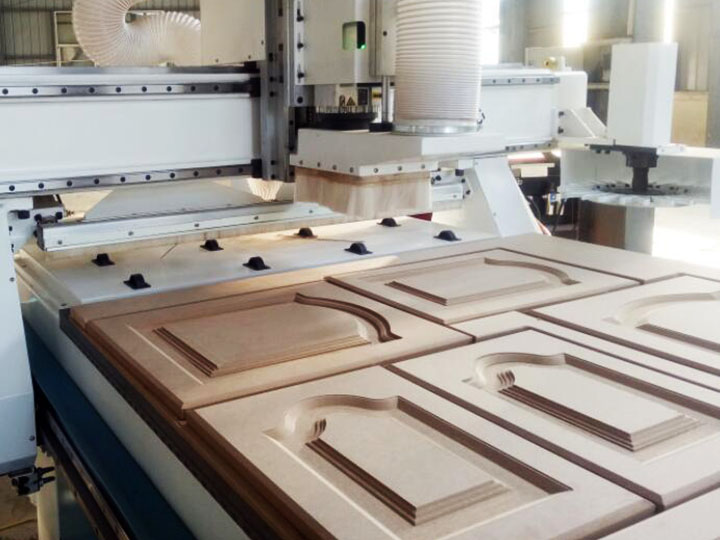
Cabinet CNC Routers Play Critical Roles in Custom Furniture
For example, kitchen cabinet manufacturers rely on CNC routing to produce side panels, shelves, and door fronts that align perfectly. Decorative details such as edge profiles or recessed panels can also be machined directly, reducing the need for additional finishing steps.
Signage and Engraving
CNC routing is widely used in signage for cutting letters, logos, and custom shapes from materials like acrylic, PVC, and aluminum. The process allows for clean edges and precise lettering, which is essential for professional visual presentation.
Engraving applications benefit from controlled depth and repeatable results. Wayfinding signs, nameplates, and branded displays often use CNC routers to achieve consistent text and graphics across multiple units.
Aerospace and Automotive Parts
In aerospace and automotive industries, CNC routing supports the production of lightweight components, prototypes, and interior parts. While heavy structural components are typically machined on other equipment, CNC routers are well-suited for panels, brackets, and composite parts.
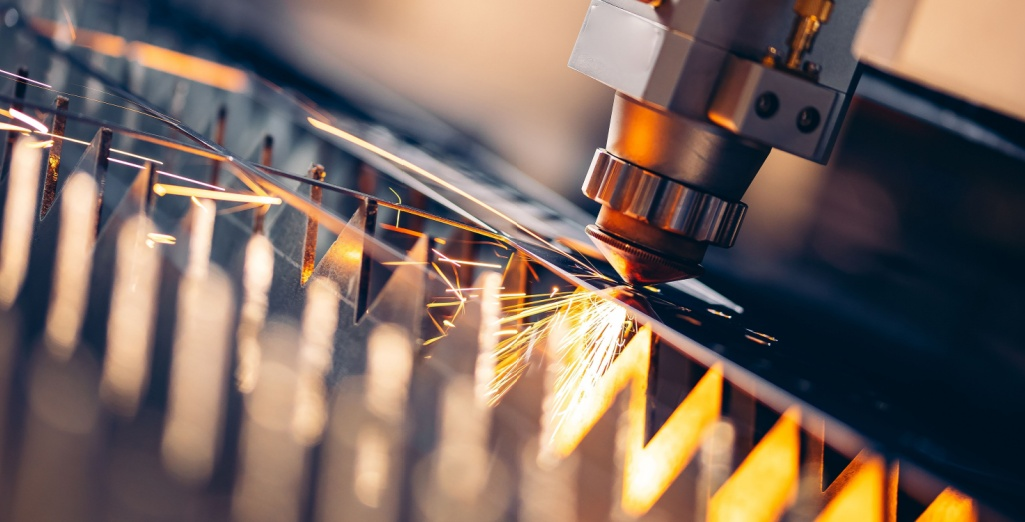
Common Aerospace Parts Made With CNC Machining
For instance, interior trim panels or composite housings can be cut accurately to match complex contours, ensuring proper fit during installation.
Prototyping and Product Development
CNC routing plays a key role in prototyping by allowing designers and engineers to quickly turn digital models into physical parts. This speeds up testing and design validation before moving to full-scale production.
Product development teams often use CNC routers to create enclosures, mockups, and functional prototypes. Adjustments can be made directly in the design file, then re-machined without changing tooling setups.
Custom and Small-Batch Manufacturing
For custom work and small production runs, CNC routing offers a cost-effective alternative to manual fabrication. Once a design is programmed, parts can be reproduced accurately without relying on specialized jigs or fixtures.
This approach is commonly used by workshops producing custom furniture, architectural panels, or specialized components where design variation is frequent but quality expectations remain high.
Advantages of CNC Routing
CNC routing offers a combination of accuracy, efficiency, and flexibility that is difficult to achieve with manual methods. These advantages explain why the process is widely adopted across both high-volume manufacturing and custom production environments. When properly implemented, CNC routing improves output quality while reducing production variability.
The benefits below highlight how CNC routing supports consistent results and long-term operational efficiency.
Precision and Consistency
One of the strongest advantages of CNC routing is its ability to produce identical parts with minimal variation. Once a program is set, the machine follows the same path every time, maintaining tight tolerances throughout production.
This consistency is especially valuable in applications such as modular furniture or equipment enclosures, where even small dimensional differences can cause alignment problems during assembly.
Speed and Productivity
CNC routers operate at high speeds while maintaining accuracy, which significantly reduces production time compared to manual routing. Automated toolpaths allow continuous operation without fatigue-related errors.
In a production shop, a CNC router can cut multiple nested parts from a single sheet of material in one cycle. This approach shortens lead times and allows manufacturers to meet larger order volumes without increasing labor costs.
Design Flexibility and Complexity
CNC routing supports complex geometries that would be difficult or impractical to achieve by hand. Curved profiles, detailed engravings, and multi-depth features can all be produced from a single digital file.
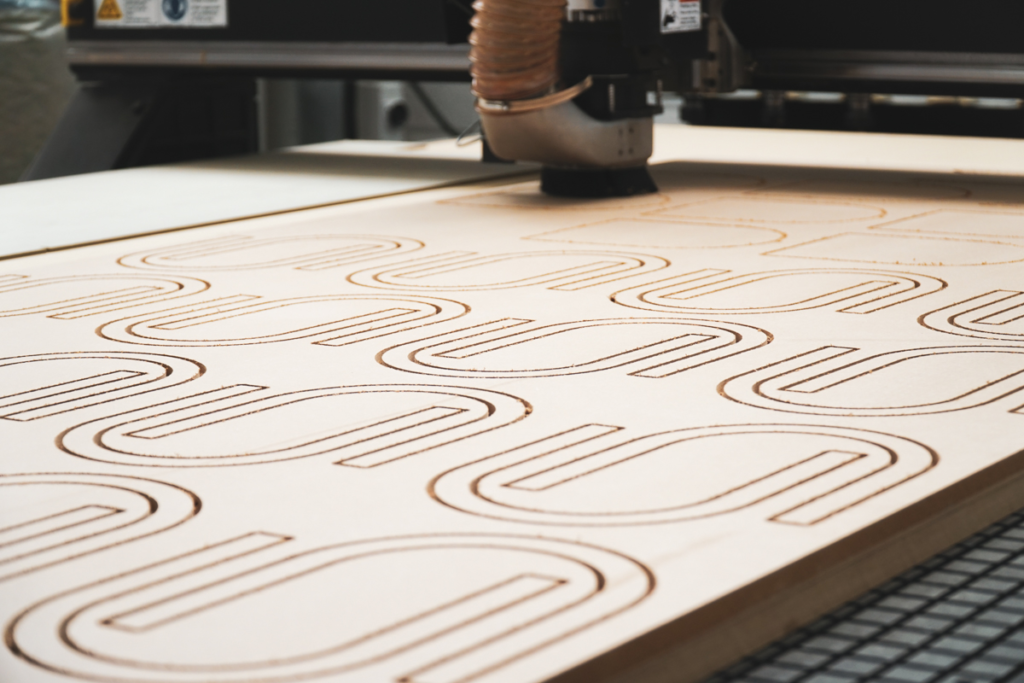
Design changes are also easier to manage. When adjustments are needed, operators update the design file rather than reworking physical templates or tooling. This flexibility is particularly useful in product development and short-run manufacturing.
Reduced Material Waste
Accurate toolpaths and optimized nesting layouts help minimize material waste. CAM software arranges parts efficiently on the material surface, allowing more components to be cut from each sheet.
For example, in plywood processing, efficient nesting can significantly lower raw material costs while also reducing disposal and cleanup time.
Cost Efficiency for Repeat Production
Although initial setup requires planning, CNC routing becomes highly cost-effective when producing repeat parts. Once the design and toolpaths are established, the same program can be reused without additional setup effort.
This advantage is evident in industries such as signage and panel manufacturing, where recurring designs must be produced with consistent quality over time.
Limitations and Considerations
While CNC routing offers many advantages, it is not always the ideal solution for every manufacturing task. Understanding its limitations helps businesses make informed decisions and avoid costly mismatches between equipment and application.
Initial Equipment Cost
CNC routers require a significant upfront investment, especially for industrial-grade machines. In addition to the machine itself, costs may include software licenses, tooling, dust collection systems, and workspace preparation. For small operations with low production volumes, this investment may take time to justify.
Material Thickness Limits
CNC routers are best suited for sheet materials and moderate thicknesses. Very thick or hardened materials may require alternative machining processes. For example, heavy steel components are typically better handled by CNC milling machines rather than routers.
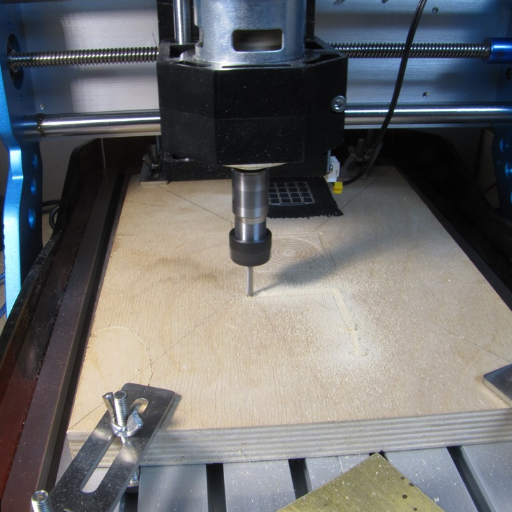
Maximum CNC Router Cutting Thickness
Tool Wear and Maintenance
Cutting tools wear down over time, especially when working with abrasive materials like composites or aluminum. Regular inspection and replacement are necessary to maintain cut quality and accuracy. Machines also require routine maintenance to keep motion systems and spindles operating reliably.
Skill and Software Learning Curve
Although CNC routing reduces manual labor, it increases reliance on software and technical knowledge. Operators must understand CAD design, CAM programming, and machine operation. Training and experience play an important role in achieving consistent results.
When CNC Routing May Not Be the Best Choice
CNC routing may not be suitable for extremely high-precision metal parts, very small components, or applications that require heavy material removal. In these cases, other machining methods may offer better performance or cost efficiency.
Conclusion
CNC routing is a controlled manufacturing process that transforms digital designs into precise physical components through automated cutting and shaping. By combining CAD design, CAM programming, and computer-controlled machining, it delivers consistent results across a wide range of materials and applications.
Its continued relevance comes from its balance of accuracy, speed, and flexibility. Businesses should consider CNC routing when they need repeatable quality, efficient production, and the ability to adapt designs without retooling. When matched with the right application and materials, CNC routing remains a reliable and effective manufacturing method.