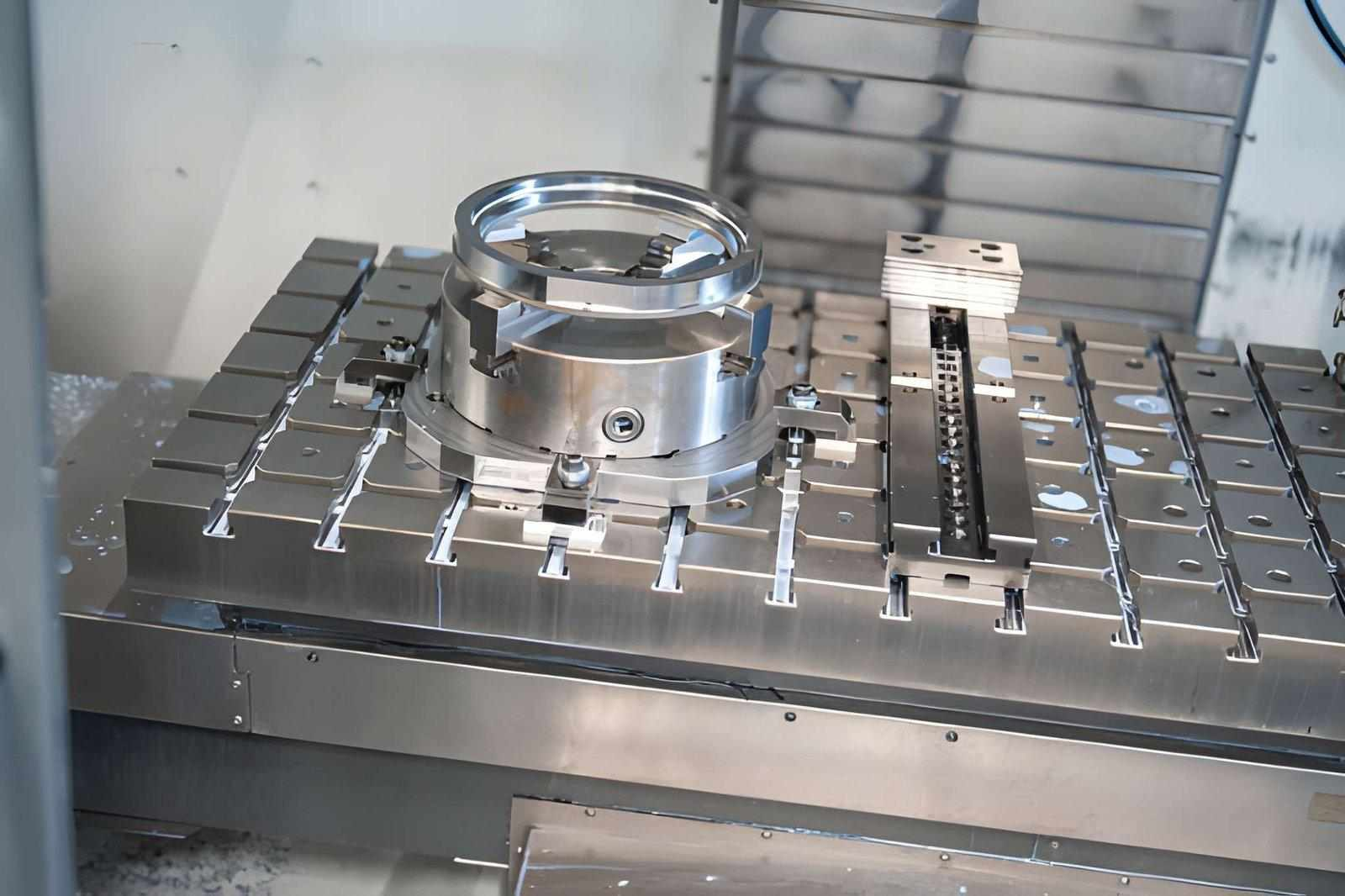

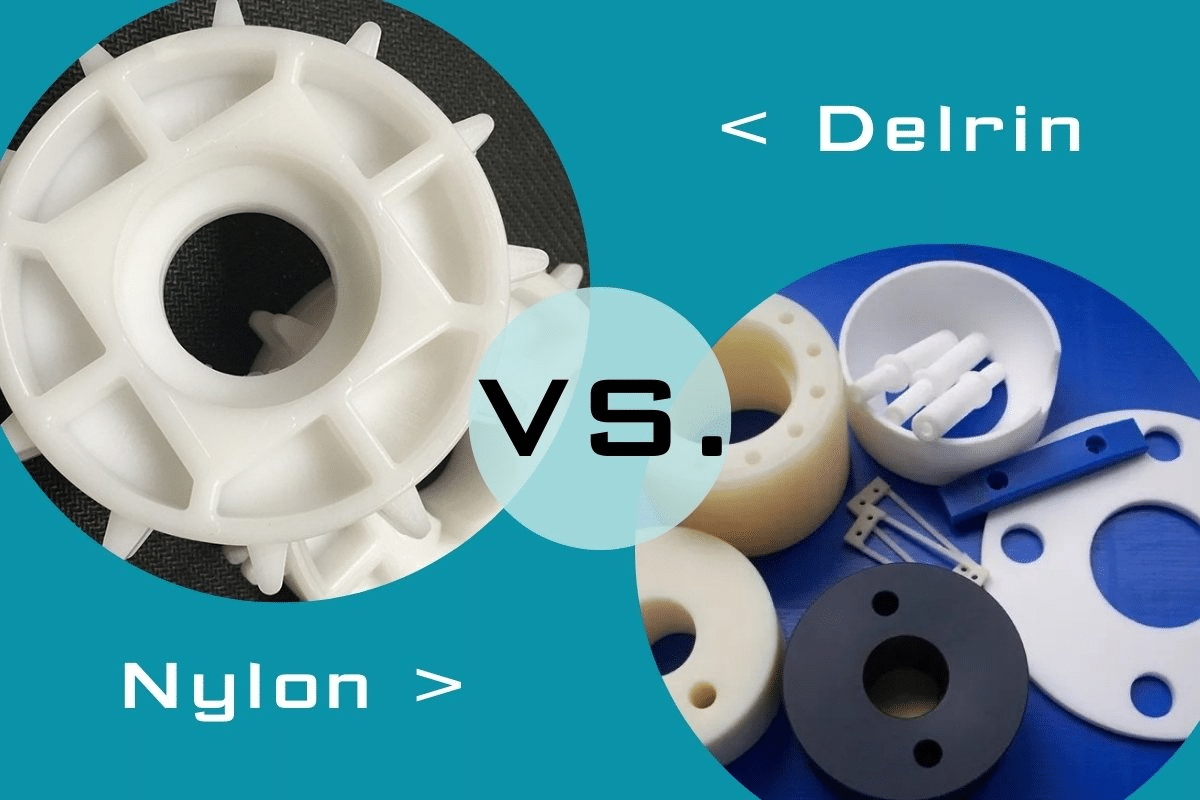
Engineering plastics play a critical role in modern product design, offering a balance of strength, durability, and manufacturability that metals often cannot match. They are widely used in mechanical components, industrial equipment, and consumer products where weight reduction, corrosion resistance, and precise performance are essential. Choosing the right engineering polymer directly affects part reliability, service life, and overall cost.
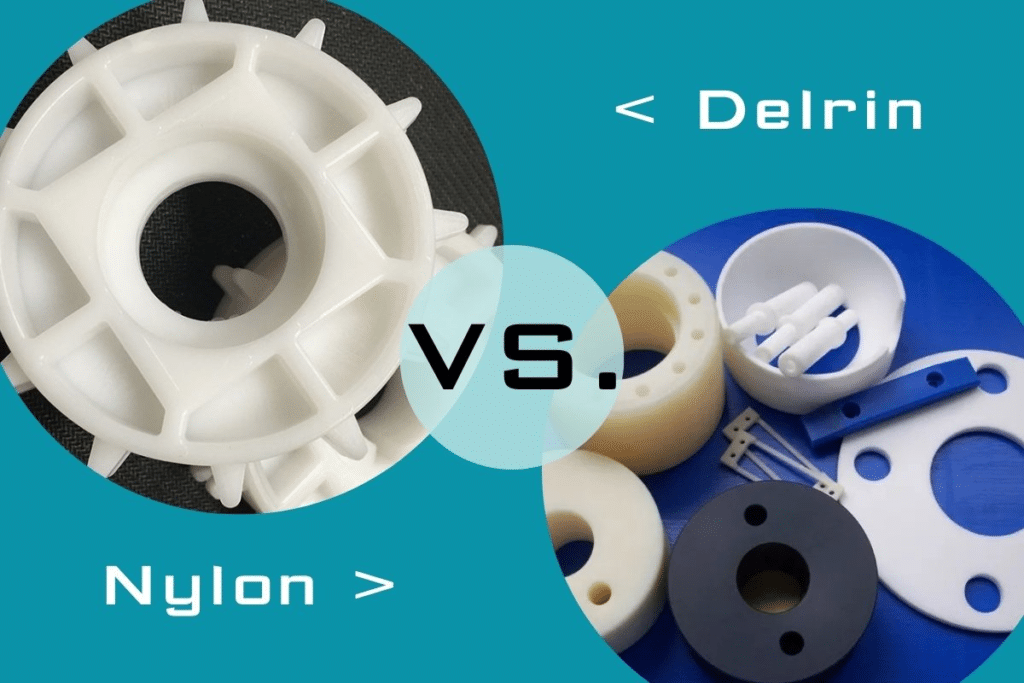
Delrin and Nylon are two of the most commonly specified engineering plastics. Designers and engineers often compare them when selecting materials for load-bearing, moving, or precision components. This article is intended to help you clearly understand where each material excels, where it falls short, and how to choose the right option.
Understanding the Materials at a Practical Level
Before comparing performance, it is important to understand what Delrin and Nylon actually are and how their internal structure influences real-world behavior. Although both fall under the category of engineering plastics, they are built differently at the molecular level, which explains why they respond so differently to stress, heat, and environmental exposure.
Delrin (Acetal Homopolymer)
Delrin is a branded acetal homopolymer known for its uniform structure and highly consistent mechanical behavior. It is often chosen for precision parts where repeatability and tight tolerances matter more than flexibility.
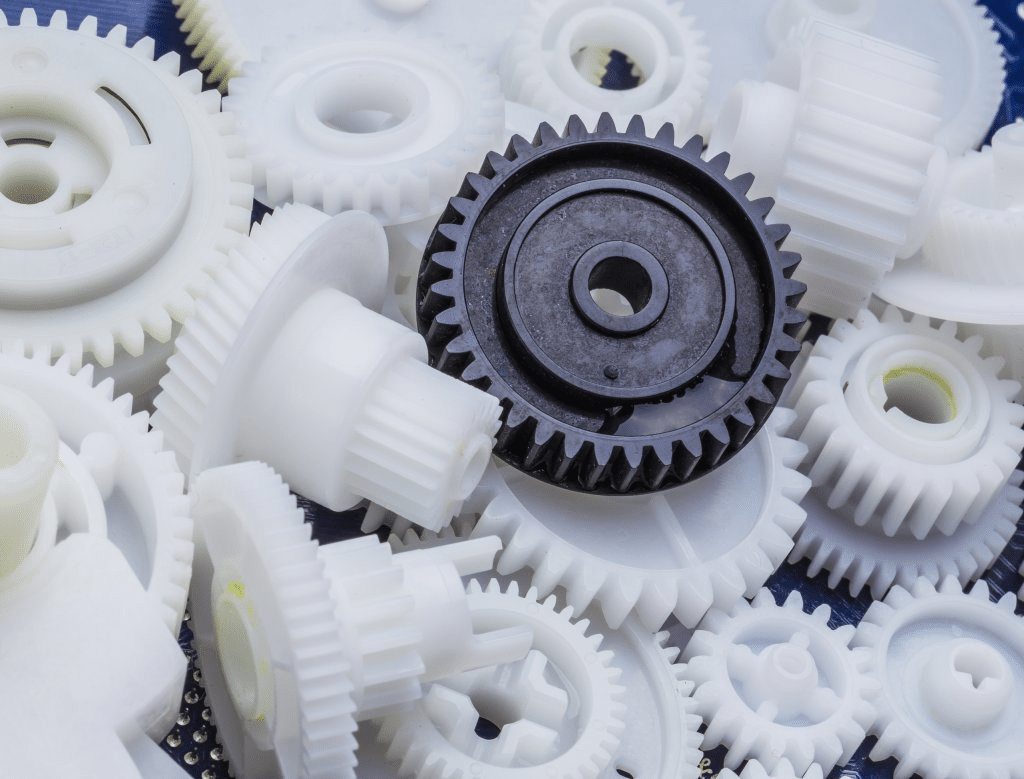
At a material level, Delrin is valued for its balance of strength, stiffness, and low friction. This makes it especially useful in components that move against other parts or must maintain exact dimensions over time.
Key characteristics that define Delrin in practice include:
- High stiffness and rigidity
Delrin resists bending under load, which is why it is commonly used in gears, bushings, and conveyor components that must retain their shape during operation.
- Low friction and good wear behavior
Its naturally slippery surface reduces the need for external lubrication. This is helpful in applications such as sliding mechanisms or small mechanical assemblies.
- Excellent dimensional stability
Delrin absorbs very little moisture from the air. Parts machined to tight tolerances tend to stay within specification even when used in humid or variable environments.
Because of these traits, Delrin is often selected for precision industrial parts such as valve components, pump housings, and automated equipment parts where consistency is critical.
Nylon (Polyamide)
Nylon refers to a family of polyamides rather than a single material. Among them, Nylon 6 and Nylon 6/6 are the most widely used in engineering applications. While their properties are similar, they can behave slightly differently depending on formulation and processing.
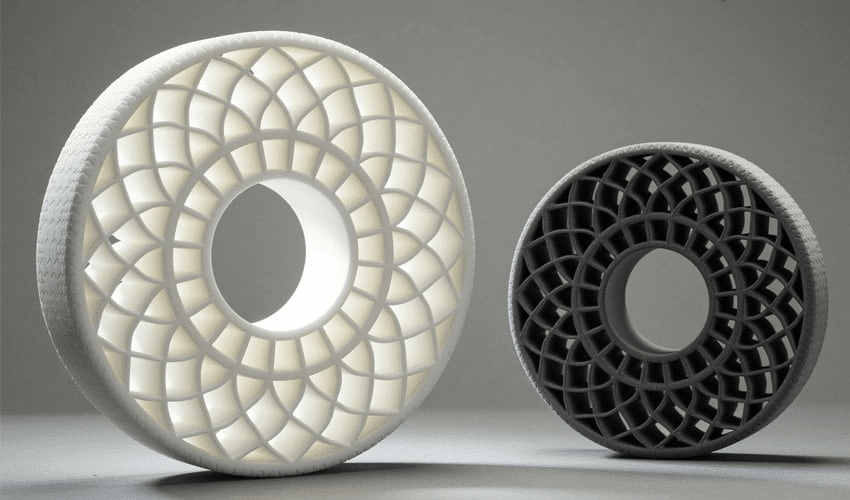
Nylon is generally recognized for its toughness and versatility. It can handle repeated impact and dynamic loads better than many rigid plastics, which makes it suitable for parts that experience shock or vibration.
Core material traits that shape Nylon performance include:
- High toughness and impact resistance
Nylon can absorb energy without cracking, which is why it is often used in components like housings, clips, and protective covers.
- Good fatigue resistance
When parts are subjected to repeated loading cycles, such as rotating or flexing components, Nylon tends to perform reliably over time.
- Moisture sensitivity
Unlike Delrin, Nylon absorbs moisture from the surrounding environment. This can improve toughness but may also cause slight swelling or changes in dimensions, which designers must account for in precision applications.
In practical terms, Nylon is frequently chosen for structural parts, bearings, and consumer-facing components where durability and impact strength are more important than strict dimensional control.
Mechanical Performance Under Real Operating Conditions
Mechanical properties are often the deciding factor when choosing between Delrin and Nylon. While datasheets may show overlapping numbers, real-world performance can differ noticeably once load type, motion, and long-term use are considered. Understanding how each material behaves under stress helps prevent premature wear, deformation, or failure.
Strength and Stiffness
Delrin generally offers higher stiffness than Nylon, which means it deflects less when subjected to load. This characteristic is especially valuable in parts that must hold alignment or transmit force accurately.
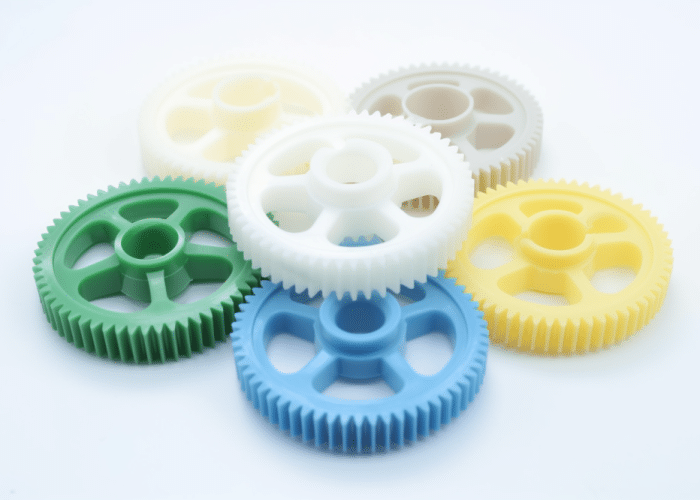
Delrin for Your Engineering Projects
- Delrin performs well in rigid components such as gears, cams, and spacers where shape retention is critical. For example, in conveyor systems, Delrin sprockets maintain tooth geometry more reliably under constant load.
- Nylon, while still strong, is more flexible. This flexibility can be an advantage in parts that experience sudden loads, such as clips or housings that must bend slightly without cracking.
In short, Delrin favors rigidity, while Nylon favors controlled flexibility.
Impact Resistance
When impact or shock loading is a concern, Nylon often has the advantage. Its molecular structure allows it to absorb energy more effectively before failure.
- Nylon components are commonly used in protective guards, enclosures, and structural brackets where accidental impacts are expected.
- Delrin can handle moderate impact, but it is more prone to cracking if subjected to sharp or repeated shocks, especially in colder environments.
This difference becomes important in applications such as material handling equipment, where dropped loads or sudden stops are part of daily operation.
Fatigue Performance
Fatigue resistance matters when a part is exposed to repeated cycles of loading and unloading. Over time, poor fatigue behavior can lead to cracks or complete failure even if the load is relatively low.
- Nylon generally performs well in cyclic applications. Hinges, snap-fit components, and rotating elements benefit from its ability to flex repeatedly without degrading quickly.
- Delrin also offers good fatigue resistance, particularly in dry, stable environments. It is often chosen for precision rotating parts where consistent motion matters more than flexibility.
The choice here often depends on whether the part experiences bending or mostly rigid motion.
Dimensional Stability
Dimensional stability can be a deciding factor in precision engineering. Parts that swell, shrink, or warp can cause misalignment or assembly issues.
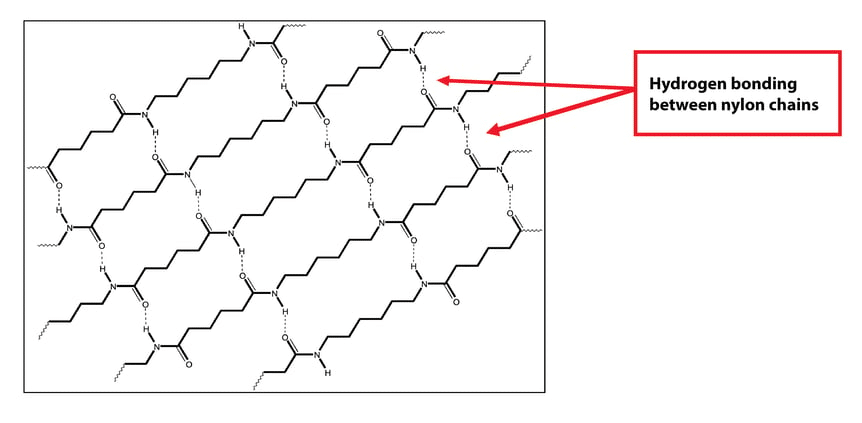
- Delrin remains dimensionally stable because it absorbs very little moisture. Machined parts tend to stay within tolerance even after long-term exposure to humidity.
- Nylon absorbs moisture from the environment, which can lead to slight dimensional changes. In some cases, this improves toughness, but it can be problematic in tight-tolerance assemblies such as precision bearings or metering components.
For applications such as valve components or precision guides, this difference often leads engineers to favor Delrin.
Mechanical Properties Comparison
| Property | Delrin (Acetal) | Nylon (Polyamide) |
| Stiffness | High | Moderate |
| Impact Resistance | Moderate | High |
| Fatigue Resistance | Good | Very good |
| Dimensional Stability | Excellent | Moderate due to moisture absorption |
This mechanical comparison shows that neither material is universally better. Delrin excels where rigidity and precision matter most, while Nylon performs well in applications that demand toughness and repeated load handling.
Thermal Behavior and Environmental Resistance
Beyond mechanical strength, environmental conditions often determine whether a material succeeds or fails in service. Temperature exposure, humidity, and contact with chemicals can gradually change how a polymer performs. Delrin and Nylon respond quite differently to these factors, which is why the operating environment should always be considered early in the material selection process.
Operating Temperature Range
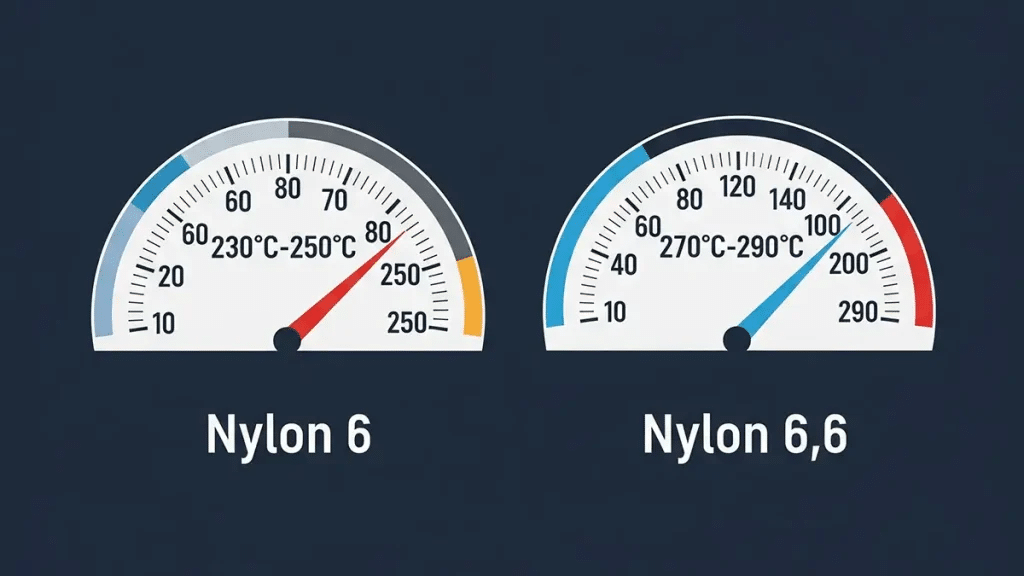
Both materials are suitable for a wide range of industrial temperatures, but their behavior at elevated or fluctuating temperatures is not identical.
- Delrin maintains its stiffness and mechanical integrity across a stable temperature range. It is commonly used in equipment operating in controlled indoor environments, such as automated assembly lines or packaging machinery.
- Nylon can tolerate similar temperature limits but tends to soften slightly as temperatures rise. In applications where parts experience both heat and mechanical load, this softening can affect dimensional accuracy.
In practice, Delrin is often preferred when thermal consistency is more important than toughness.
Heat Resistance
Heat resistance becomes critical in applications involving friction, continuous motion, or proximity to heat sources.
- Delrin handles moderate heat well, especially in low-friction applications like sliding guides or bearings. Its predictable behavior under heat makes it suitable for precision components that must retain shape.
- Nylon performs reliably in higher heat situations when reinforced or modified, such as glass-filled grades. These variants are frequently used in automotive under-the-hood components where heat exposure is unavoidable.
Material selection here often depends on whether standard or reinforced grades are being considered.
Moisture Absorption Behavior
Moisture exposure is one of the clearest differentiators between Delrin and Nylon.
- Delrin absorbs very little moisture from the environment. Parts used in humid facilities or near water sources tend to maintain their original dimensions and mechanical properties.
- Nylon absorbs moisture over time. This can increase toughness and reduce brittleness, but it can also cause swelling. For example, a tightly fitted Nylon bushing may become harder to install or rotate smoothly after prolonged exposure to humidity.
Designers often compensate for this by adjusting tolerances or choosing stabilized Nylon grades.
Chemical Resistance
Both materials offer good resistance to many chemicals, but there are practical differences worth noting.
- Delrin resists fuels, solvents, and many industrial chemicals, making it suitable for fluid-handling components such as valves and pump parts.
- Nylon also resists oils and fuels but can be affected by strong acids or bases. In environments with frequent chemical cleaning or exposure, this may influence long-term durability.
These considerations are especially relevant in industries such as food processing, automotive manufacturing, and chemical handling.
When thermal and environmental factors are properly evaluated, material failures can often be avoided before they occur.
Machinability and Manufacturing Considerations
Manufacturing efficiency often influences material choice as much as performance. Even a well-suited polymer can become impractical if it is difficult to machine, inconsistent during processing, or unable to hold required tolerances. Delrin and Nylon are both widely processed, but they behave quite differently on the shop floor.
Ease of Machining
Delrin is generally regarded as one of the easiest engineering plastics to machine. Its uniform structure allows cutting tools to move smoothly, producing clean edges and consistent results.
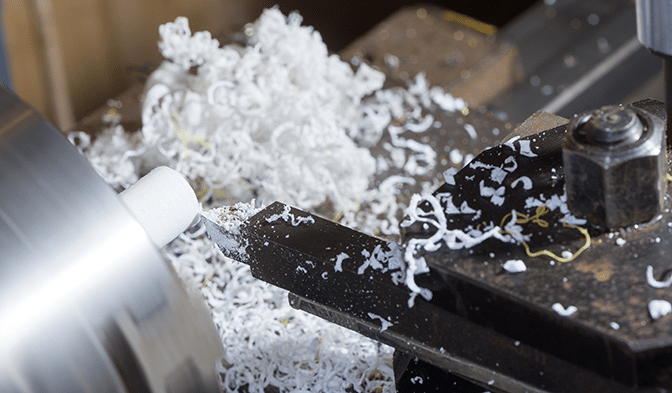
- Machinists often prefer Delrin for CNC turning and milling because it cuts cleanly without excessive tool wear.
- Chips break predictably, which helps maintain surface quality during high-speed machining.
Nylon, while still machinable, requires more attention during processing.
- Its toughness can cause material to string or deform slightly during cutting.
- Sharp tools and controlled feeds are important to avoid surface tearing or dimensional variation.
In high-volume or precision-machining environments, these differences can directly affect production time and scrap rates.
Surface Finish Quality
Surface finish matters in both functional and aesthetic applications. Components with poor finish may experience higher friction or wear over time.
- Delrin typically produces a smooth, uniform surface straight from the machine. This is one reason it is commonly used for sliding components and visible mechanical parts.
- Nylon surfaces may appear slightly rougher after machining, particularly if the moisture content varies. Post-processing may be required when appearance or low friction is important.
For example, precision rollers or guide rails often favor Delrin because of its naturally smooth finish.
Tolerances and Precision
Holding tight tolerances is easier when the material remains stable during and after machining.
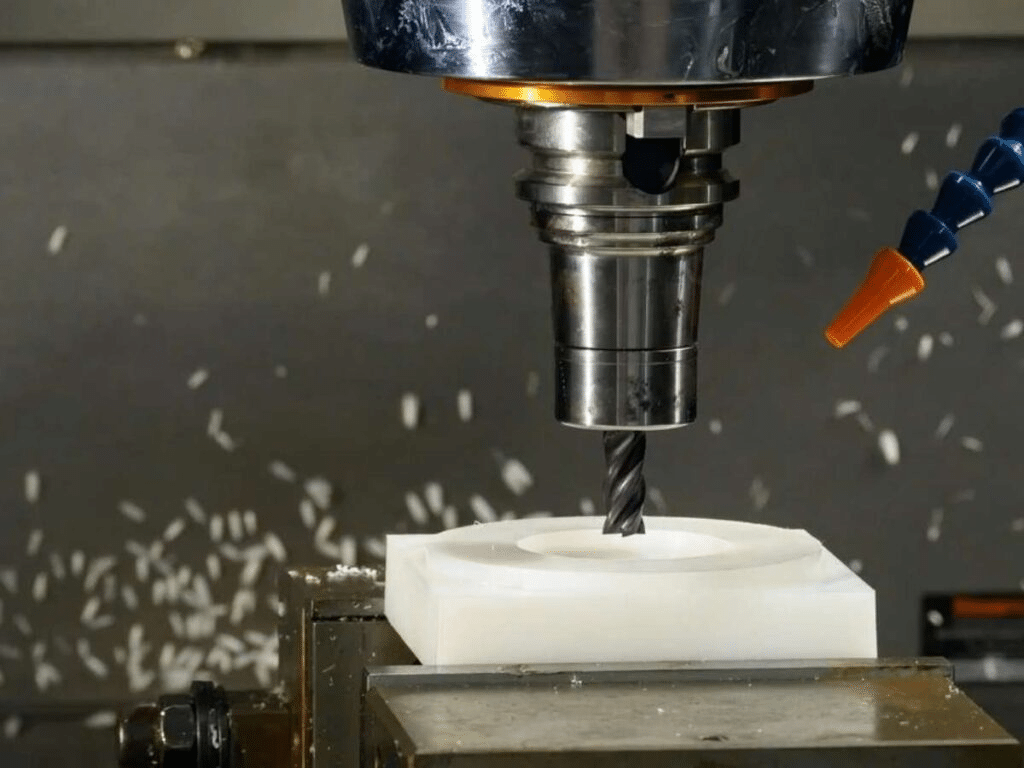
- Delrin maintains dimensional accuracy well, even after machining, making it suitable for gears, bushings, and spacers with strict tolerance requirements.
- Nylon can be machined to tight tolerances, but designers must consider potential dimensional change due to moisture absorption after production.
This difference is especially noticeable in assemblies where multiple parts must fit together without adjustment.
Common Manufacturing Processes
Both materials are compatible with standard manufacturing methods used in industrial production.
- Delrin is widely used in CNC machining, injection molding, and extrusion for precision components.
- Nylon is commonly injection molded for complex shapes and machined for lower volume or custom parts. Reinforced grades are frequently molded for structural components.
Manufacturers often choose Delrin for precision-machined parts and Nylon for molded components that require toughness and design flexibility.
Application-Driven Material Selection
The differences between Delrin and Nylon become clearest when viewed through real applications. While both materials appear in many of the same industries, they are often chosen for different reasons within the same system. Understanding where each polymer is typically used helps clarify why one may outperform the other in a specific role.
Typical Delrin Applications
Delrin is commonly selected for parts that demand precision, smooth motion, and long-term dimensional stability.
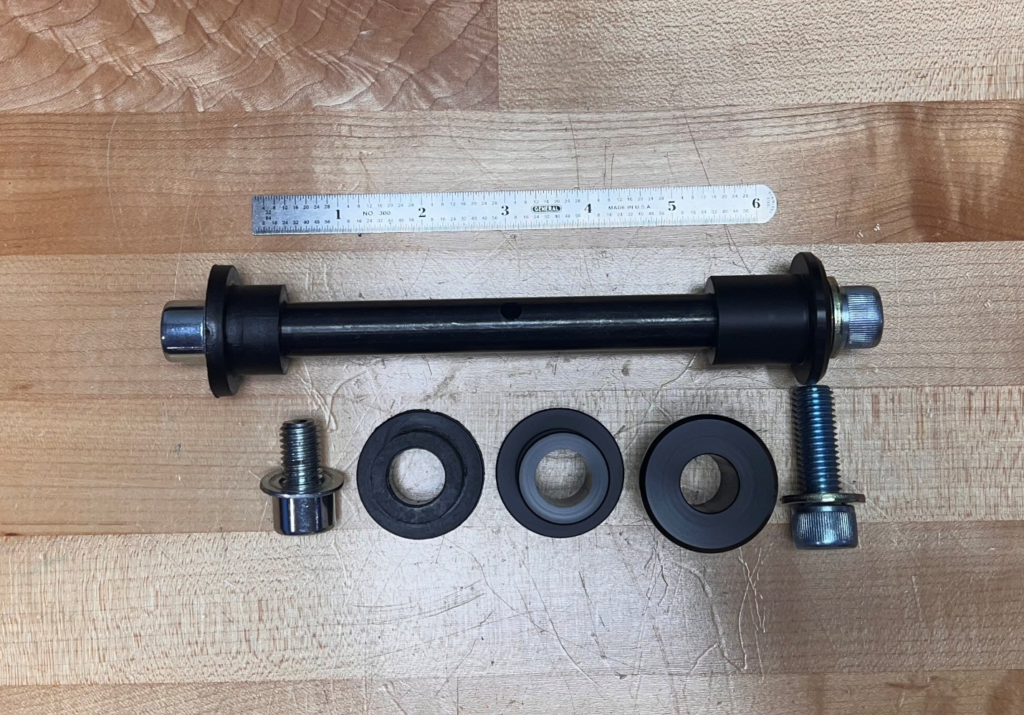
- Gears and sprockets
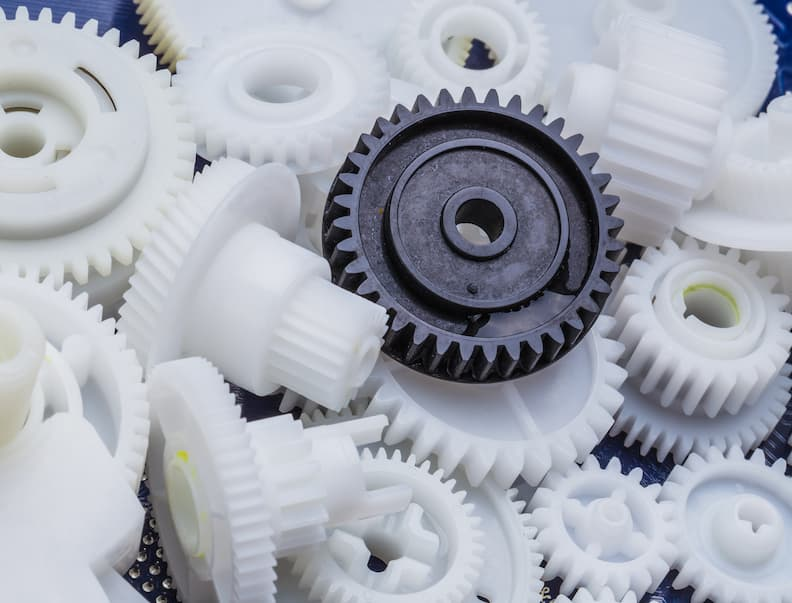
Delrin gears are widely used in conveyor systems, office equipment, and automated machinery where consistent tooth engagement and low noise are important.
- Bushings and bearings
Its low-friction surface makes Delrin suitable for sliding or rotating parts that operate without lubrication.
- Valve and pump components
In fluid handling systems, Delrin maintains shape and performance even with repeated motion and exposure to moisture.
These applications benefit from Delrin’s rigidity and predictable behavior over time.
Typical Nylon Applications
Nylon is often chosen where toughness and impact resistance take priority over strict dimensional control.
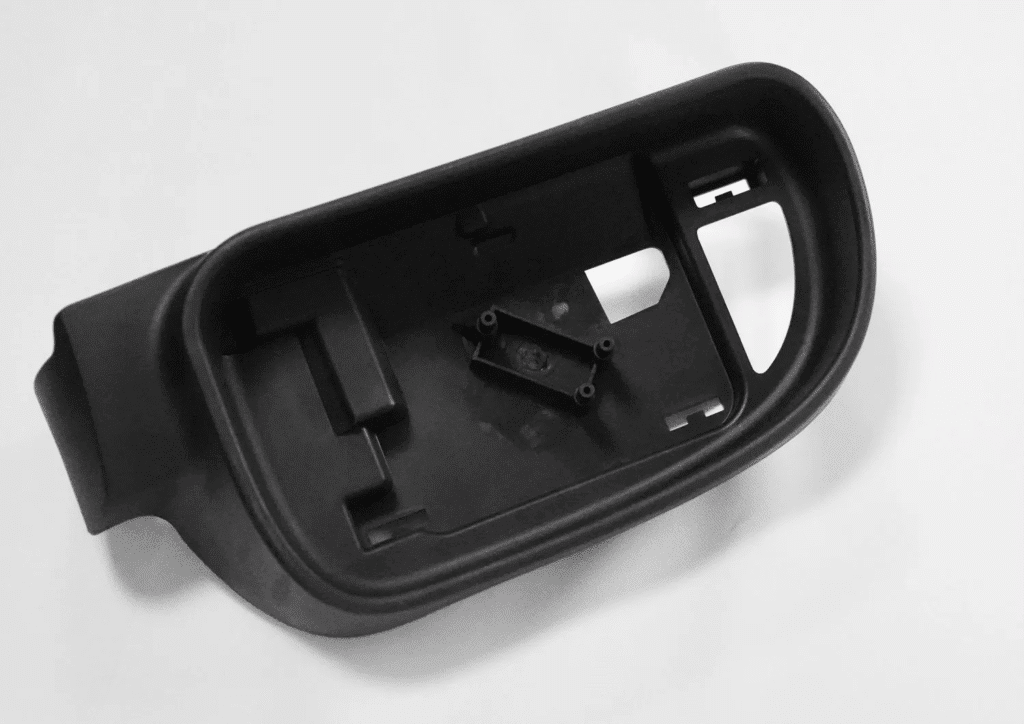
Nylon Compound in the Automotive Industry
- Structural housings and covers
Nylon absorbs impact well, which is useful in protective enclosures and load-bearing frames.
- Wear pads and guides
Its fatigue resistance supports repeated movement and contact in dynamic systems.
- Automotive and consumer components
Reinforced Nylon grades are frequently used in brackets, clips, and under-the-hood parts where vibration and temperature variation are expected.
In these cases, the material’s ability to handle stress and shock outweighs concerns about minor dimensional change.
Situations Where One Clearly Performs Better
Certain operating conditions strongly favor one material over the other.
- Delrin is the better choice for precision assemblies such as timing gears, metering devices, and alignment components where moisture stability and tight tolerances are critical.
- Nylon performs better in applications exposed to repeated impact, flexing, or vibration, such as snap-fit parts or structural supports.
In practice, it is common to see both materials used within the same machine, each selected for a specific function rather than as a universal solution.
Cost, Availability, and Long-Term Performance
Beyond technical performance, practical factors such as cost, supply stability, and service life often shape the final material decision. Even when both Delrin and Nylon meet design requirements, differences in pricing and longevity can influence what makes the most sense over the full lifecycle of a component.
Material Cost Comparison
From a raw material perspective, Nylon is generally more affordable than Delrin. This price difference becomes noticeable in high-volume production or large molded parts.
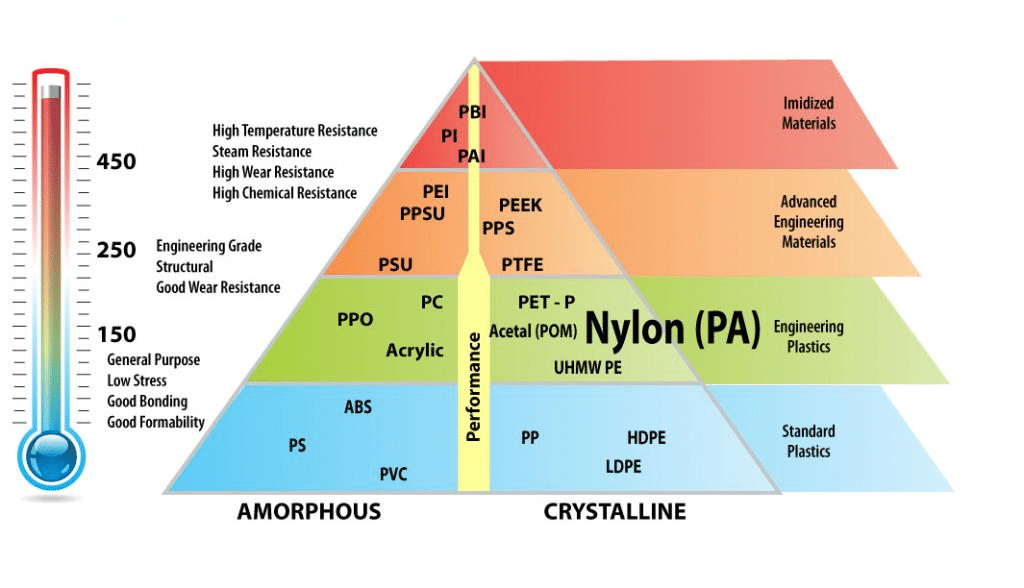
- Nylon is widely produced and available in many grades, which helps keep pricing competitive. This makes it attractive for cost-sensitive applications such as consumer products or large structural components.
- Delrin typically carries a higher price due to its controlled manufacturing process and tighter property consistency. The added cost is often justified in precision parts where performance stability reduces downstream issues.
In many projects, the initial cost difference is offset by reduced machining time or lower failure rates.
Availability and Supply Consistency
Both materials are well established in global supply chains, but availability can vary depending on grade and region.
- Nylon is produced by numerous manufacturers worldwide, offering flexibility in sourcing and substitution.
- Delrin is a branded acetal homopolymer, which can limit supplier options and lead times in certain markets.
For long-term programs or high-volume production, supply continuity is often reviewed alongside material performance.
Wear Life and Maintenance Considerations
Long-term performance is not only about strength but also about how a part behaves after months or years of service.
- Delrin components tend to maintain consistent performance over time, particularly in moving assemblies. Reduced friction and stable dimensions help extend wear life and minimize maintenance.
- Nylon parts may experience gradual changes due to moisture absorption or thermal cycling. In many applications, this is acceptable, but in precision systems, it may require periodic inspection or replacement.
For example, a Nylon guide rail in a humid facility may still perform reliably, but a Delrin alternative would likely require less adjustment over time.
When viewed through the lens of total cost of ownership, Delrin often proves economical for precision and low maintenance applications, while Nylon remains a strong choice for durable, cost-effective designs that tolerate environmental variation.
Conclusion
Delrin and Nylon are both proven engineering polymers, but they solve different problems. Delrin stands out in applications that demand precision, dimensional stability, and smooth mechanical motion. Its predictable behavior, low moisture absorption, and excellent machinability make it a strong choice for gears, bearings, and tight-tolerance components where consistency matters over long service periods.
Nylon, on the other hand, excels where toughness, impact resistance, and cost efficiency are priorities. It performs well in structural and dynamic applications that experience vibration, shock, or repeated loading, even if minor dimensional changes are acceptable. Choosing between Delrin and Nylon ultimately comes down to understanding the operating environment, performance expectations, and long-term maintenance needs of the part rather than relying on material strength alone.