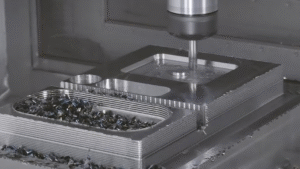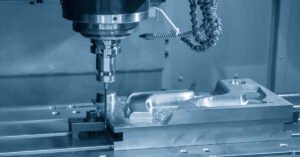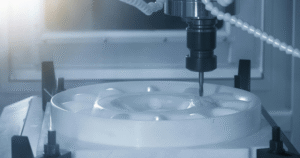
What Is Profile Milling in CNC Manufacturing and Why Does It Matter?
Profile milling’s precise, flexible approach suits high-tolerance industries by creating complex geometries, expanding its significance in various manufacturing sectors.
Drawing from our 20+ years of precision machining experience, we share practical insights to help you overcome technical challenges in complex parts manufacturing. From material selection to process optimization, we empower your procurement decisions with professional expertise and confidence.

Profile milling’s precise, flexible approach suits high-tolerance industries by creating complex geometries, expanding its significance in various manufacturing sectors.

Solution treatment is essential in enhancing machined parts, offering improved strength and performance. By understanding its nuances, you can leverage it for high-quality, durable components.

Effective chip control in CNC turning is essential for maintaining safety, surface integrity, and tool longevity, especially when working with difficult materials such as titanium, Inconel, and stainless steels. Achieving this requires a deep understanding of chip formation mechanics, tool geometry, and the influence of process parameters.

Properly securing a workpiece during CNC machining is vital. Any movement can lead to inaccuracies, affecting the final product’s quality. Workholding ensures parts remain stable,

Equally important is the maintenance and inspection of cutting fluids throughout their service life. Monitoring key parameters such as pH, concentration, and contamination ensures that the fluid continues to perform as intended.

Are you struggling with gear selection for your mechanical system? Poor gear choice leads to inefficiency, excessive noise, and premature failure—potentially causing expensive downtime and

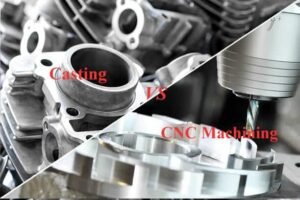
In short, your products perform better when you choose the right blank. Moreover, forgings give you more strength. On the other hand, you use casting to make complex shapes easily. Then, you use plates for simple and flat designs.

Internal or residual stresses have a major impact on the long-term performance, dimensional stability, and machining precision of manufactured parts.

Tool wear detection has become a primary component of intelligent manufacturing by providing a smarter and data-driven approach to CNC machining (CNC milling).

Residual stress remains hidden inside machined parts, yet it has a powerful influence on dimensional accuracy, performance, and service life.
We will contact you within 1 working day, please pay attention to the email with the suffix “@partstailor.com”.